Edo Period dish
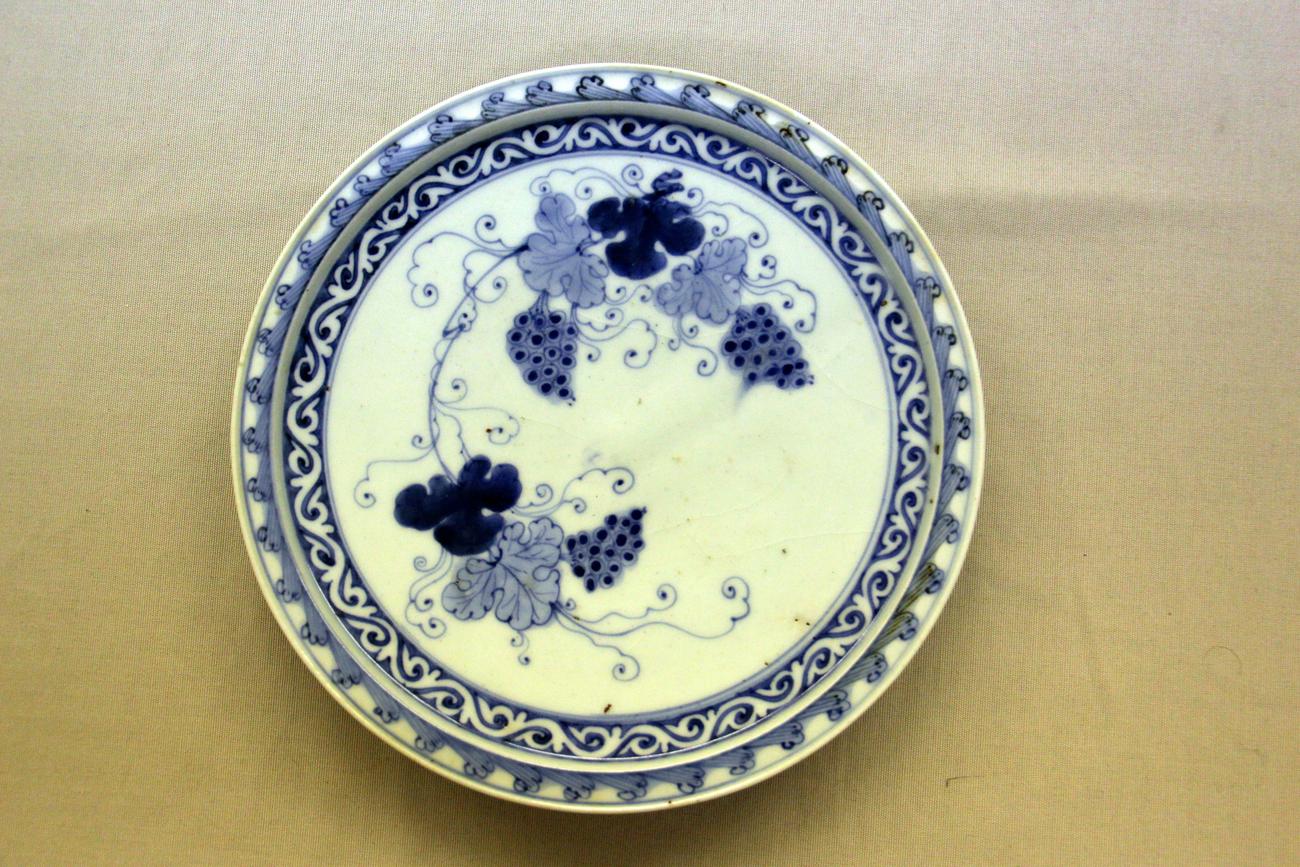
- Gallery: Room 93
- Culture: Edo Period
- Made in: Arita
- Date: 1630-1640
- Object type: dish, storage box
- Materials: porcelain; wood
- Museum number: 2015,3034.1
- Museum: The British Museum
- Collection record: British Museum website
- Image © The Trustees of the British Museum, shared under a CC BY-NC-SA 4.0 licence.
Listen to the free audio guide
In the museum now? Point your phone at the next object and hear its guide.
About this object
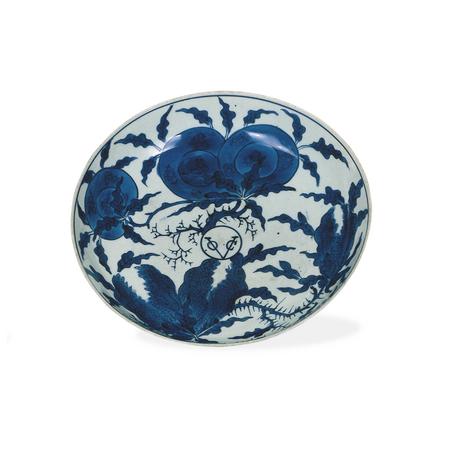
This is a beautifully crafted dish from the Edo Period, created in Arita in the 1630s. The porcelain is painted under the glaze in bold cobalt blue, showing a rich design of grape vines. Look closely at the center medallion—and you’ll see the motif was inspired by Korean art, imported to Japan over a hundred years earlier.
The dish is part of a rare early style known as Shoki Imari. At the time, Japan was trying to create a competitive porcelain industry to rival Chinese imports. This piece shows clear influence from Ming-era Chinese porcelain, especially in the double band pattern around the rim.
Turn your eye to the base, where three Chinese characters—Dai Sei Min—are marked. These translate to “Great Ming Chenghua era,” a reference to China’s fifteenth century. Though decorative, this may have been used to mimic or even challenge imported Chinese wares.
The dish comes with a wooden storage box, a thoughtful addition to its historical presentation.
See it in person
Edo Period dish is on display in Room 93 at the British Museum on Great Russell Street, Bloomsbury, London — free to enter. Choose British Museum on audioguide.london and take a photo of it to hear this free audio guide in six languages — no app download needed.
New, in beta. British Museum support has just launched and is still improving: over 1,000 objects so far, with more added all the time.