Double-dial clock
- Gallery: Room 39
- Maker: Thomas Earnshaw
- Made in: London (England)
- Date: 1790-1800
- Object type: double-dial clock, long-case clock, regulator
- Materials: mahogany (clock-case); brass (clock-case); gold (clock-case); mercury (barometer/thermometer)
- Museum number: 1989,0307.1
- Museum: The British Museum
- Collection record: British Museum website
- Image © The Trustees of the British Museum, shared under a CC BY-NC-SA 4.0 licence.
Listen to the free audio guide
About this object
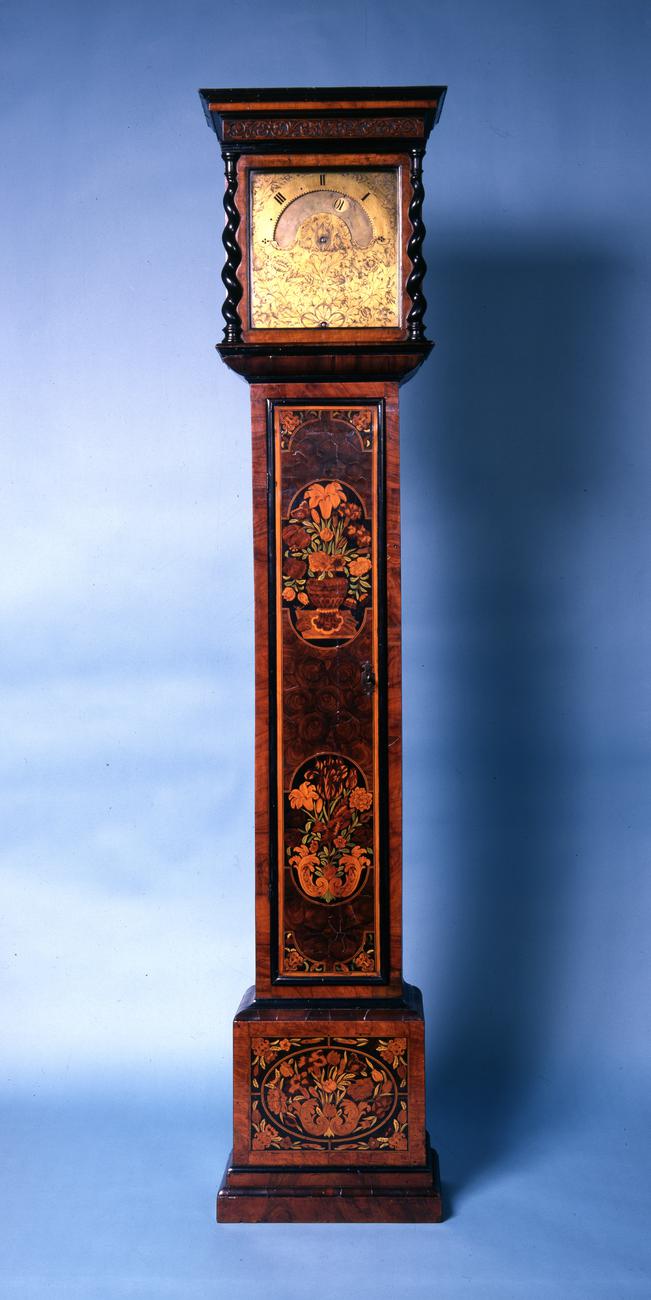
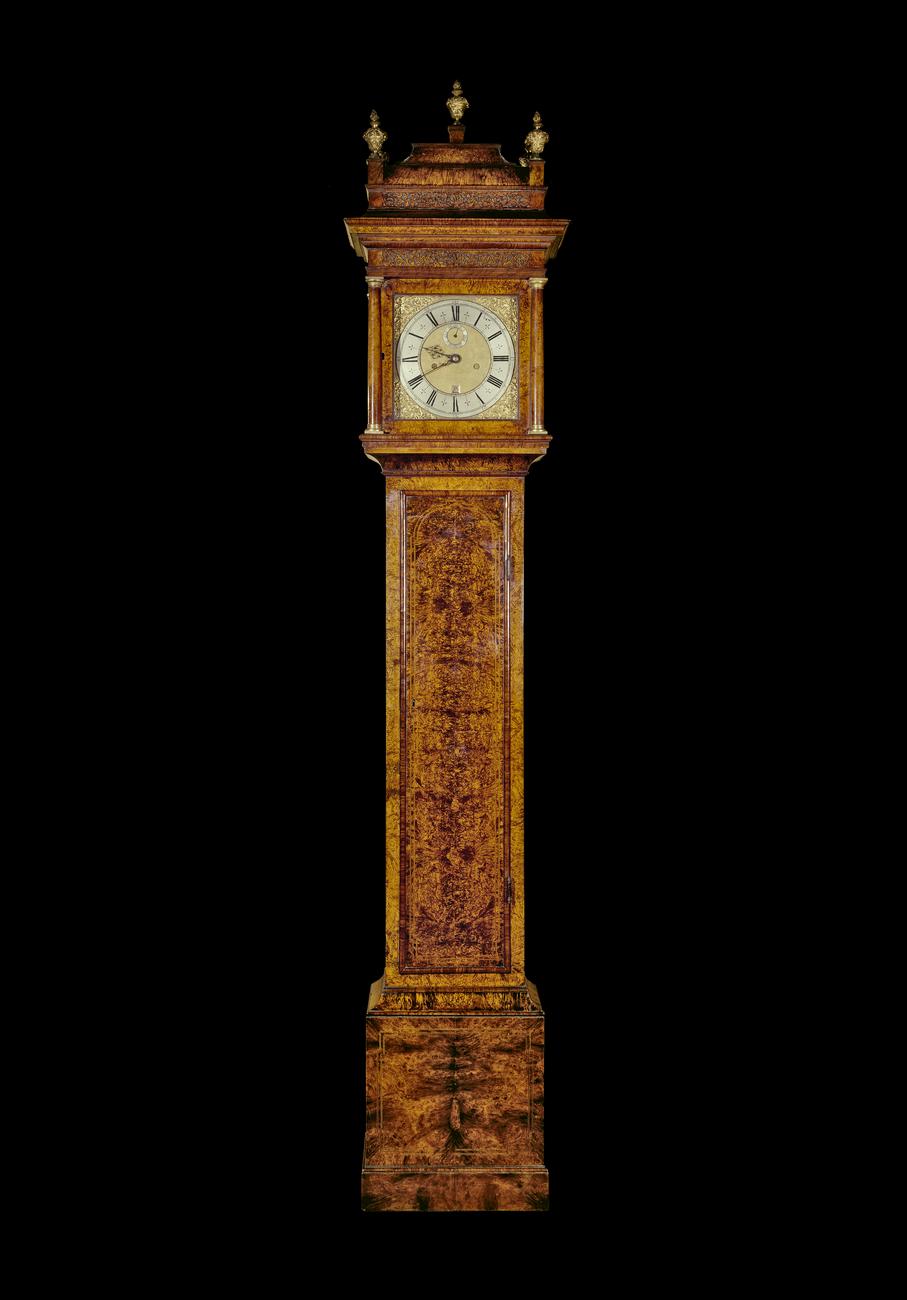
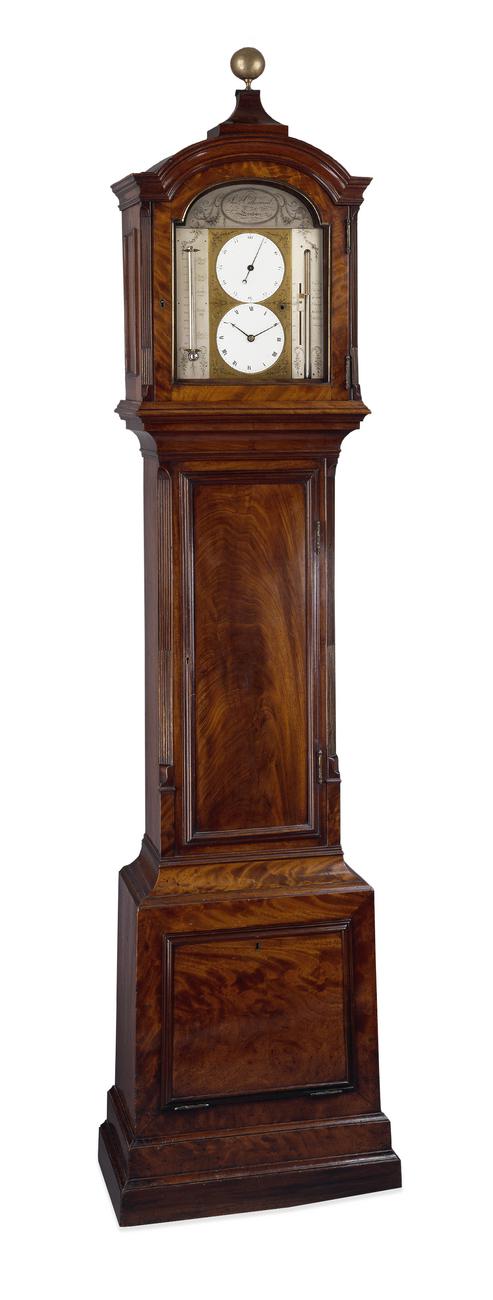
This is a double-dial clock made by Thomas Earnshaw in London around 1795. Before you is a tall mahogany case with ornate brass inlays and a front-opening door, flanked by reeded pilasters that reflect the neoclassical taste of the period. Notice the central composite dial: a central gilt-brass section features engraved foliate scrolls surrounding two white enamel dials—the upper one tells seconds, the lower shows hours and minutes.
To the left of the dials is a silver-plated thermometer and to the right, a mercury barometer, both essential tools for scientific observation in the 18th century. Inside, the clock features a two-week weight-driven movement with a sophisticated escapement design by Mudge and a compensation pendulum by Harrison—cutting-edge technology in timekeeping.
The clock’s story remains compelling: it has been connected to the astronomer William Larkins and may have once been used in a private observatory in London. A later signature of Joseph Catherwood appears on the dial, suggesting changes in ownership or attribution over time.
See it in person
Double-dial clock is on display in Room 39 at the British Museum on Great Russell Street, Bloomsbury, London — free to enter. Choose British Museum on audioguide.london and take a photo of it to hear this free audio guide in six languages — no app download needed.
New, in beta. British Museum support has just launched and is still improving: over 1,000 objects so far, with more added all the time.