Ceramic tomb figures
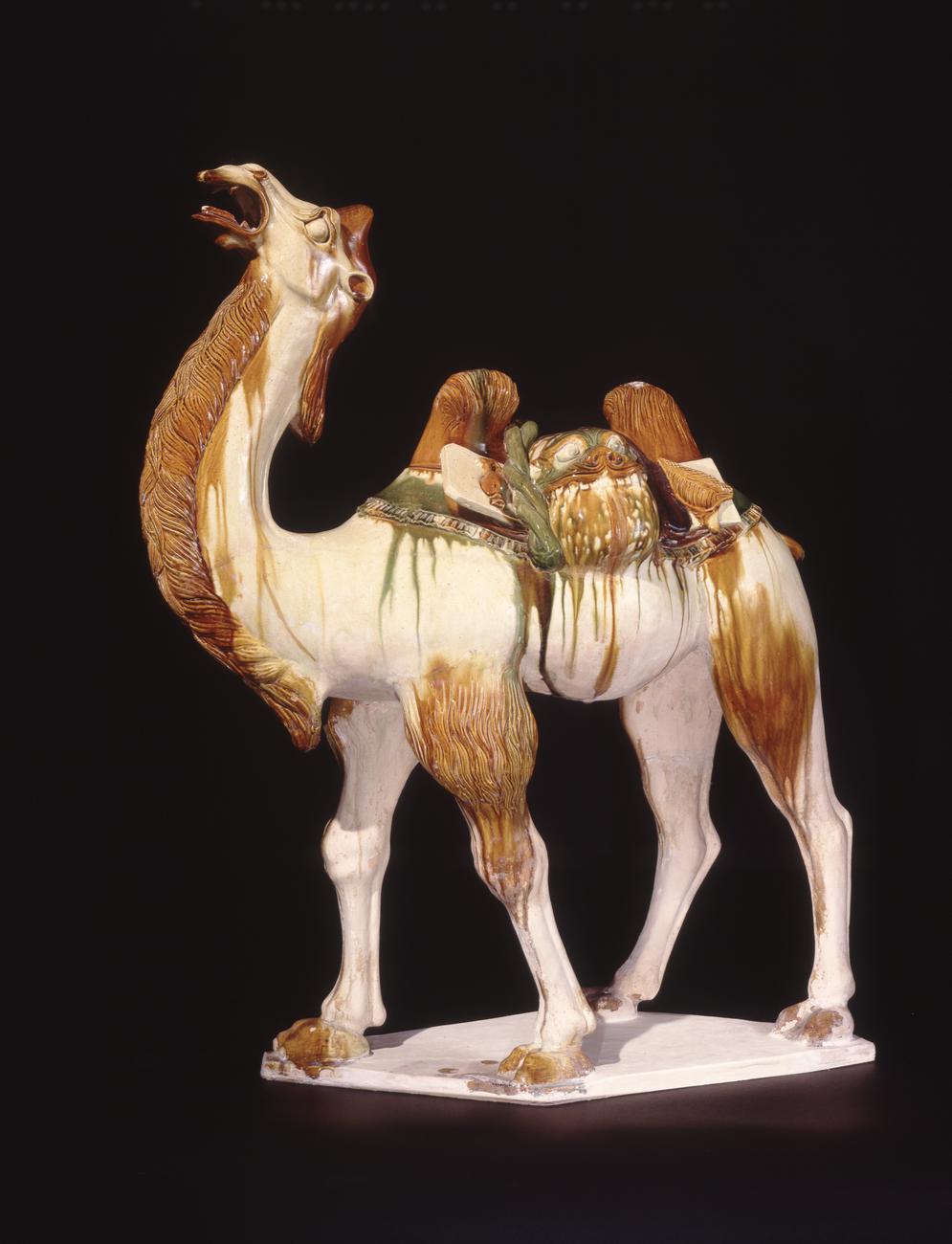
- Audio guide stop: 622
- Gallery: Room 33
- Audio guide: one commentary for a group of objects shown together
- Museum: The British Museum
- Image © The Trustees of the British Museum, shared under a CC BY-NC-SA 4.0 licence.
Listen to the free audio guide
About these objects
This is a group of "sancai"—meaning "three-color"—ceramic tomb figures from China's Tang dynasty, created around 728 AD for the burial of a high-ranking official named Liu Tingxun. These figures were placed in the tomb as part of a funerary procession, meant to honor and protect the deceased in the afterlife. Glazed in rich tones of green, brown, and yellow, they reflect the sophisticated craftsmanship and cosmopolitan spirit of Tang China.
Among the figures on display is a striking Bactrian camel laden with silk and goods from distant lands, a reminder of the famous Silk Route trade. Also featured are two fierce "lokapala," or Buddhist guardian figures, standing atop bulls, and civil officials whose elaborate robes and headgear marked their rank and status. These figures, along with others representing Earth spirits and grooms, formed a rich and symbolic entourage in the tomb, reflecting Liu Tingxun’s esteemed position in society. Taken together, these ceramics offer a window into the artistic, spiritual, and cultural life of a vibrant era in Chinese history.
See it in person
Ceramic tomb figures is on display in Room 33 at the British Museum on Great Russell Street, Bloomsbury, London — free to enter. Choose British Museum on audioguide.london and type its audio guide stop number, 622, from the gallery label, or take a photo of it, to hear this free audio guide in six languages — no app download needed.
New, in beta. British Museum support has just launched and is still improving: over 1,000 objects so far, with more added all the time.