Apulian calyx-krater
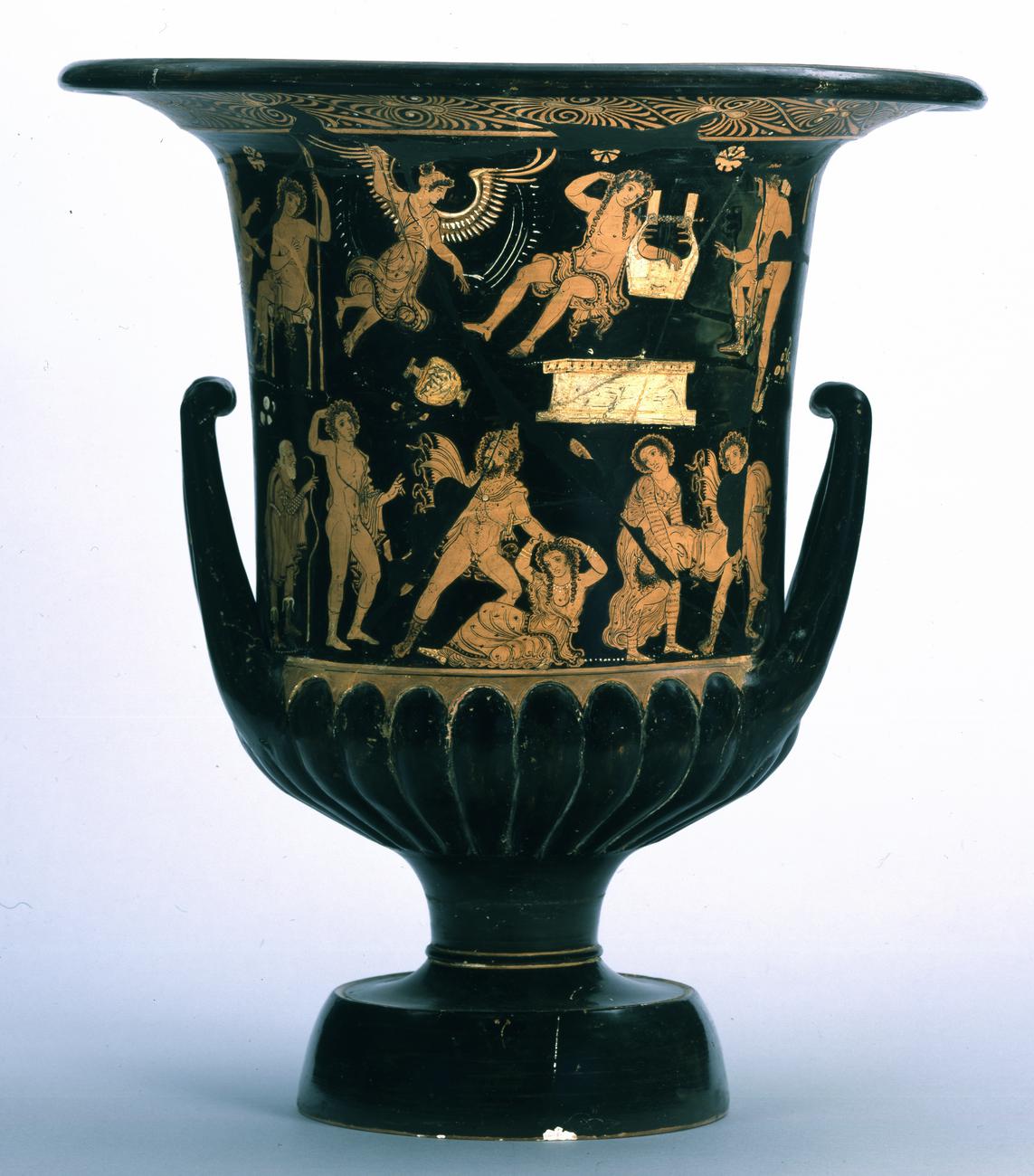
- Gallery: Room 73
- Maker: Attributed to The Lycurgus Painter
- Culture: Apulian (Greek) (Greek) (Greek)
- Made in: Puglia
- Date: 350BC-340BC (circa)
- Object type: calyx-krater
- Materials: pottery
- Museum number: 1849,0623.48
- Museum: The British Museum
- Collection record: British Museum website
- Image © The Trustees of the British Museum, shared under a CC BY-NC-SA 4.0 licence.
Listen to the free audio guide
In the museum now? Point your phone at the next object and hear its guide.
About this object
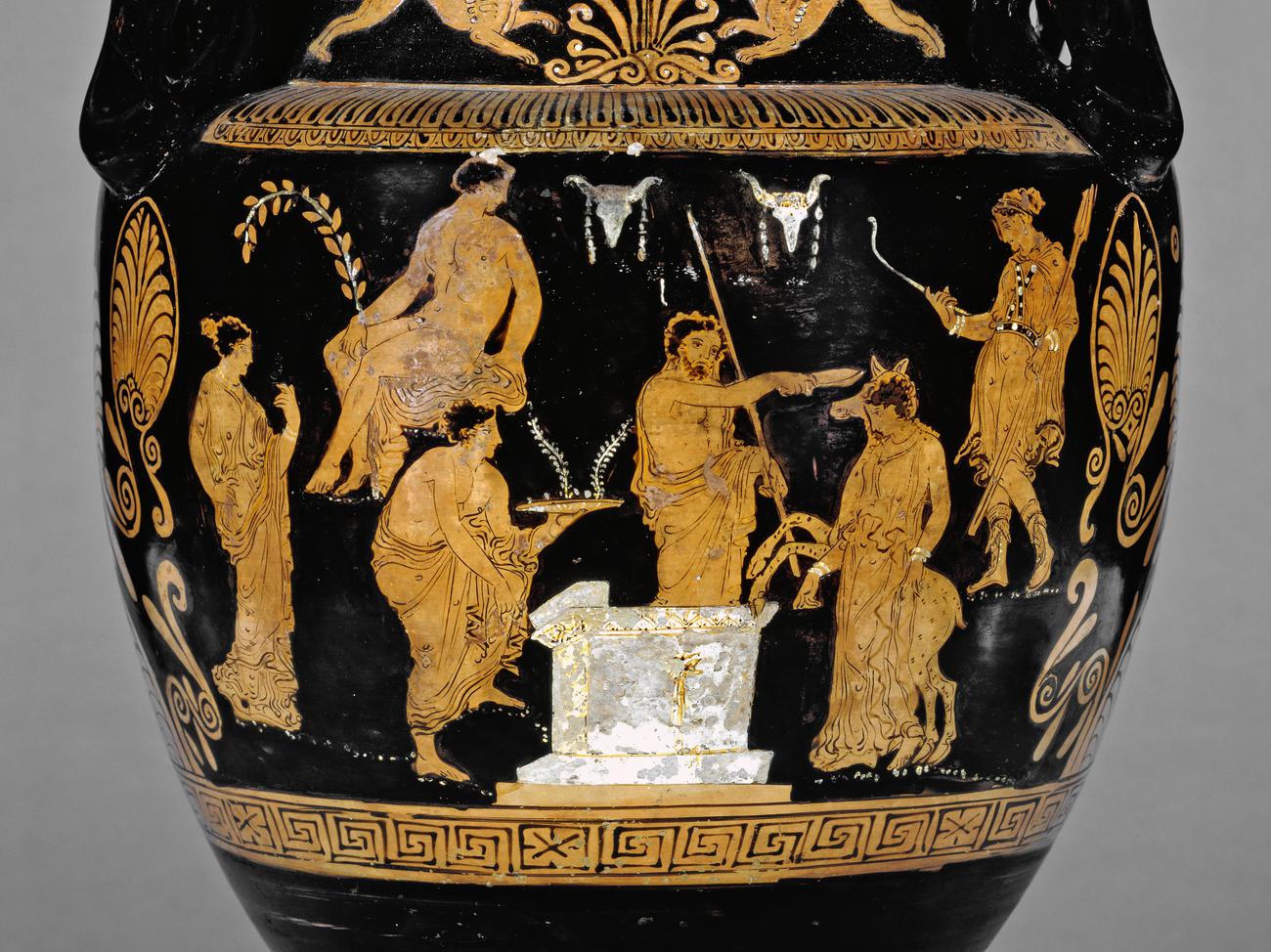
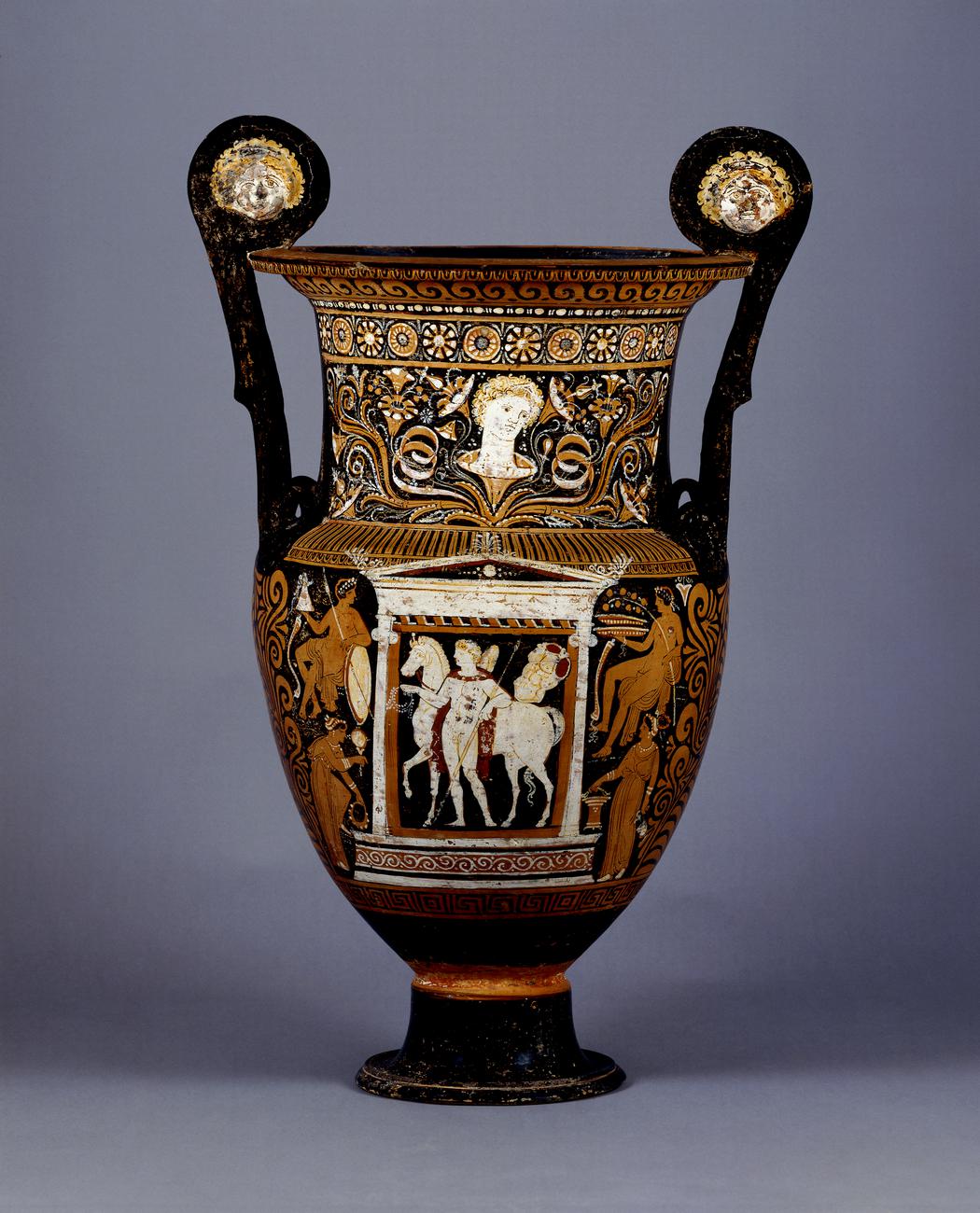
This is an Apulian calyx-krater, a large vessel used for mixing wine and water. Created around 350 to 340 BCE in southern Italy, during the height of Greek artistic influence in the region, it showcases intricate black-and-white painted designs.
Each side of the vase tells a dramatic story from classical mythology. One side illustrates the tragic tale of Lycurgus, a king consumed by madness, as he attacks his wife and kills his son. Above the scene floats Lyssa, the personification of fury. The other side depicts Pelops preparing for a chariot race, a moment rich with emotional tension as the outcome of his fate hangs in balance.
The detailed imagery is painted in the red-figure style, with black outlines and white and yellow accents applied through a sophisticated painting technique. The vase itself is ribbed and fluted, with ornamental bands of palmettes and ivy borders framing the scenes.
This work is attributed to The Lycurgus Painter, a master known for their dynamic storytelling and expressive figures, and is a fine example of Apulian Greek pottery.
See it in person
Apulian calyx-krater is on display in Room 73 at the British Museum on Great Russell Street, Bloomsbury, London — free to enter. Choose British Museum on audioguide.london and take a photo of it to hear this free audio guide in six languages — no app download needed.
New, in beta. British Museum support has just launched and is still improving: over 1,000 objects so far, with more added all the time.