Apulian volute krater
- Gallery: Room 73
- Culture: Apulian (Greek) (Greek) (Greek)
- Made in: Apulia (historic - region)
- Date: 370BC-350BC (circa)
- Object type: volute krater
- Materials: pottery
- Museum number: 1865,0103.21
- Museum: The British Museum
- Collection record: British Museum website
- Image © The Trustees of the British Museum, shared under a CC BY-NC-SA 4.0 licence.
Listen to the free audio guide
About this object
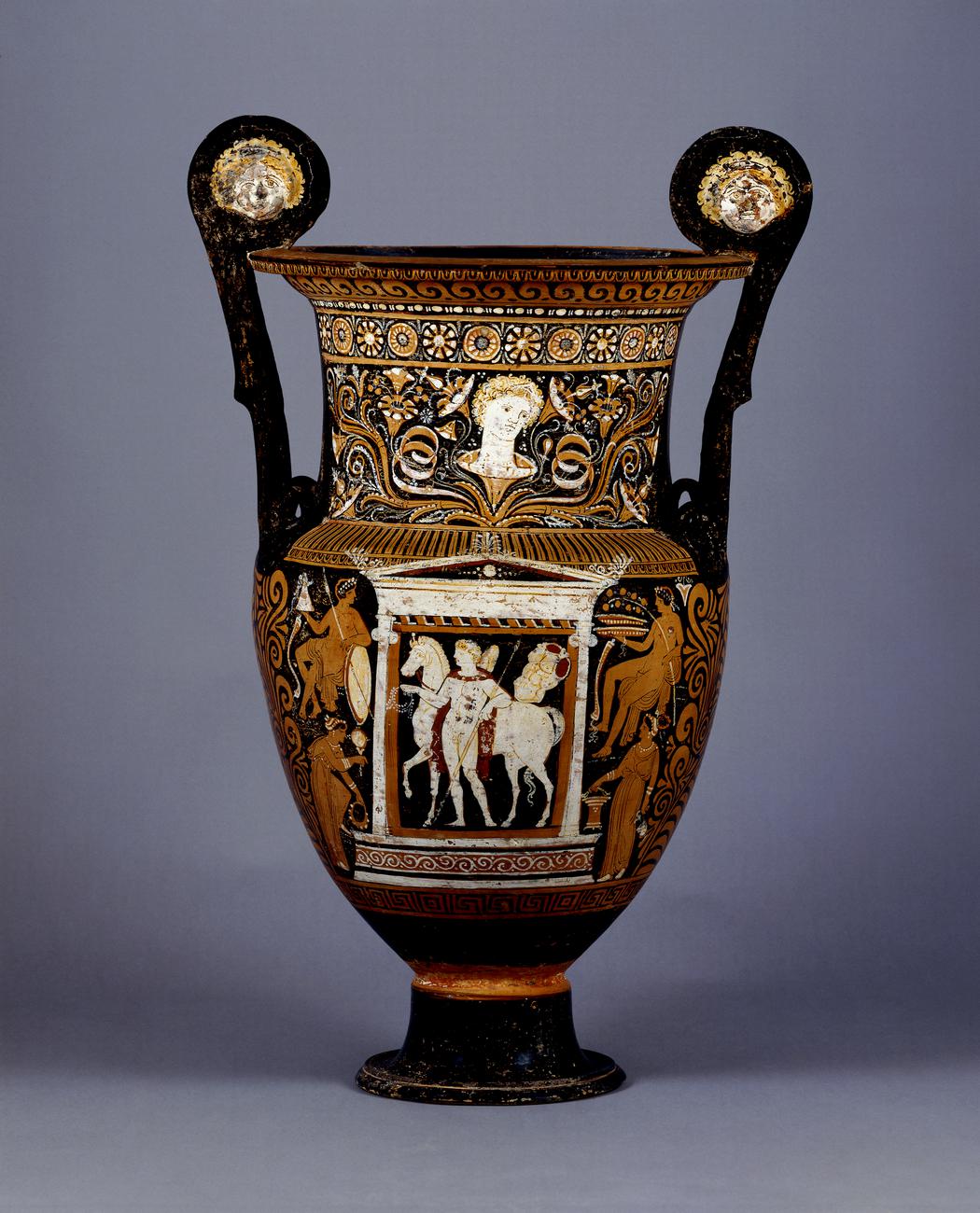
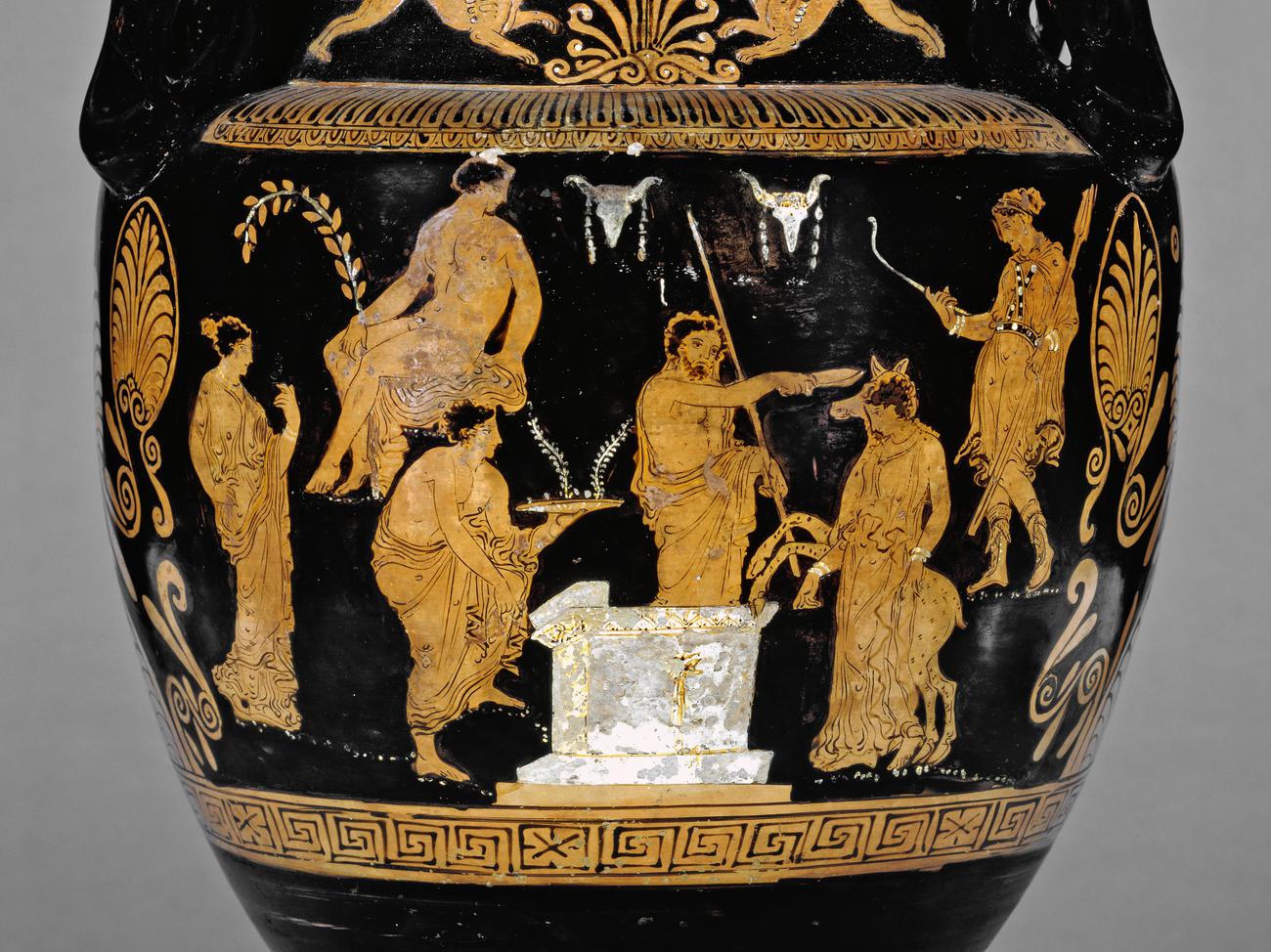
This is an Apulian volute krater, a large bowl used for mixing wine and water. Created around 370–350 BC in southern Italy, it’s a stunning example of red-figured pottery. The vase is painted with intricate black and white decorations on a red background. Along the rim, you’ll notice patterns like ivy wreaths and wave designs, while below the handles, swan heads and Gorgoneia add dramatic flair.
The central scene shows a moment from Greek myth: the near-sacrifice of Iphigeneia. You’ll see Agamemnon, holding a knife, preparing to kill his daughter as a sacrifice to the goddess Artemis. A deer appears behind her—an unexpected twist, as Artemis saves her at the last minute. The scene is layered with divine and human figures, including the goddess Artemis and the god Apollo, offering a complex visual narrative.
Rich in classical mythology and funerary symbolism, the krater is a rare and beautifully preserved artifact, linking myth with the themes of death and renewal.
See it in person
Apulian volute krater is on display in Room 73 at the British Museum on Great Russell Street, Bloomsbury, London — free to enter. Choose British Museum on audioguide.london and take a photo of it to hear this free audio guide in six languages — no app download needed.
New, in beta. British Museum support has just launched and is still improving: over 1,000 objects so far, with more added all the time.