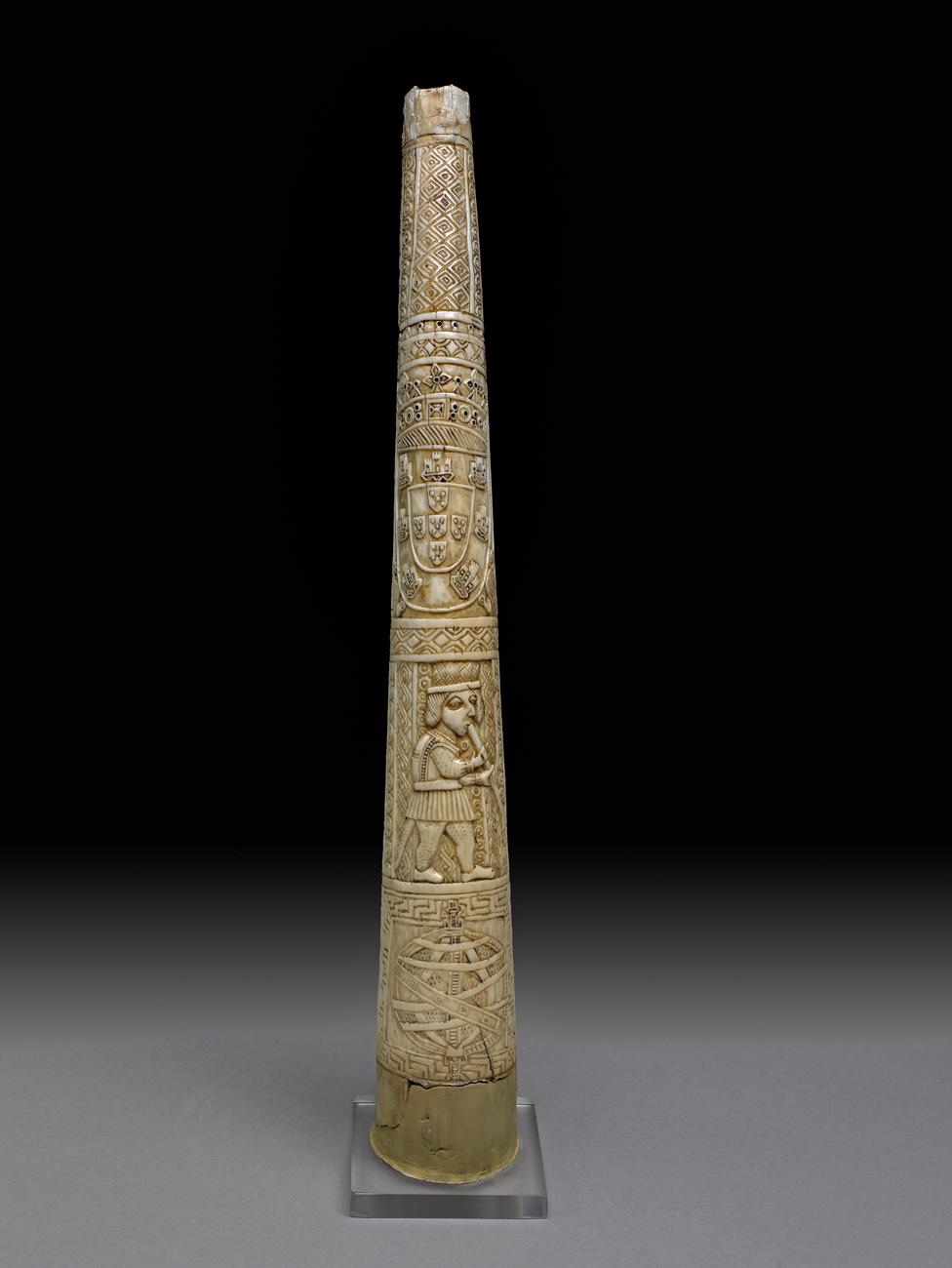
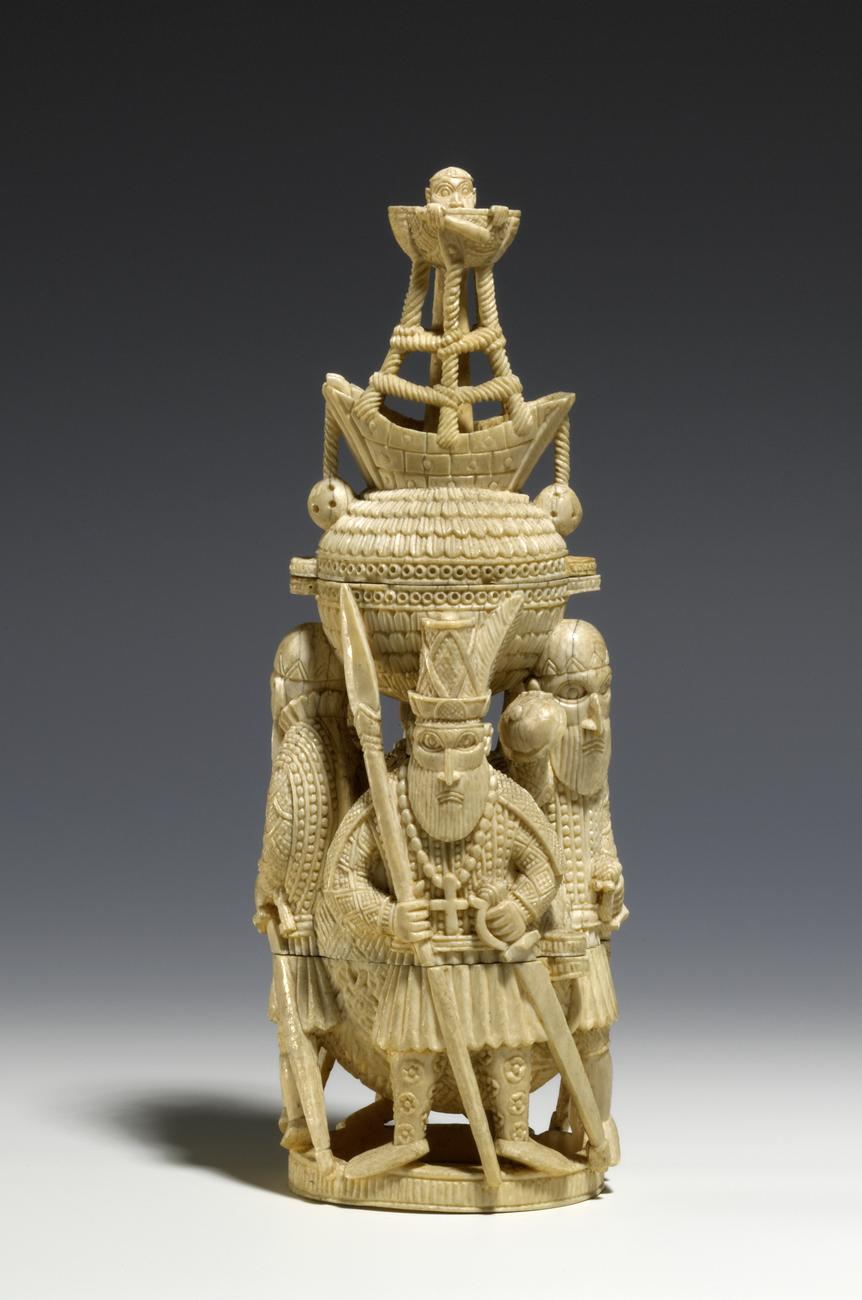
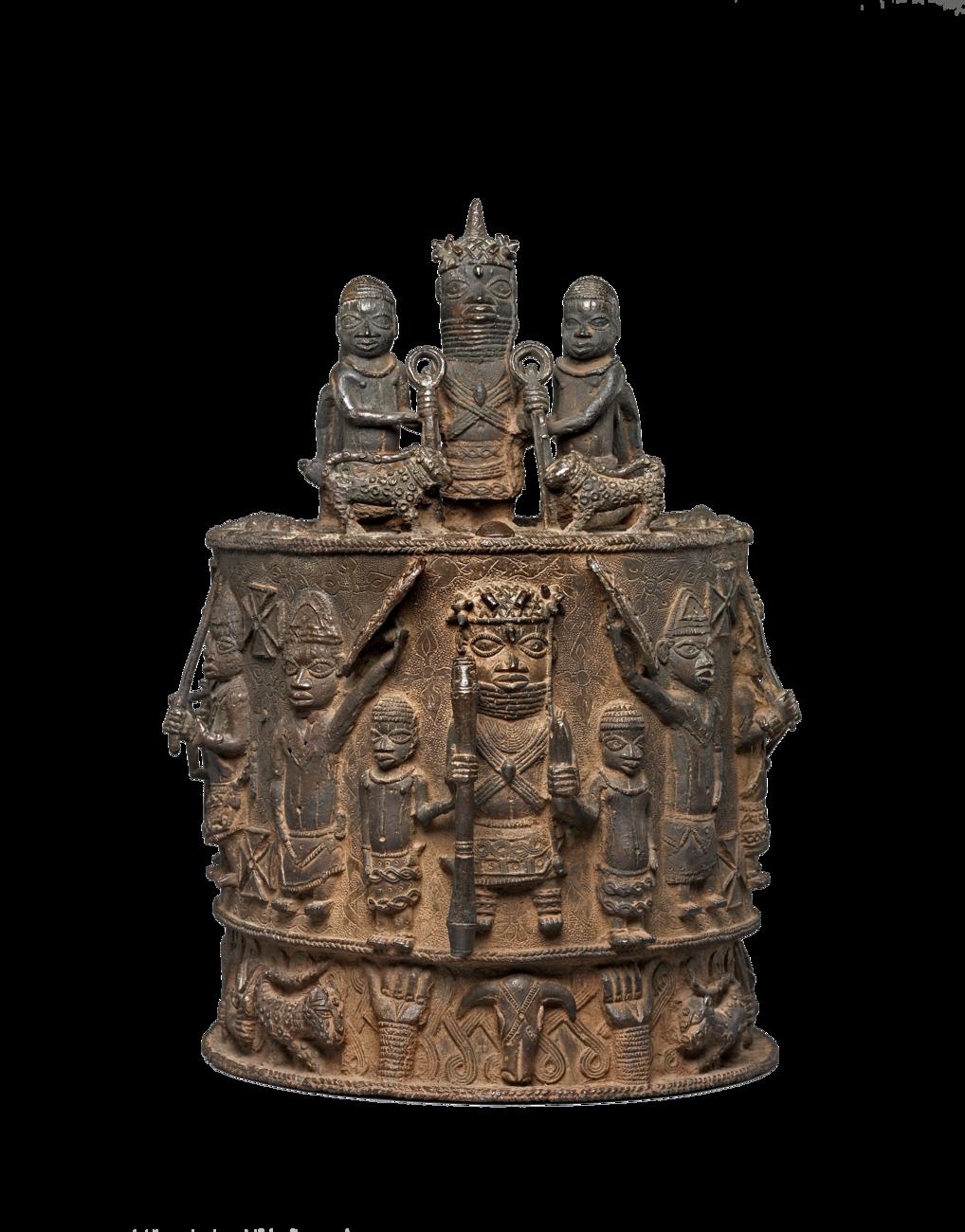
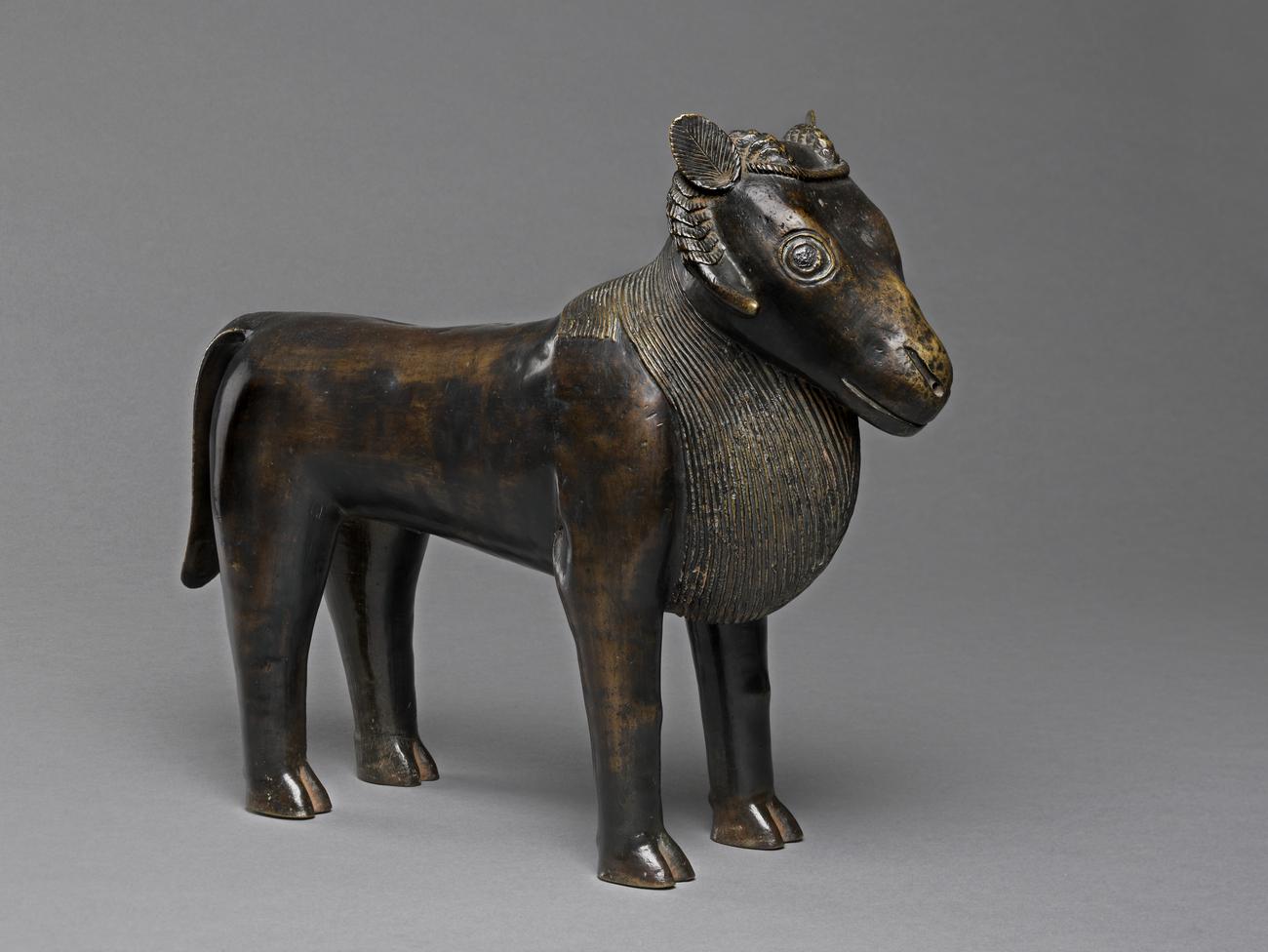
Afro-Portuguese Ivories: salt-cellar
- Gallery: Room 25
- Culture: Benin City
- Made in: Benin City (?)
- Date: 1525-1600
- Object type: salt-cellar, lid
- Materials: ivory
- Museum number: Af1856,0623.162.a-c
- Museum: The British Museum
- Collection record: British Museum website
- Image © The Trustees of the British Museum, shared under a CC BY-NC-SA 4.0 licence.
Listen to the free audio guide
In the museum now? Point your phone at the next object and hear its guide.
About this object
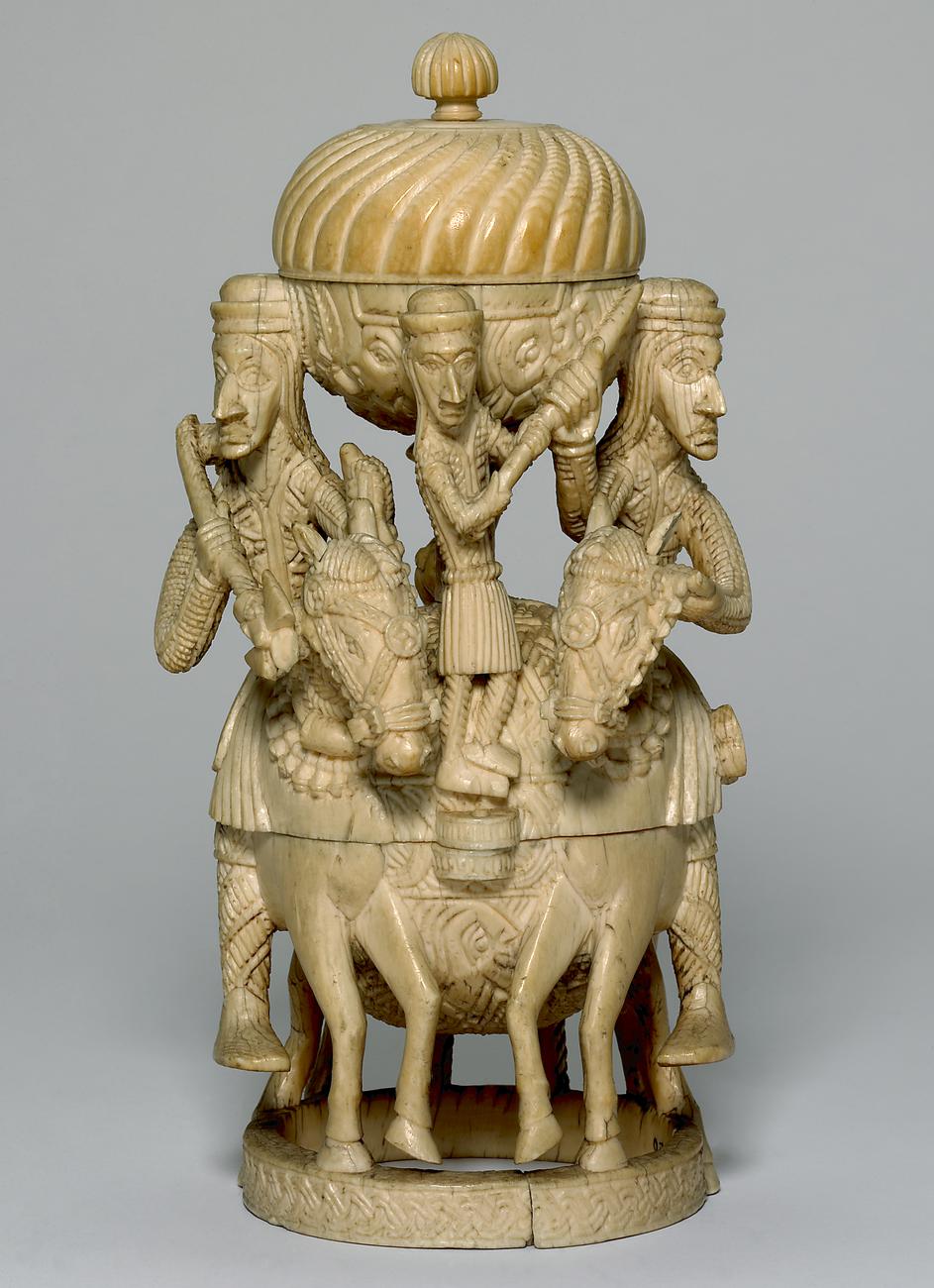
This is the "Afro-Portuguese Ivories: salt-cellar," a striking object made from carved ivory. In your view are three connected sections—an elegant base, a middle part, and a replacement lid. Two Portuguese figures ride horseback in lively poses, shown with clean-shaven faces, angular noses, and distinctive costumes. One holds a sword, the other a battle-axe. Between them stands a smaller figure dressed in a similar style. At the back stands a nude angel, posed in motion and facing away from the viewer.
The design suggests an Edo origin from Benin City. The carving includes fine details like pleated clothes and decorated stockings. The piece reflects cultural exchanges between Africa and Europe during the 16th century. While the original lid has been replaced, it still adds a decorative flair with radiating patterns.
This object and a similar one in Scotland may have come from the same skilled hand. It was purchased in 1856 from Rev. William Maskell, who collected a variety of ivory works.
See it in person
Afro-Portuguese Ivories: salt-cellar is on display in Room 25 at the British Museum on Great Russell Street, Bloomsbury, London — free to enter. Choose British Museum on audioguide.london and take a photo of it to hear this free audio guide in six languages — no app download needed.
New, in beta. British Museum support has just launched and is still improving: over 1,000 objects so far, with more added all the time.