Aquamanile
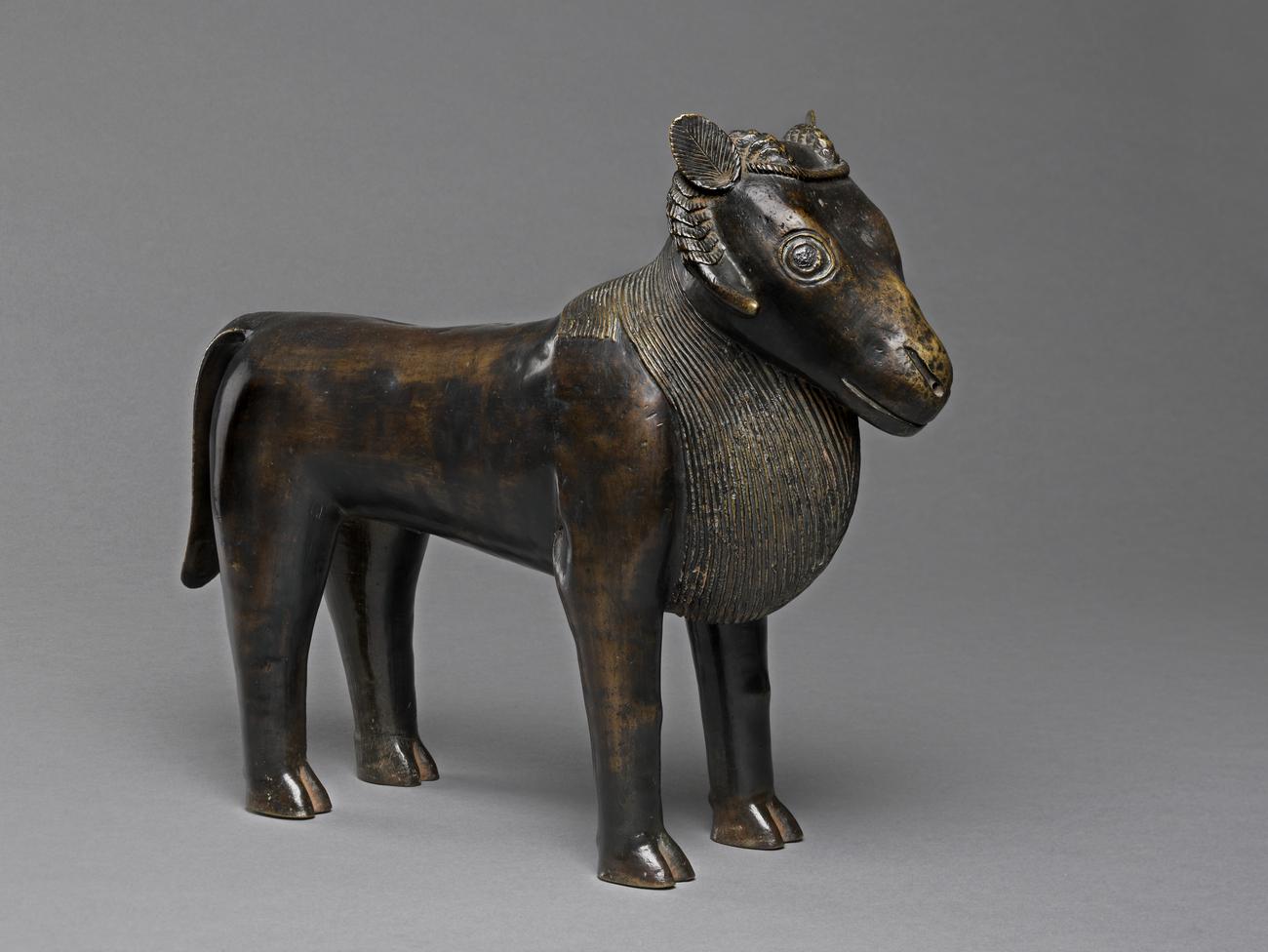
- Gallery: Room 25
- Made in: Benin City
- Date: 16thC-17thC (?)
- Object type: aquamanile
- Materials: brass
- Museum number: Af1954,23.294
- Museum: The British Museum
- Collection record: British Museum website
- Image © The Trustees of the British Museum, shared under a CC BY-NC-SA 4.0 licence.
Listen to the free audio guide
In the museum now? Point your phone at the next object and hear its guide.
About this object
This is an aquamanile in the form of a standing ram, created in Benin City during the 16th or 17th century. The ram stands alert, with upright ears, curving horns, and stylized fur across its chest. Its split hooves are clearly defined, and its nostrils are pierced—an unusual and striking detail. Between the horns is a twisted rope design, adding a decorative and symbolic element.
Made using the lost-wax casting technique in brass, the body is hollow with a small opening on the head for pouring. The original lid is missing. These rams were likely used in ceremonial contexts, possibly during hand-washing rituals connected to the Ague ceremony at the royal palace.
This piece was acquired in 1931 and added to the museum collection in 1954. Its design reflects the high level of artistry and cultural significance of Edo metalwork.
See it in person
Aquamanile is on display in Room 25 at the British Museum on Great Russell Street, Bloomsbury, London — free to enter. Choose British Museum on audioguide.london and take a photo of it to hear this free audio guide in six languages — no app download needed.
New, in beta. British Museum support has just launched and is still improving: over 1,000 objects so far, with more added all the time.