Unique Forms of Continuity in Space
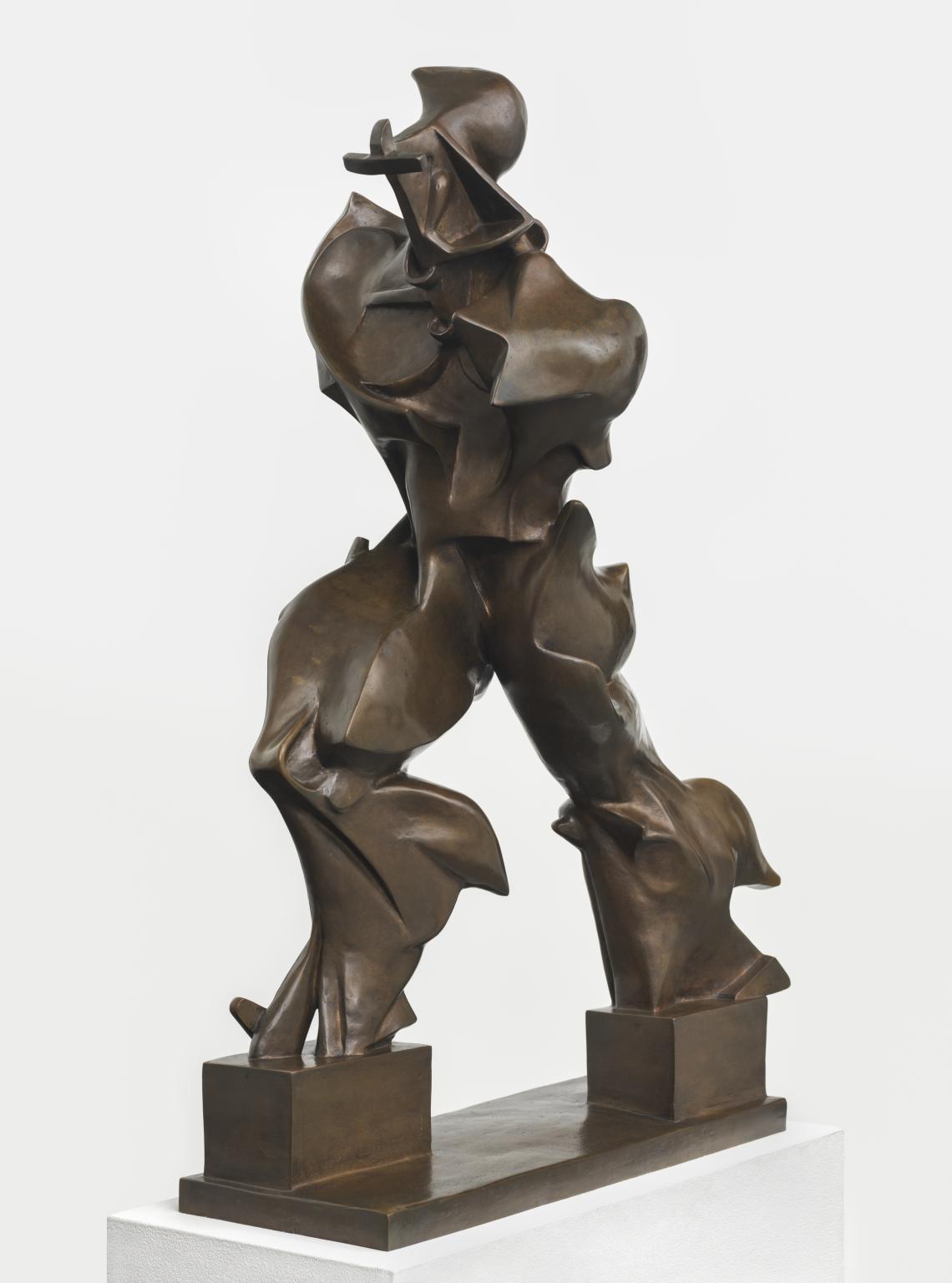
- Artist: Umberto Boccioni
- Date: 1913, cast 1972
- Medium: Bronze
- Dimensions: object: 1175 x 876 x 368 mm
- Museum: Tate Modern
- Collection record: Tate Modern website
Listen to the free audio guide
About this artwork
This is the “Unique Forms of Continuity in Space” by Umberto Boccioni. Created in 1913, it’s a striking bronze cast that weighs about 55 kg, and it was first made in Italy during the rise of the Futurist movement. Boccioni was fascinated by the energy of new machines – cars, electricity – and he wanted to capture that same kinetic force in a human figure. The sculpture shows a lone body in mid‑stride, its limbs twisted and elongated as if the figure is being sliced by speed itself. The dynamic deformation turns the human form into a machine‑like silhouette, echoing the futurist idea of a mechanised body and even Nietzsche’s concept of the “superman.” The piece is a powerful visual shorthand for the early 20th‑century obsession with progress, motion, and the new machine age.
See it in person
Unique Forms of Continuity in Space is in the collection of Tate Modern on Bankside, London — free to enter. Point your phone at any artwork there and audioguide.london plays a free audio guide in six languages — no app download needed.