Turning Road
- Artist: Paul Cézanne
- Date: c. 1905
- Medium: oil on canvas
- Museum: The Courtauld Gallery
- Collection record: The Courtauld Gallery website
Listen to the free audio guide
About this artwork
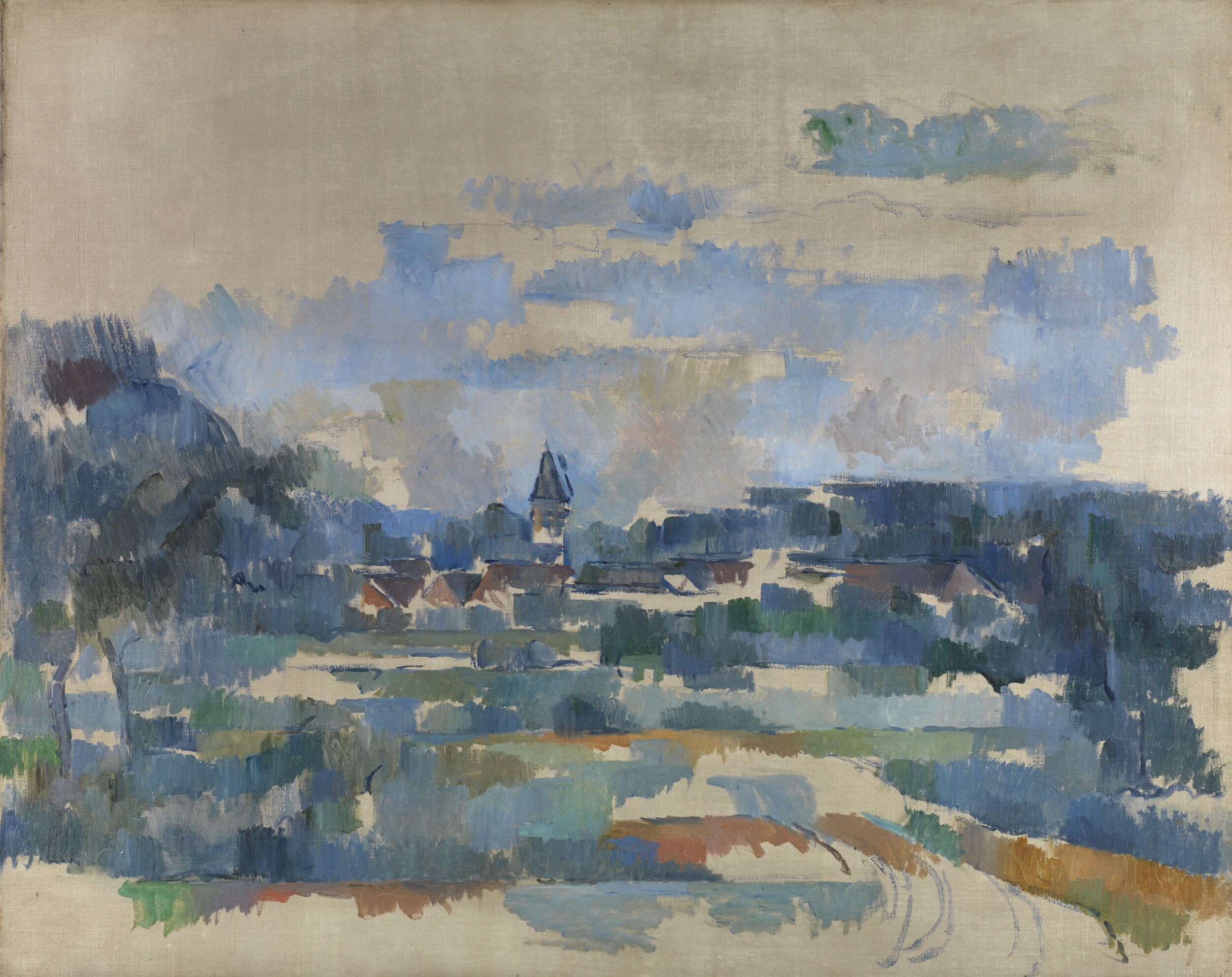
This is the Turning Road by Paul Cézanne. Look at how the canvas spreads out – a wide, almost monumental landscape painted in oil around 1905. Cézanne captures a village from a high viewpoint, the roofs and a church steeple framing the horizon. The fields and trees create a repetitive, almost architectural pattern that guides the eye along the winding road. That road doesn’t end; it leads us into the distance, inviting a sense of journey and depth.
Notice the unfinished, almost raw brushwork. Cézanne didn’t paint the whole surface in a smooth finish; he purposely left areas raw to emphasize the “abstract passages” he spoke about that prevent him from covering the canvas entirely. This technique breaks away from academic conventions, showing how he used color to render light in a way that feels immediate yet conceptual. It’s a key reason he’s called the father of modernism – he was moving beyond realistic representation to a new visual language that later artists would follow.
The composition is balanced yet dynamic. The road’s curvature pulls you forward, while the village’s steady rooftops provide a grounding counterpoint. Cézanne’s choice of palette – muted earth tones and subtle blues – lets light interact with form in a subtle, almost geometric way. This piece feels like a bridge between impressionism and the modernist experiments that followed, a testament to Cézanne’s restless exploration of structure and perception.
See it in person
Turning Road hangs in The Courtauld Gallery at Somerset House, London. Point your phone at any artwork there and audioguide.london plays a free audio guide in six languages — no app download needed.