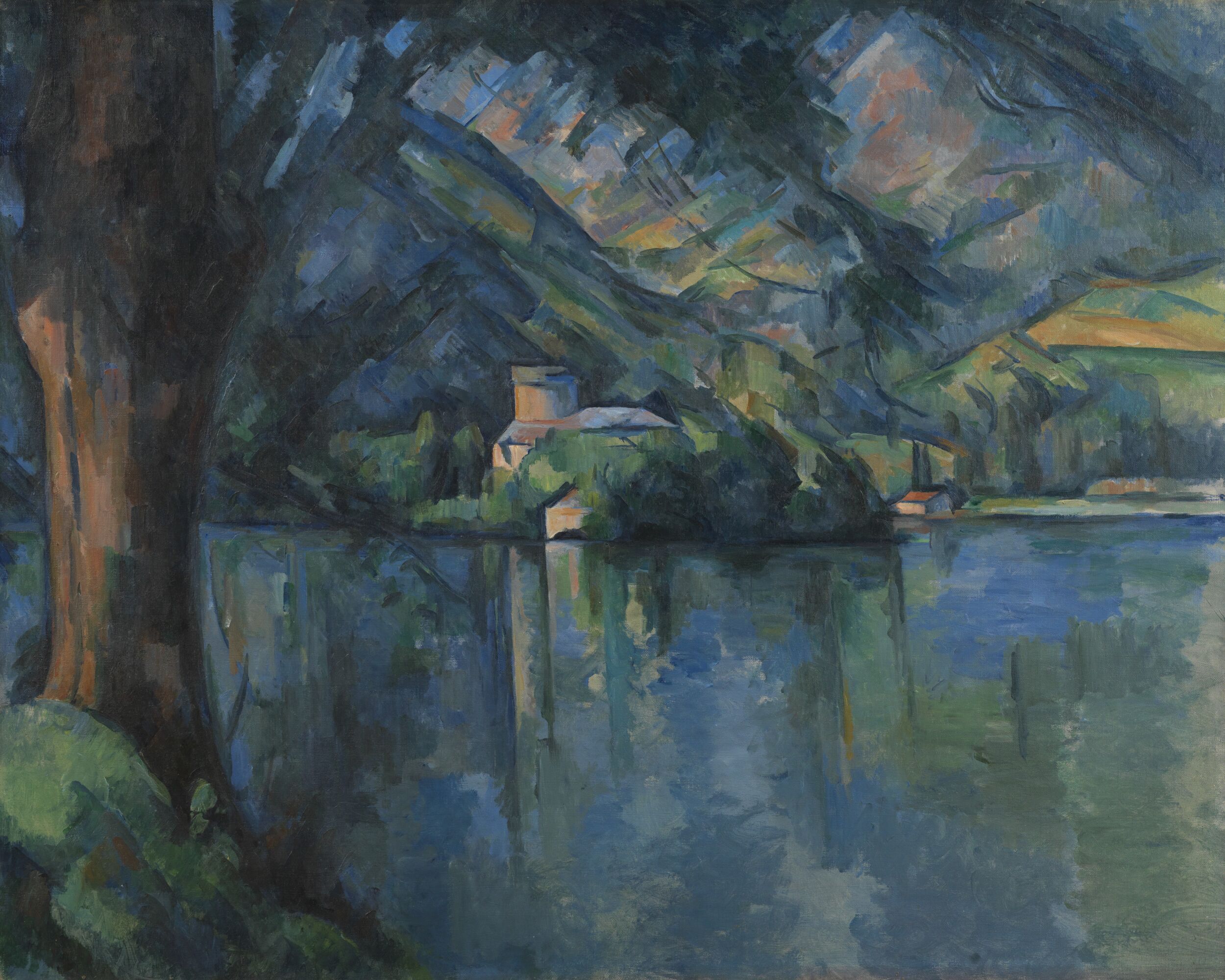
L'Etang des Soeurs, Osny (The Sisters' Pond, Osny)
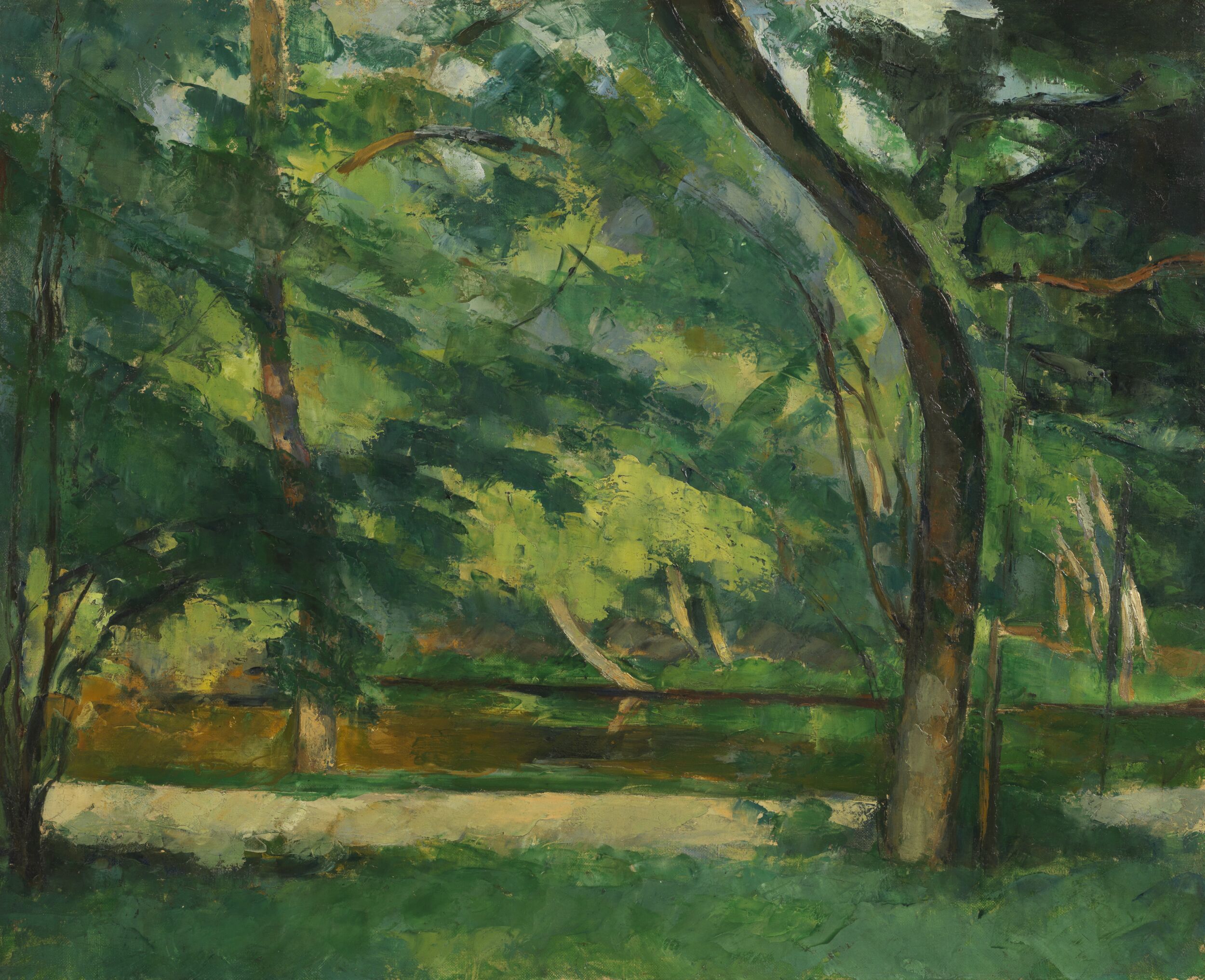
- Artist: Paul Cézanne
- Date: c. 1875
- Medium: oil on canvas
- Museum: The Courtauld Gallery
- Collection record: The Courtauld Gallery website
Listen to the free audio guide
About this artwork
This is “The Sisters' Pond, Osny” by Paul Cézanne. Painted around 1875, it’s an oil on canvas that captures a quiet woodland clearing just outside Paris, where Cézanne spent time with his friend Camille Pissarro. What’s striking is the way Cézanne approached the surface. Instead of the delicate brushwork most associate with him, he worked in thick, dense layers with a palette knife – an unconventional choice that gives the painting a sculptural texture. The knife leaves a diagonal sweep of colour, producing a patchwork that feels alive and dynamic. A broad shaft of light breaks through the canopy, guiding the eye from the shadowed foreground across the pond to the opposite bank, and hinting at the light‑shadow dance of the surrounding trees. The overall effect is one of quiet intensity; the rough, impasto surface almost makes the water and foliage seem to rise off the canvas. This early work foreshadows Cézanne’s later explorations of form and color, and remains a powerful example of his innovative use of texture and light.
See it in person
L'Etang des Soeurs, Osny (The Sisters' Pond, Osny) hangs in The Courtauld Gallery at Somerset House, London. Point your phone at any artwork there and audioguide.london plays a free audio guide in six languages — no app download needed.