Lac d'Annecy (Lake Annecy)
- Artist: Paul Cézanne
- Date: 1896
- Medium: oil on canvas
- Museum: The Courtauld Gallery
- Collection record: The Courtauld Gallery website
Listen to the free audio guide
About this artwork
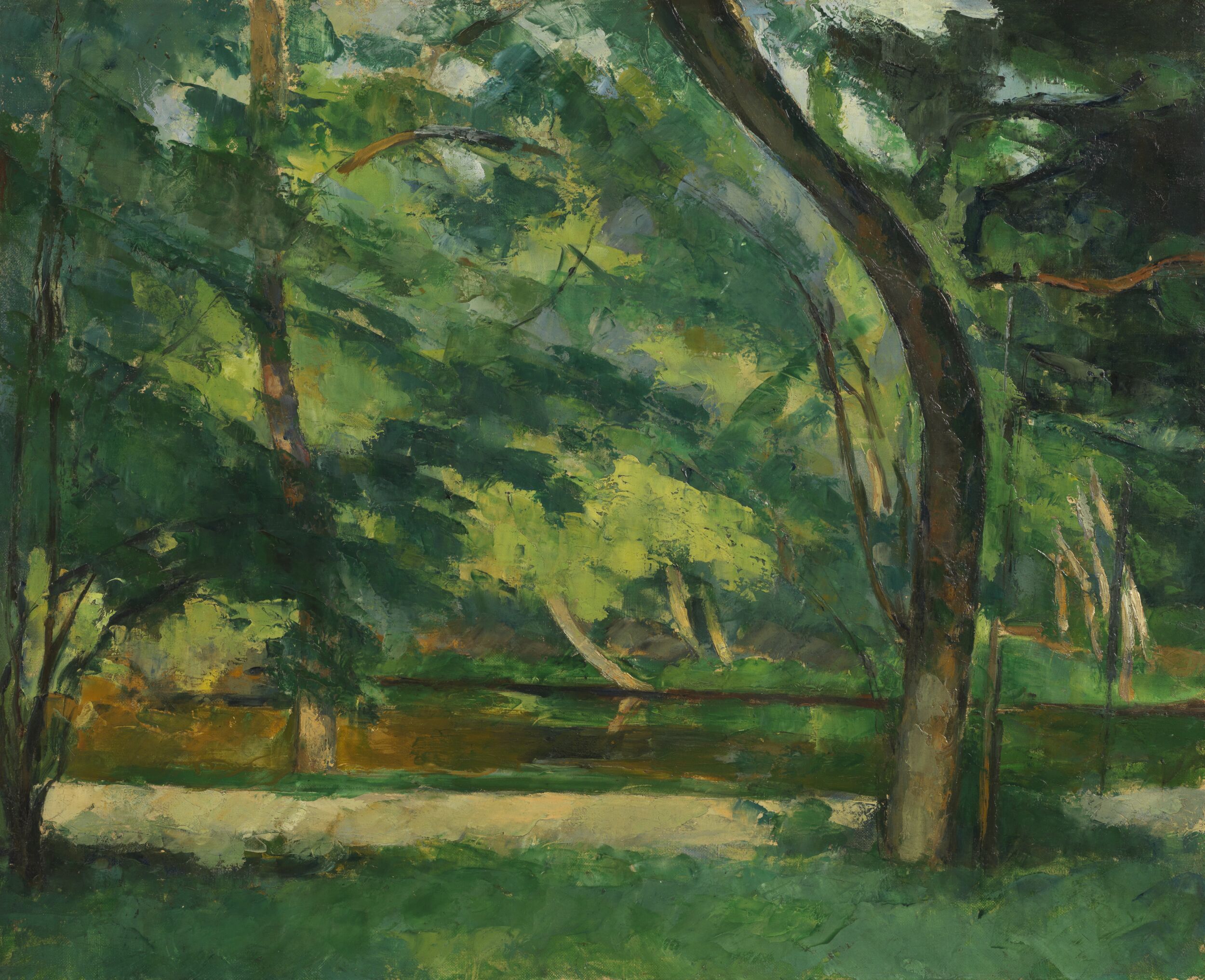
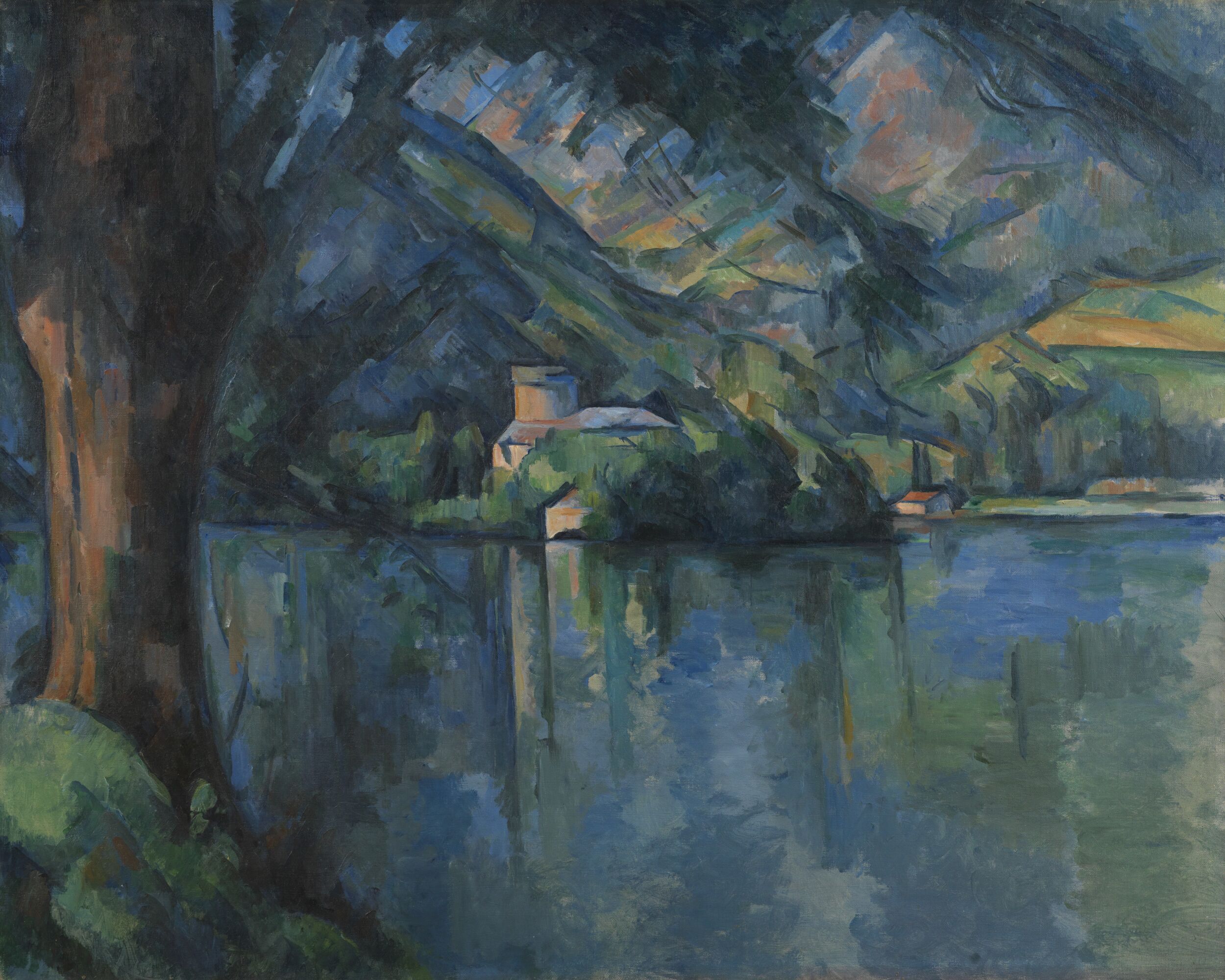
This is the “Lac d'Annecy (Lake Annecy)” by Paul Cézanne. In 1896 Cézanne took a short holiday with his wife and son into the French Alps, and this was the sole canvas he produced on that trip. He found the alpine scenery “overly charming,” a stark contrast to the rugged, earthy landscapes of his native Provence, but the tension between these worlds gave rise to one of his most daring works.
The composition is a masterclass in Cézanne’s exploration of form and colour. He reduces the distant castle to a rigid, geometric shape, almost a square or rectangle, cutting it off from the rest of the landscape. The mountain slopes are rendered with stark, contrasting blocks of colour that capture the play of light and shadow, a technique that would later influence the development of modern art.
The canvas is an oil on canvas, typical of Cézanne’s late style, where the brushwork becomes looser yet remains precise in its structural intent. The lake itself reflects a muted palette that balances the bright blues of the sky and the dark greens of the surrounding trees. It’s a moment where Cézanne’s fascination with geometry meets the natural world’s fluidity, resulting in a painting that feels both grounded and almost abstract.
See it in person
Lac d'Annecy (Lake Annecy) hangs in The Courtauld Gallery at Somerset House, London. Point your phone at any artwork there and audioguide.london plays a free audio guide in six languages — no app download needed.