The Turquoise Mosaics: sacrificial knife
- Gallery: Room 27
- Culture: Aztec; Mixtec
- Made in: Mexico
- Date: 1400-1521
- Object type: sacrificial knife, mosaic
- Materials: malachite; flint; cedrela wood; turquoise; conch shell; oyster shell; maguey fibre; resin; fibre; wood
- Museum number: Am,St.399
- Museum: The British Museum
- Collection record: British Museum website
- Image © The Trustees of the British Museum, shared under a CC BY-NC-SA 4.0 licence.
Listen to the free audio guide
About this object
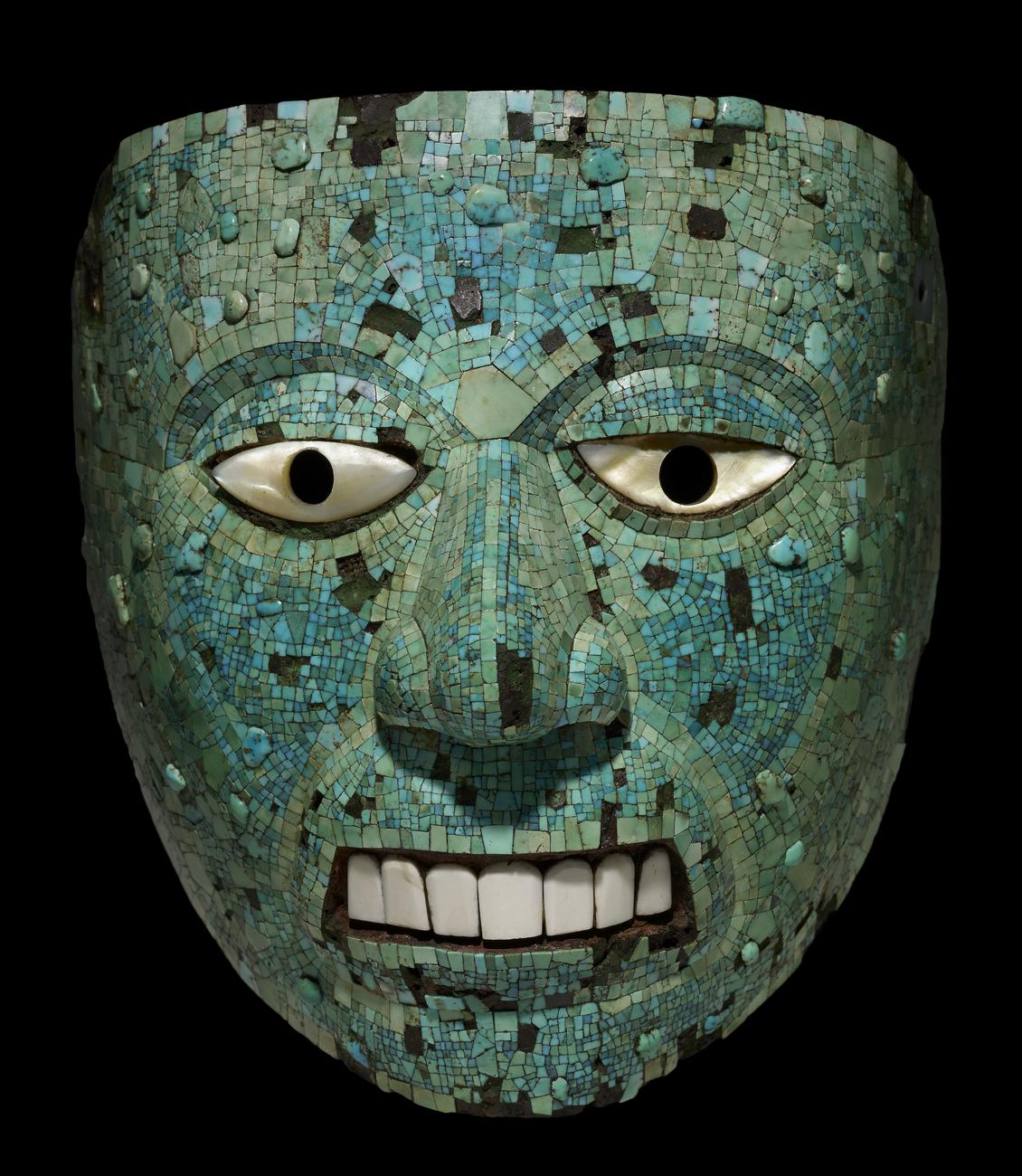
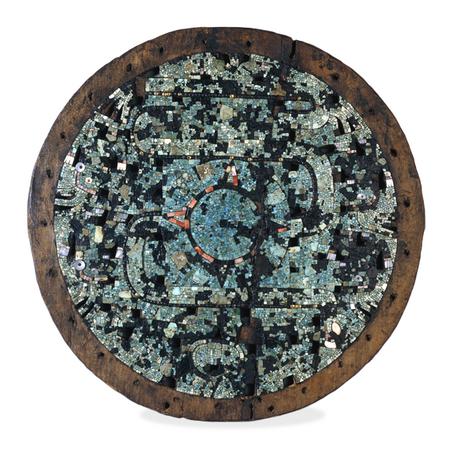
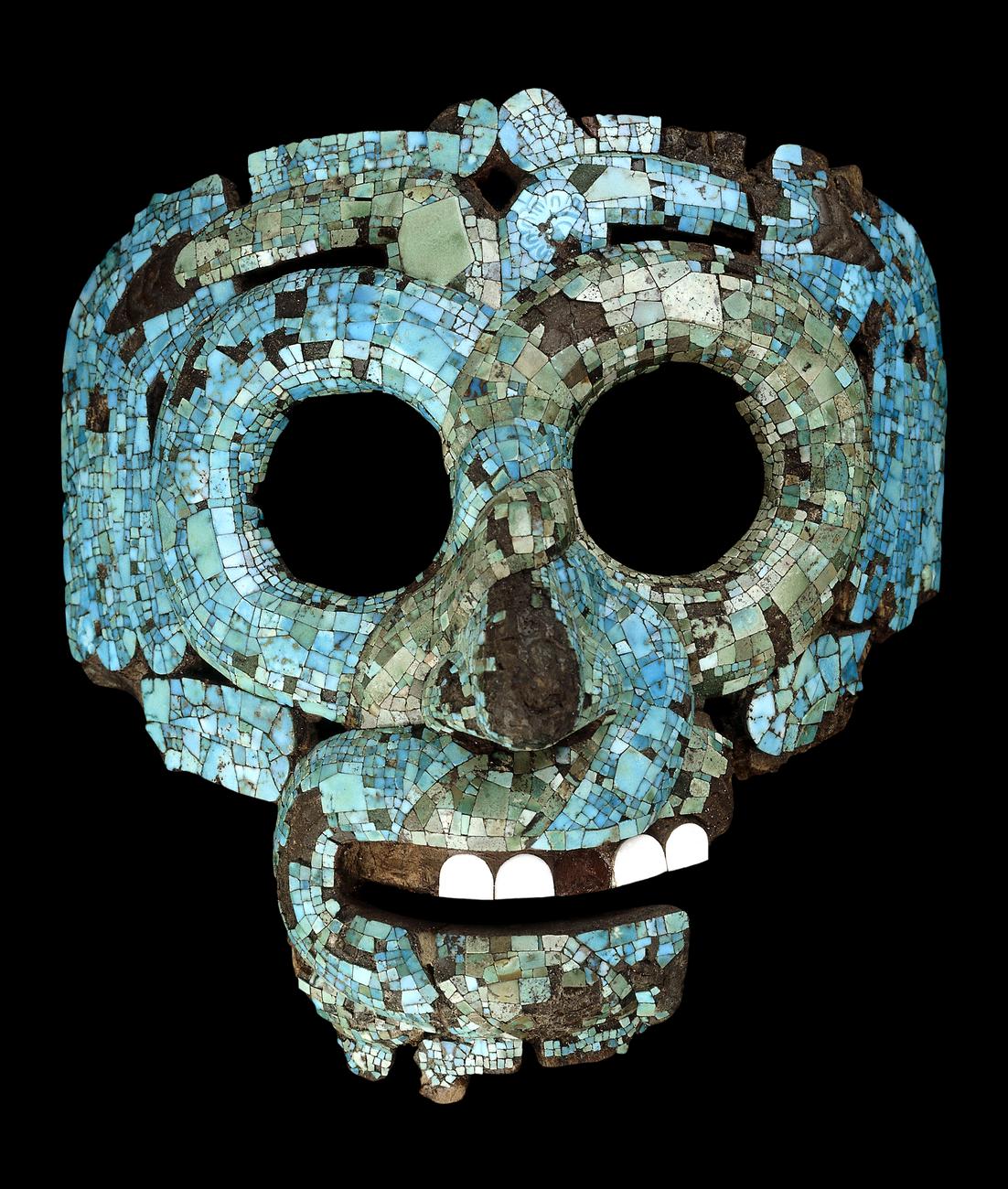
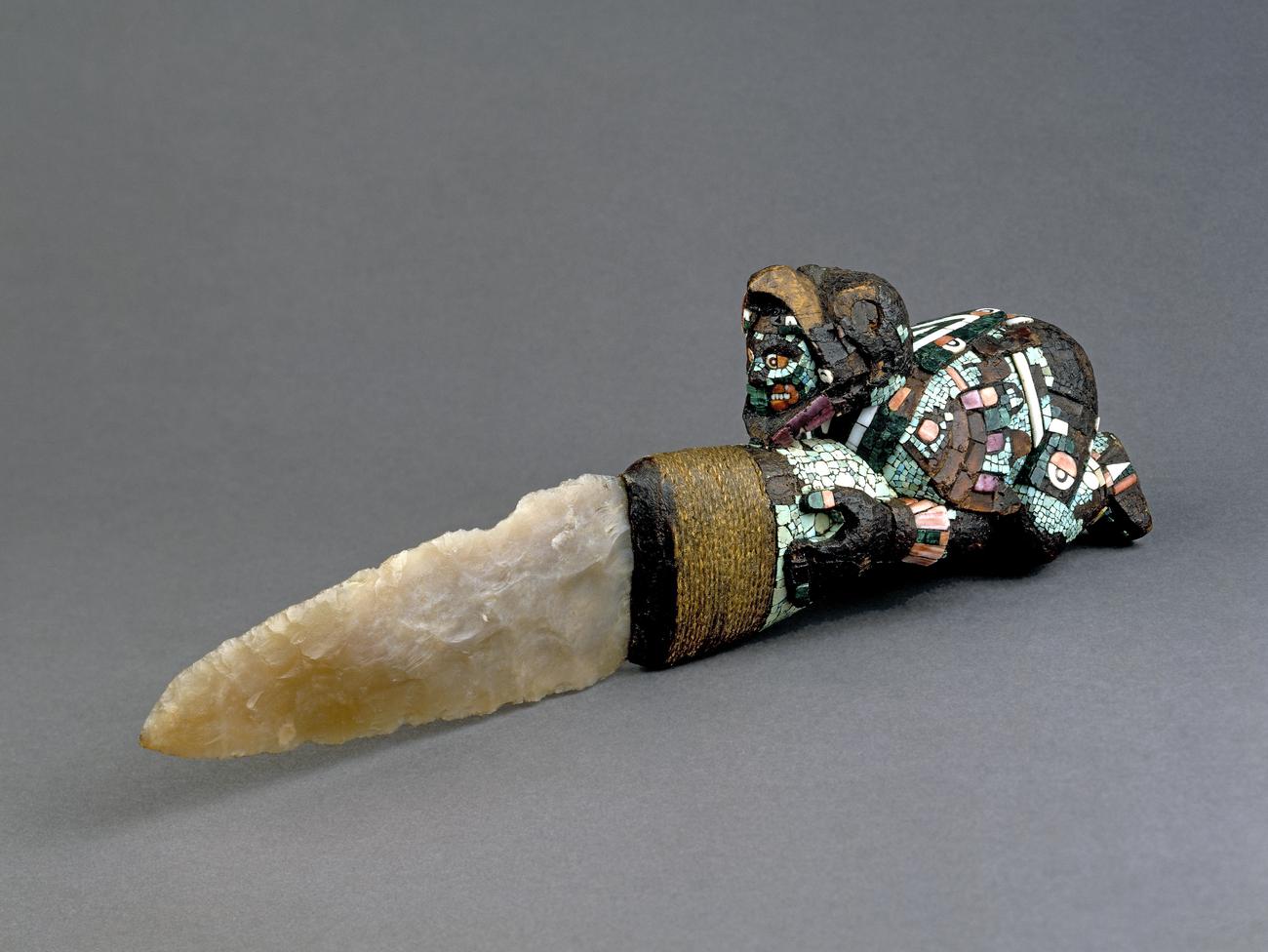
Before you is "The Turquoise Mosaics," a sacrificial knife shaped like a crouching eagle warrior. This object was crafted by the Aztec culture in Mexico, around the years 1400 to 1521. The handle is made from cedro wood and is covered with an intricate mosaic of turquoise, malachite, and shells. You'll notice inlays of white conch, thorny oyster, and mother-of-pearl, held in place with pine resin, some of it also used decoratively. The blade is made from flint, attached using maguey fiber bindings wrapped in Protium resin. This kind of eagle form was worn by elite warriors, and in some cases, items like this were offered to the rain god Tlaloc. The materials used were both beautiful and symbolic, showing the high status of the wearer and the sacred importance of the object.
See it in person
The Turquoise Mosaics: sacrificial knife is on display in Room 27 at the British Museum on Great Russell Street, Bloomsbury, London — free to enter. Choose British Museum on audioguide.london and take a photo of it to hear this free audio guide in six languages — no app download needed.
New, in beta. British Museum support has just launched and is still improving: over 1,000 objects so far, with more added all the time.