The Turquoise Mosaics: mask
- Gallery: Room 27
- Culture: Aztec; Mixtec
- Made in: Mexico
- Date: 1400-1521
- Object type: mask, mosaic
- Materials: turquoise; mother-of-pearl; cedrela wood; conch shell; cinnabar; pine resin
- Museum number: Am,St.400
- Museum: The British Museum
- Collection record: British Museum website
- Image © The Trustees of the British Museum, shared under a CC BY-NC-SA 4.0 licence.
Listen to the free audio guide
About this object
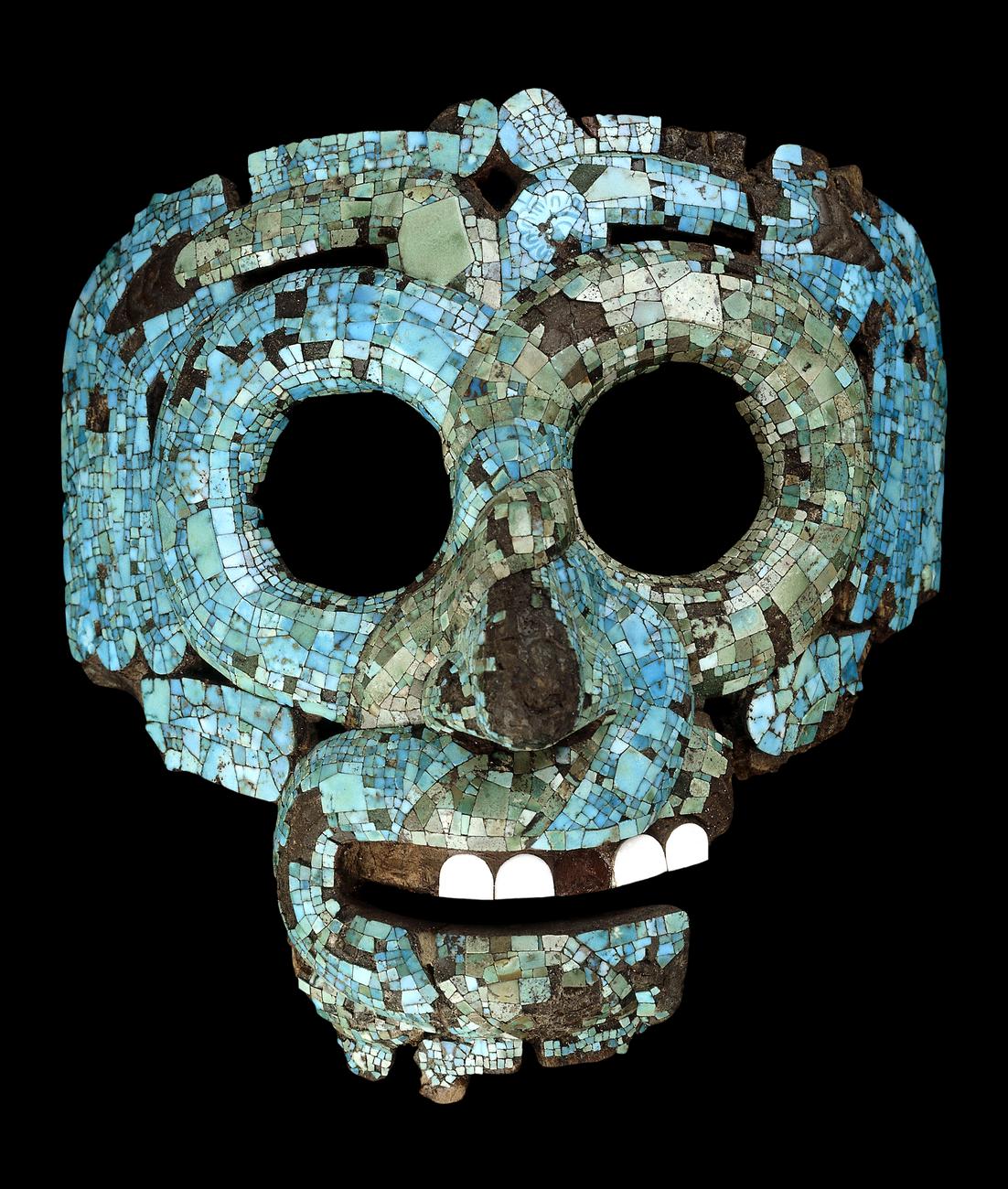
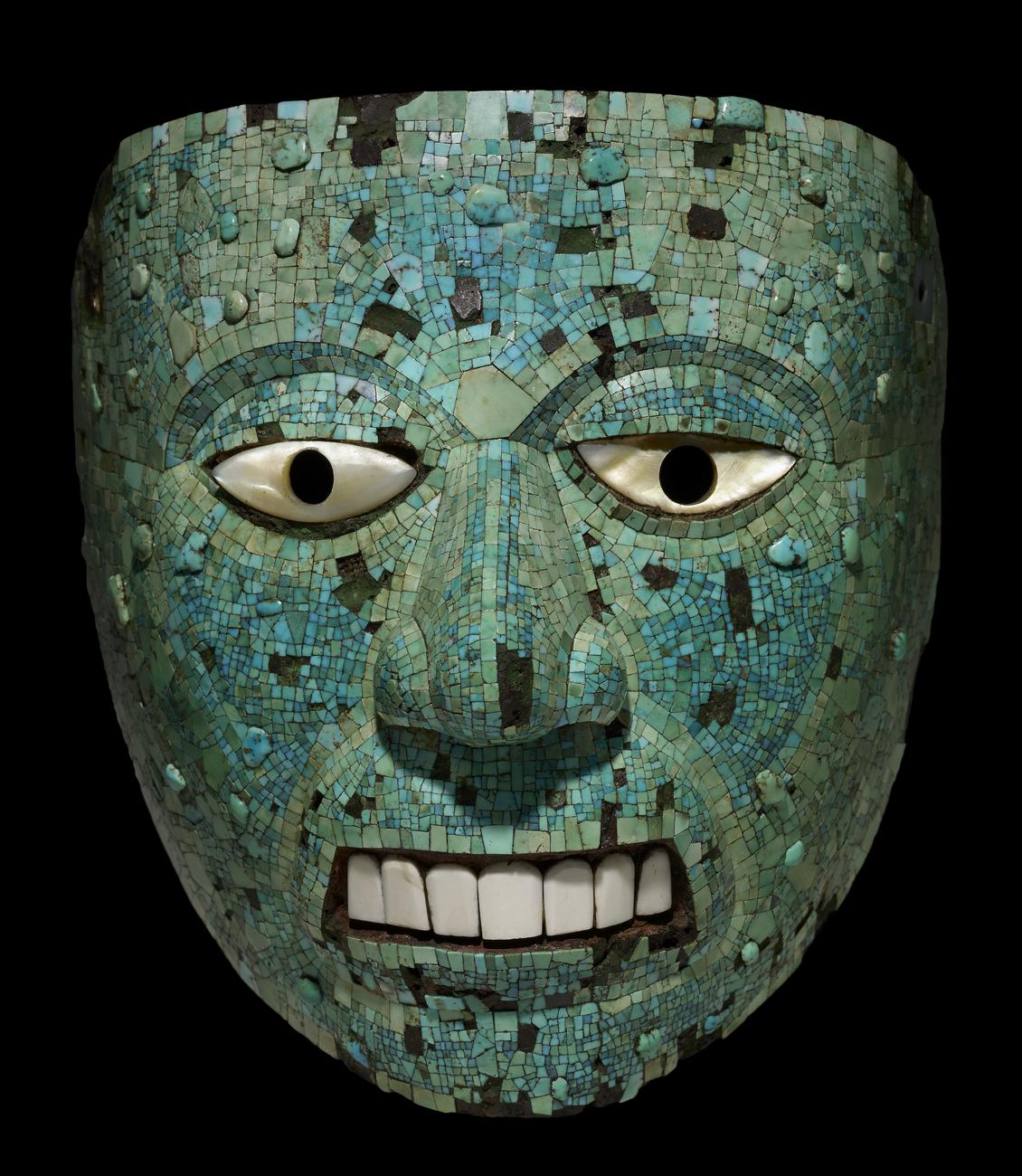
Before you is a striking turquoise mask, a remarkable object from the Aztec and Mixtec cultures of Mexico, dating to between 1400 and 1521. The mask is carved from cedro wood and encrusted with turquoise, mother-of-pearl, and conch shell.
Take a close look at the eyes—large and pierced, with mother-of-pearl inlays that glimmer with a natural iridescence. The mask’s face is covered in intricate turquoise mosaic, with raised cabochons forming small, textured protuberances that may have been symbolic. The lips are carved with care, and the teeth are made from delicate conch shell. Some teeth are modern replacements.
Historians believe this mask may represent a deity, possibly Xiuhtecuhtli, known as the Turquoise Lord, or Nanahuatzh, a god with boils associated with the sun. The pierced holes at the temples suggest the mask could be worn or attached to an object.
The turquoise mosaic was painstakingly applied to the carved wood base, with gold foil gilding on parts of the lid. This mask is part of a small collection of turquoise objects acquired by the museum in the mid-1800s.
See it in person
The Turquoise Mosaics: mask is on display in Room 27 at the British Museum on Great Russell Street, Bloomsbury, London — free to enter. Choose British Museum on audioguide.london and take a photo of it to hear this free audio guide in six languages — no app download needed.
New, in beta. British Museum support has just launched and is still improving: over 1,000 objects so far, with more added all the time.