The Townley Caryatid
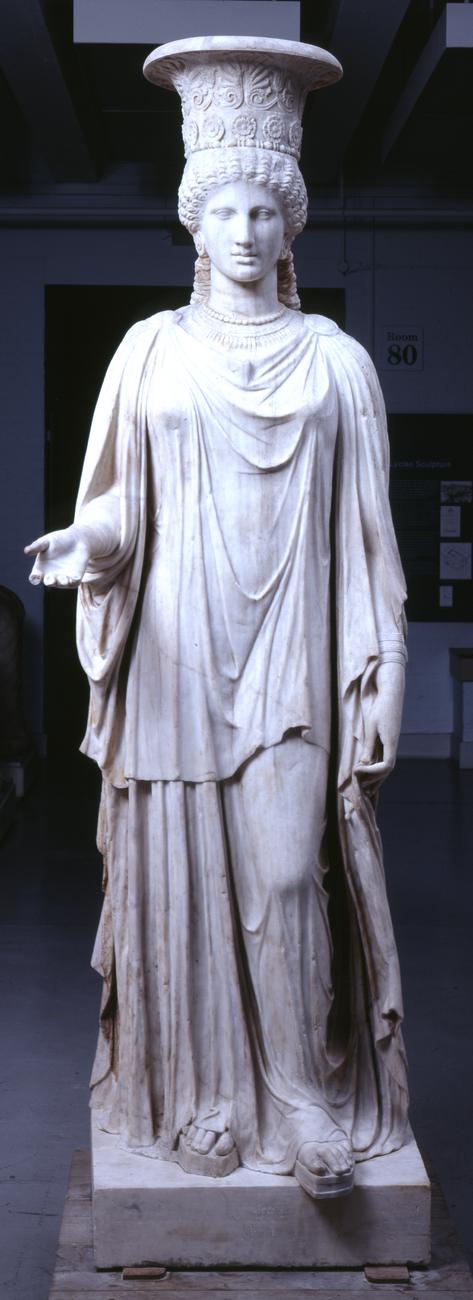
- Culture: Roman
- Date: 140-160 (circa)
- Object type: caryatid
- Materials: marble
- Museum number: 1805,0703.44
- Museum: The British Museum
- Collection record: British Museum website
- Image © The Trustees of the British Museum, shared under a CC BY-NC-SA 4.0 licence.
Listen to the free audio guide
About this object
Before you is "The Townley Caryatid," a striking figure carved from Pentelic marble. You’ll notice the elegant posture of the draped female figure, suggesting she once stood in a sacred place. This caryatid—described as a woman dressed in a style suited for religious rites—was made during the Roman period, between 140 and 160 AD.
The statue likely came from a sanctuary, possibly dedicated to Demeter or another classical deity, located along the Via Appia near Rome. These caryatids were part of a group arranged to form a colonnade in a sanctuary, reflecting influences from 5th-century Athenian sculpture.
Purchased from the English collector Peregrine Edward Towneley, this piece reflects the 18th-century fascination with classical antiquities. Standing at 2.20 metres tall, it’s a grand reminder of how the Romans preserved and adapted ancient Greek artistic traditions.
See it in person
The Townley Caryatid is on display at the British Museum on Great Russell Street, Bloomsbury, London — free to enter. Choose British Museum on audioguide.london and take a photo of it to hear this free audio guide in six languages — no app download needed.
New, in beta. British Museum support has just launched and is still improving: over 1,000 objects so far, with more added all the time.