The Sculptor
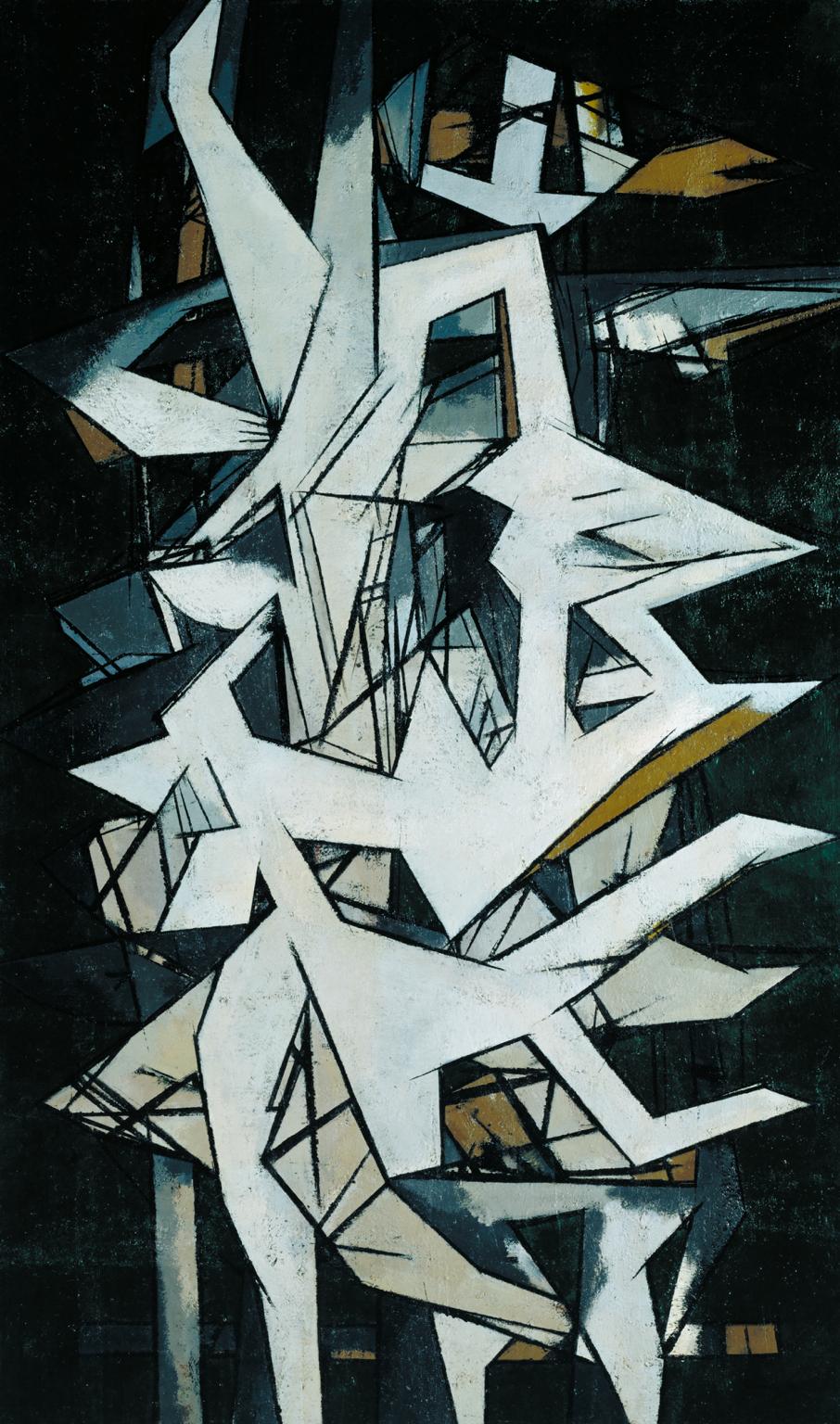
- Artist: William Gear
- Date: 1953
- Medium: Oil paint on canvas
- Dimensions: support: 1520 x 910 mm
- Museum: Tate Modern
- Collection record: Tate Modern website
Listen to the free audio guide
About this artwork
This is the painting “The Sculptor” by William Gear, created in 1953 with oil on canvas. Imagine a figure that looks almost like a stylised human: strong, strut‑like legs rise from the lower edge, while a jagged, insect‑like head juts out in the top right. Gear was sketching ideas for a sculpture at the same time, so the canvas feels like a bridge between painting and three‑dimensional form.
The work marks a sharp turn in Gear’s 1950s practice, adding angularity and a kind of kinetic tension that echoes the “geometry of fear” seen in post‑war British sculpture. Yet Gear himself dismissed the prevailing anxiety narrative, rejecting the “Zeitgeist and angst” rhetoric that critics were pouring over his work.
Here, as part of the “The Disappearing Figure: Art after Catastrophe” display, you can see how Gear’s abstraction balances raw, irregular shapes with a disciplined, almost architectural structure. The result is a piece that feels both unsettling and oddly hopeful, a snapshot of a Britain rebuilding itself and its artistic identity.
See it in person
The Sculptor is in the collection of Tate Modern on Bankside, London — free to enter. Point your phone at any artwork there and audioguide.london plays a free audio guide in six languages — no app download needed.