The Haystacks
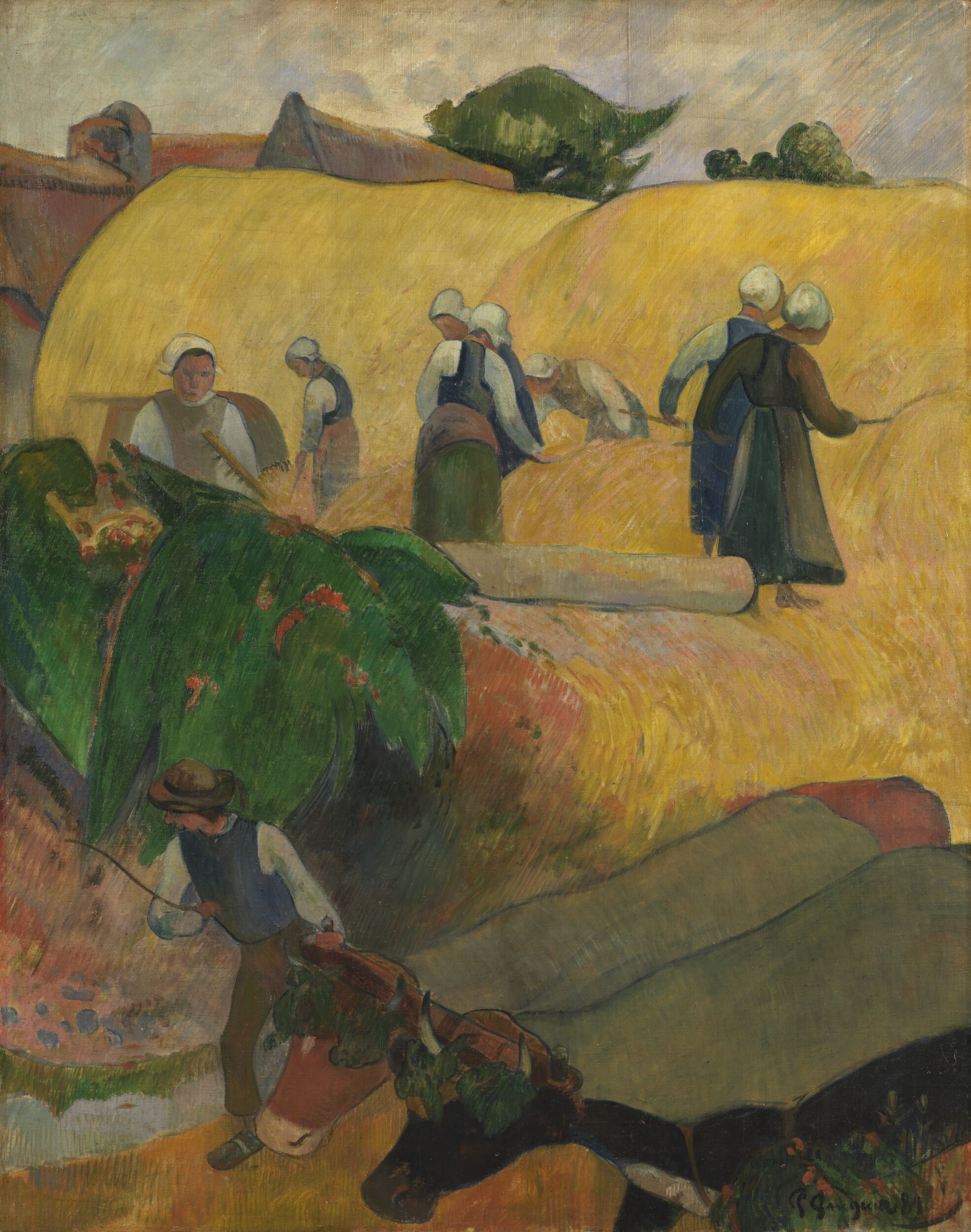
- Artist: Paul Gauguin
- Date: 1889
- Medium: oil on canvas
- Museum: The Courtauld Gallery
- Collection record: The Courtauld Gallery website
Listen to the free audio guide
About this artwork
This is “The Haystacks” by Paul Gauguin, painted in 1889 with oil on canvas. It comes from his third stay in Brittany, a place he visited repeatedly in the 1880s because of its remote feel and unique local culture. In this scene, Gauguin strips everything down to its essentials. The figures of the peasant women raking hay are reduced to simple, flat shapes—mostly the black‑and‑white outlines of their regional dress—so their actions feel almost ritualistic, timeless and universal. The landscape itself is rendered in bold, vibrant color blocks, with no hint of three‑dimensional depth or conventional perspective. This was Gauguin’s radical move away from naturalism toward a more abstract, symbolic representation of everyday life. The result is a striking composition that captures the rhythm of rural work while also inviting the viewer to focus on color, form, and the underlying sense of place. The painting’s flatness and vivid palette invite a quiet reflection on how we perceive the ordinary, turning a simple haymaking task into a powerful visual statement about culture and simplicity.
See it in person
The Haystacks hangs in The Courtauld Gallery at Somerset House, London. Point your phone at any artwork there and audioguide.london plays a free audio guide in six languages — no app download needed.