Nevermore
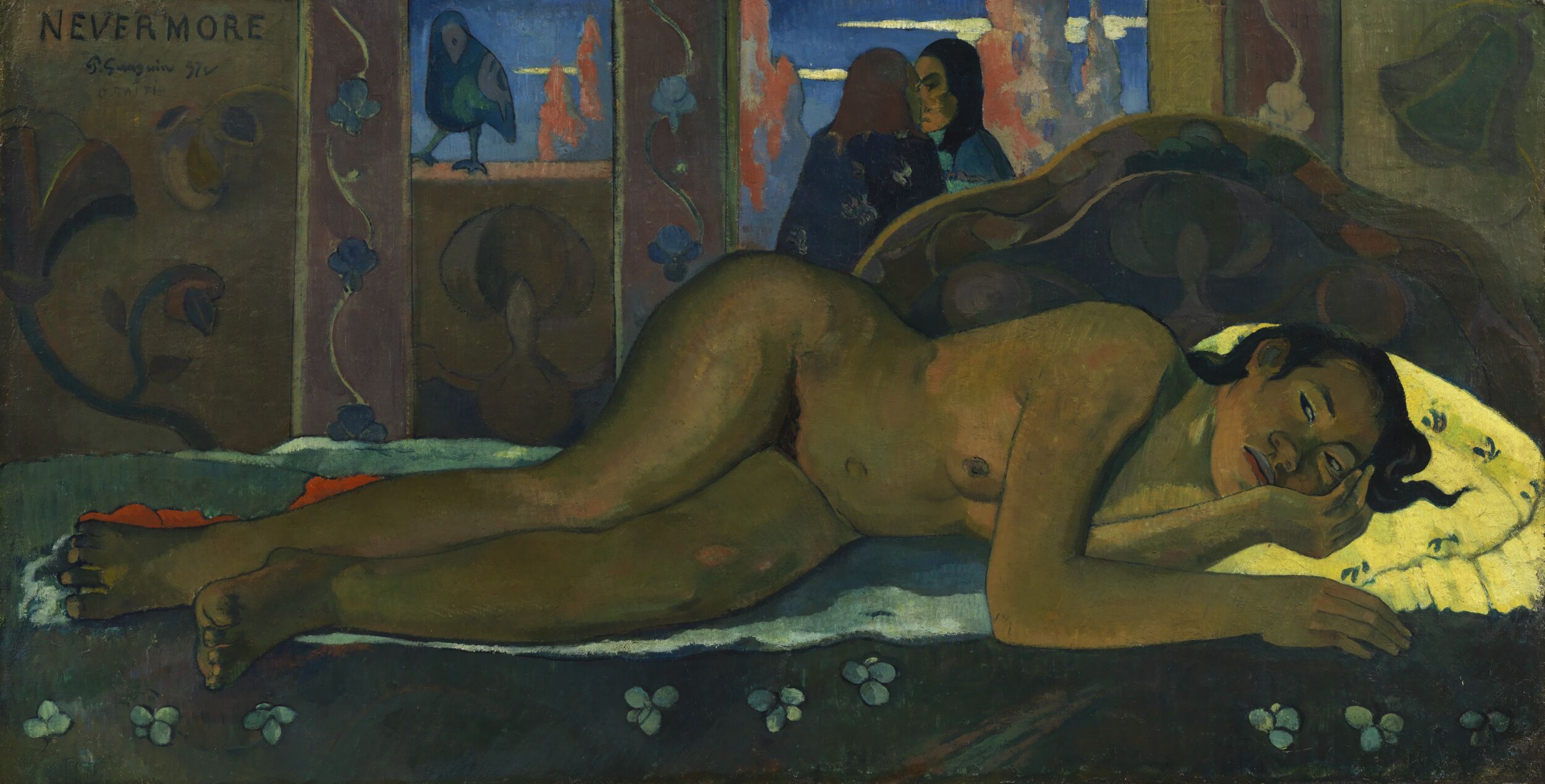
- Artist: Paul Gauguin
- Date: 1897
- Medium: oil on canvas
- Museum: The Courtauld Gallery
- Collection record: The Courtauld Gallery website
Listen to the free audio guide
About this artwork
This is the "Nevermore" by Paul Gauguin. Painted in 1897 as an oil on canvas, the work was created while Gauguin resided in Tahiti, a French‑colonised island in the southern Pacific. The scene shows a young woman reclining nude, a motif that was familiar to European audiences. Yet Gauguin injects a sense of exotic tension: the girl looks alert, her eyes tracking two dark figures that might be spirits lurking behind her. The tension is especially striking given her youthful age – she is often identified as his 15‑year‑old companion, Pahura. The title ties the image to Edgar Allan Poe’s “The Raven,” with the bird perched on a ledge repeating “nevermore,” echoing a poet’s madness over a lost love. Gauguin may have been channeling his own disillusionment over the erosion of Tahitian culture by French officials and missionaries. In doing so, he also participated in the very colonial exploitation that portrayed Tahitian girls as precocious. The painting, therefore, balances beauty, exoticism, and a disturbing commentary on colonial power.
See it in person
Nevermore hangs in The Courtauld Gallery at Somerset House, London. Point your phone at any artwork there and audioguide.london plays a free audio guide in six languages — no app download needed.