The Handsome Pork-Butcher
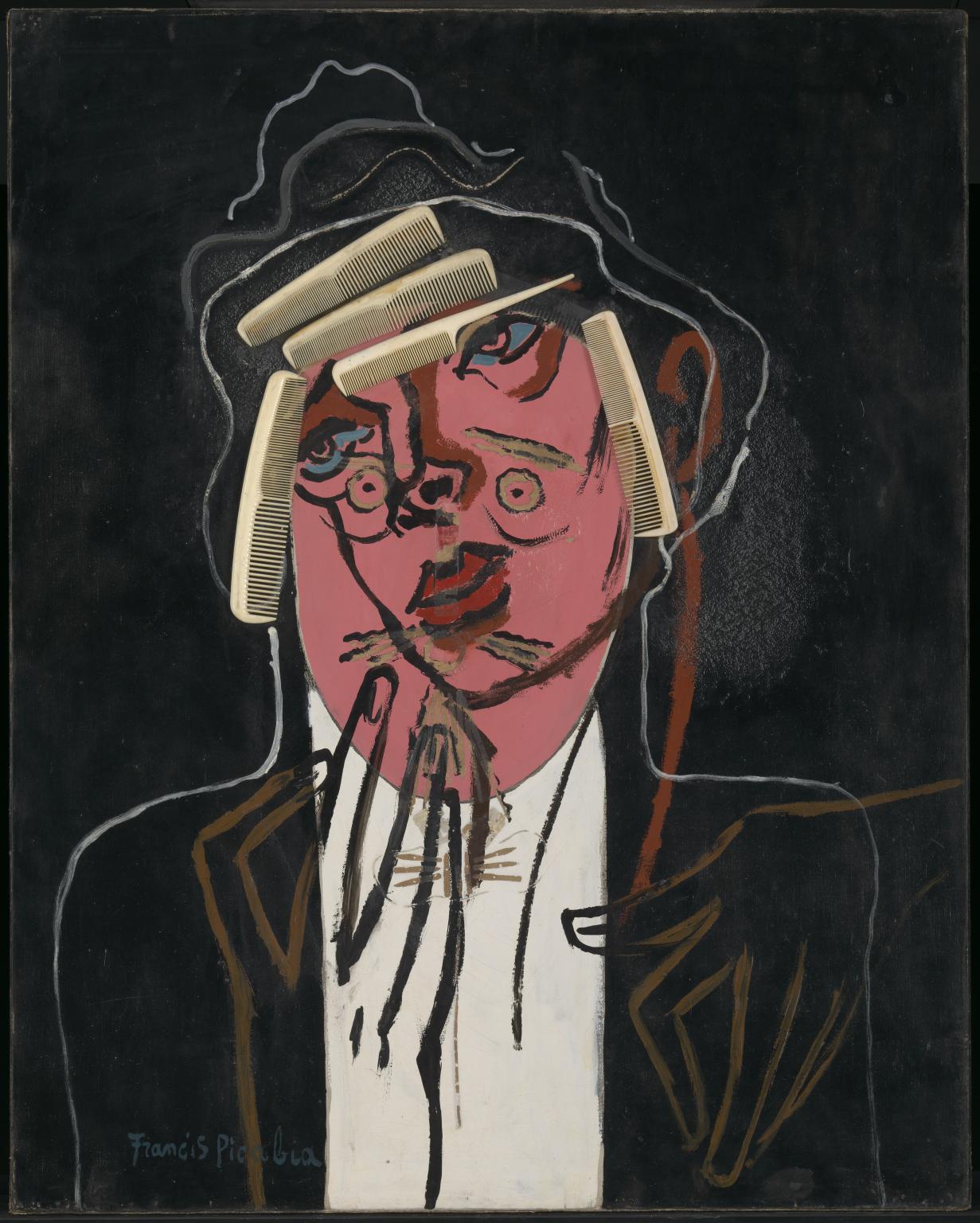
- Artist: Francis Picabia
- Date: c.1924–6, c.1929–35
- Medium: Oil paint, 4 plastic combs and bone comb on canvas
- Dimensions: support: 924 x 737 x 22 mm
- Museum: Tate Modern
- Collection record: Tate Modern website
Listen to the free audio guide
About this artwork
This is "The Handsome Pork-Butcher" by Francis Picabia, a playful piece that starts as a pink‑skinned, black‑suit‑wearing man made from household bits—string, curtain rings, measuring tape, a toothpick moustache—arranged like a collage on canvas. In the 1920s Picabia let the picture breathe, then later ripped those bits away, revealing raw canvas and a patchwork of paint. In a second phase he added plastic and bone combs for hair, and overlaid a glamorous woman’s head and hands in bright colours. The result feels like a visual joke, a double portrait where the man and woman occupy the same space yet remain distinct, reflecting Picabia’s Dada‑influenced sense of humour and his habit of reinventing his own work. The painting’s quirky history—from a possible satirical portrait of Raymond Poincaré to a collage‑painting in the late 1920s—adds layers of meaning, showing how art can be both a critique and a playful remix. It’s a great example of early 20th‑century experimentation and absurdity.
See it in person
The Handsome Pork-Butcher is in the collection of Tate Modern on Bankside, London — free to enter. Point your phone at any artwork there and audioguide.london plays a free audio guide in six languages — no app download needed.