The Great Day of His Wrath
- Artist: John Martin
- Date: 1851–3
- Medium: Oil paint on canvas
- Dimensions: support: 1965 x 3032 mm
- Museum: Tate Britain
- Collection record: Tate Britain website
Listen to the free audio guide
About this artwork
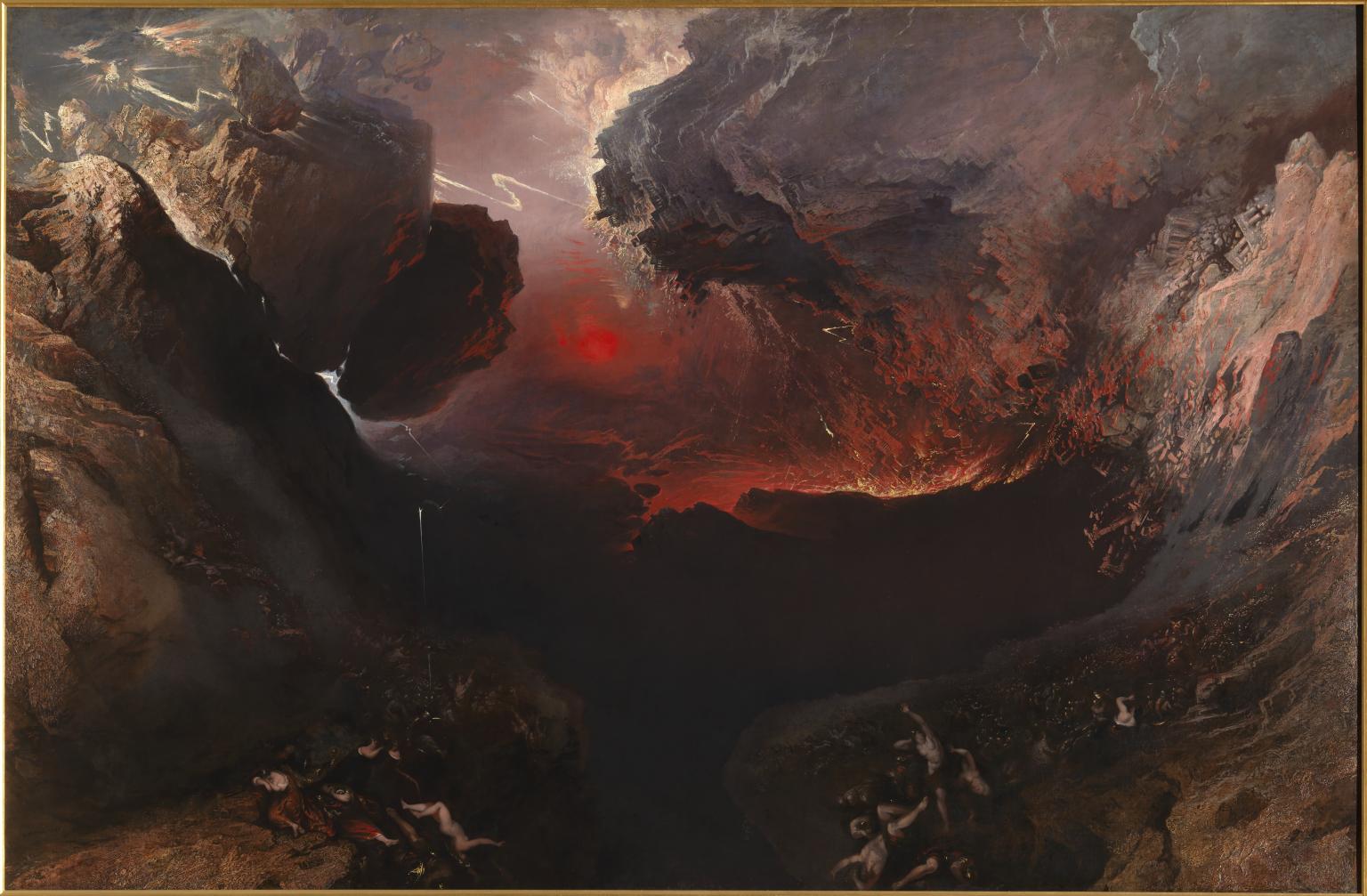
This is the “The Great Day of His Wrath” by John Martin. Painted between 1851 and 1853, it’s an oil on canvas that dominates the space with its monumental scale. Martin, a key figure of Romanticism, was obsessed with the sublime, and here he channels that through a whirlwind of divine wrath. The scene depicts a city literally being ripped apart, its buildings hurling into a bottomless gorge while a black sun eclipses the sky and the moon turns blood‑red. Lightning crackles, mountains shift into crashing waves of stone, and groups of desperate figures tumble toward oblivion. The visual drama mirrors the Book of Revelation’s description of the sixth seal, the great earthquake and the falling stars, but Martin amplifies it with his own sensational flair.
The painting is part of Martin’s Judgement Triptych, alongside “The Last Judgement” and “The Plains of Heaven.” Together they formed a spectacular touring spectacle that drew millions in Britain, the U.S., and even Australia. Even modern film makers, like Ray Harryhausen, have called it “an incredible, visionary masterpiece” and a frame from a blockbuster disaster movie. This work captures the terror and awe of the apocalypse, making it one of the most striking apocalyptic scenes in Western art.
See it in person
The Great Day of His Wrath is in the collection of Tate Britain on Millbank, London — free to enter. Point your phone at any artwork there and audioguide.london plays a free audio guide in six languages — no app download needed.