The Awakening Conscience
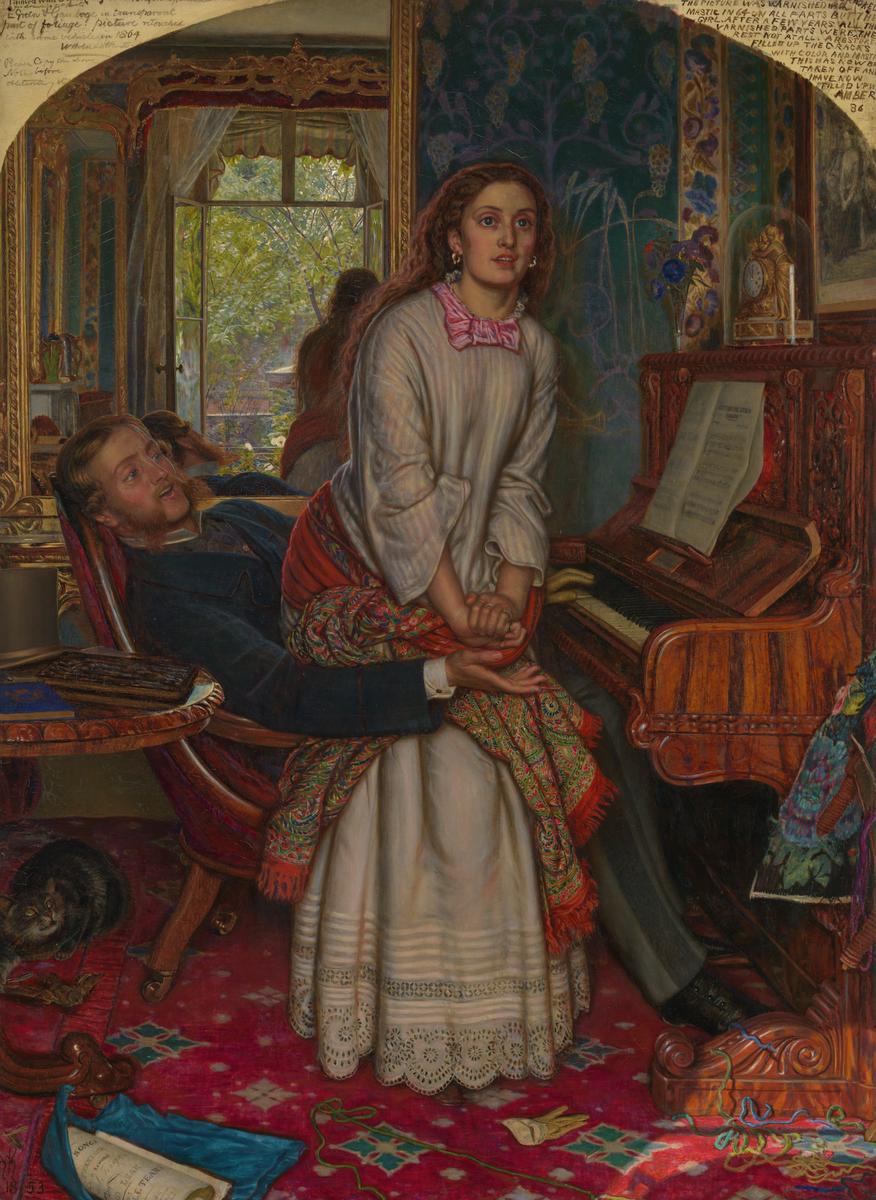
- Artist: William Holman Hunt
- Date: 1853
- Medium: Oil paint on canvas
- Dimensions: support: 762 x 559 mm
- Museum: Tate Britain
- Collection record: Tate Britain website
Listen to the free audio guide
About this artwork
This is The Awakening Conscience by William Holman Hunt, painted in 1853. The scene shows a wealthy gentleman in a snug apartment, playing a piano while his mistress—modelled after his partner Annie Miller—listens. The music, a setting of Thomas Moore’s “Oft in the Stilly Night,” triggers a flash of memory. She rises from the man’s lap, eyes fixed on the bright garden reflected in a mirror behind her. Hunt layers symbolism: a cat clawing a broken‑winged bird under the table, a hand‑tied glove hinting at the mistress’s future, tangled yarn suggesting the web of her situation. The wallpaper and clock inside the painted room echo Victorian concerns about morality and domestic exploitation. Hunt, a key Pre‑Raphaelite, used this drama to warn against the seductive but shallow comforts of a modern, industrial society. The painting was shown in 1854 and sparked debate over its moral content, though many critics missed the spiritual awakening at its core.
See it in person
The Awakening Conscience is in the collection of Tate Britain on Millbank, London — free to enter. Point your phone at any artwork there and audioguide.london plays a free audio guide in six languages — no app download needed.