The Cuerdale Hoard
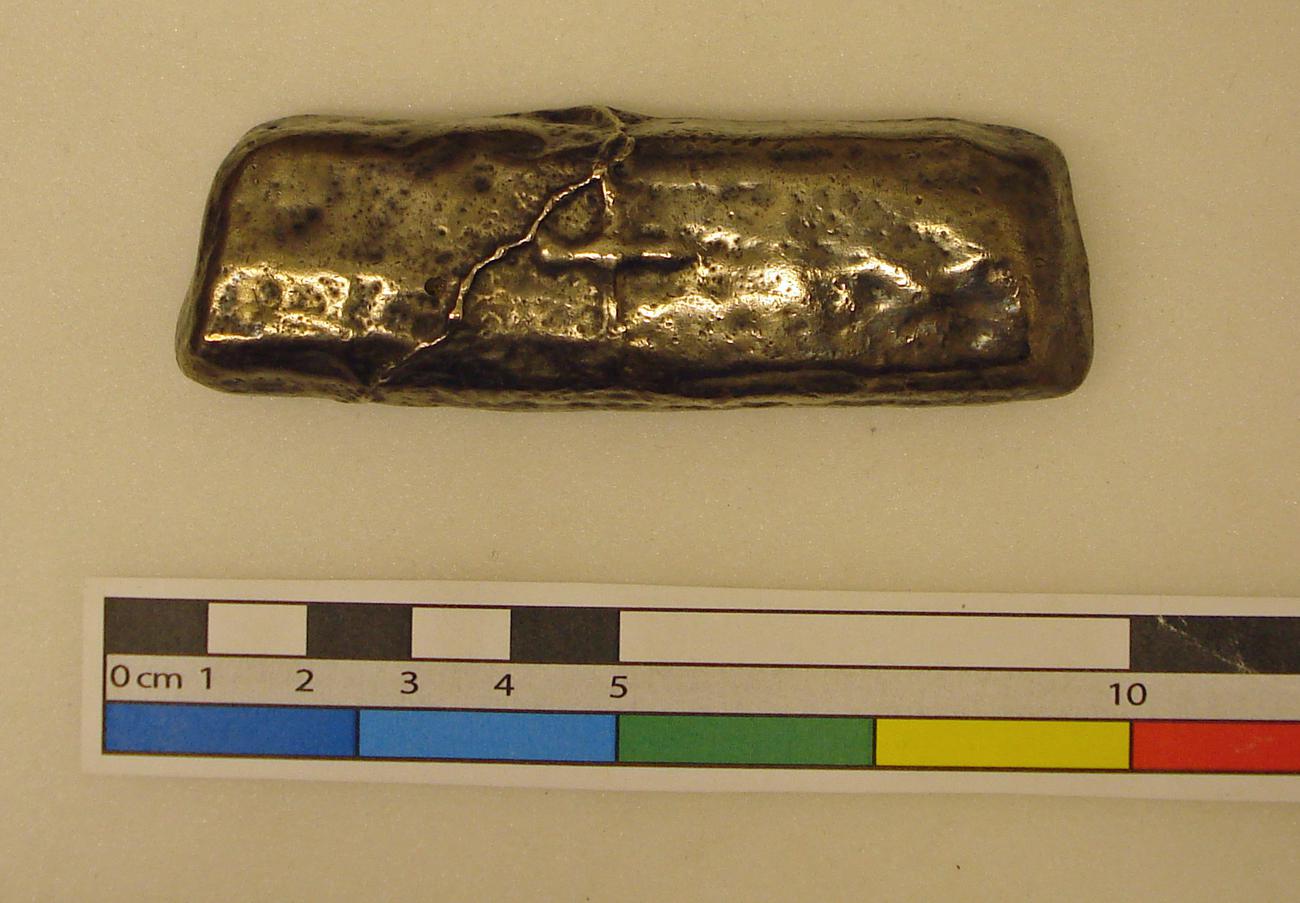
- Gallery: Room 41
- Culture: Viking
- Date: 9thC-10thC(early); 905 (deposited circa)
- Object type: ingot
- Materials: silver
- Museum number: 1841,0711.1
- Museum: The British Museum
- Collection record: British Museum website
- Image © The Trustees of the British Museum, shared under a CC BY-NC-SA 4.0 licence.
Listen to the free audio guide
In the museum now? Point your phone at the next object and hear its guide.
About this object
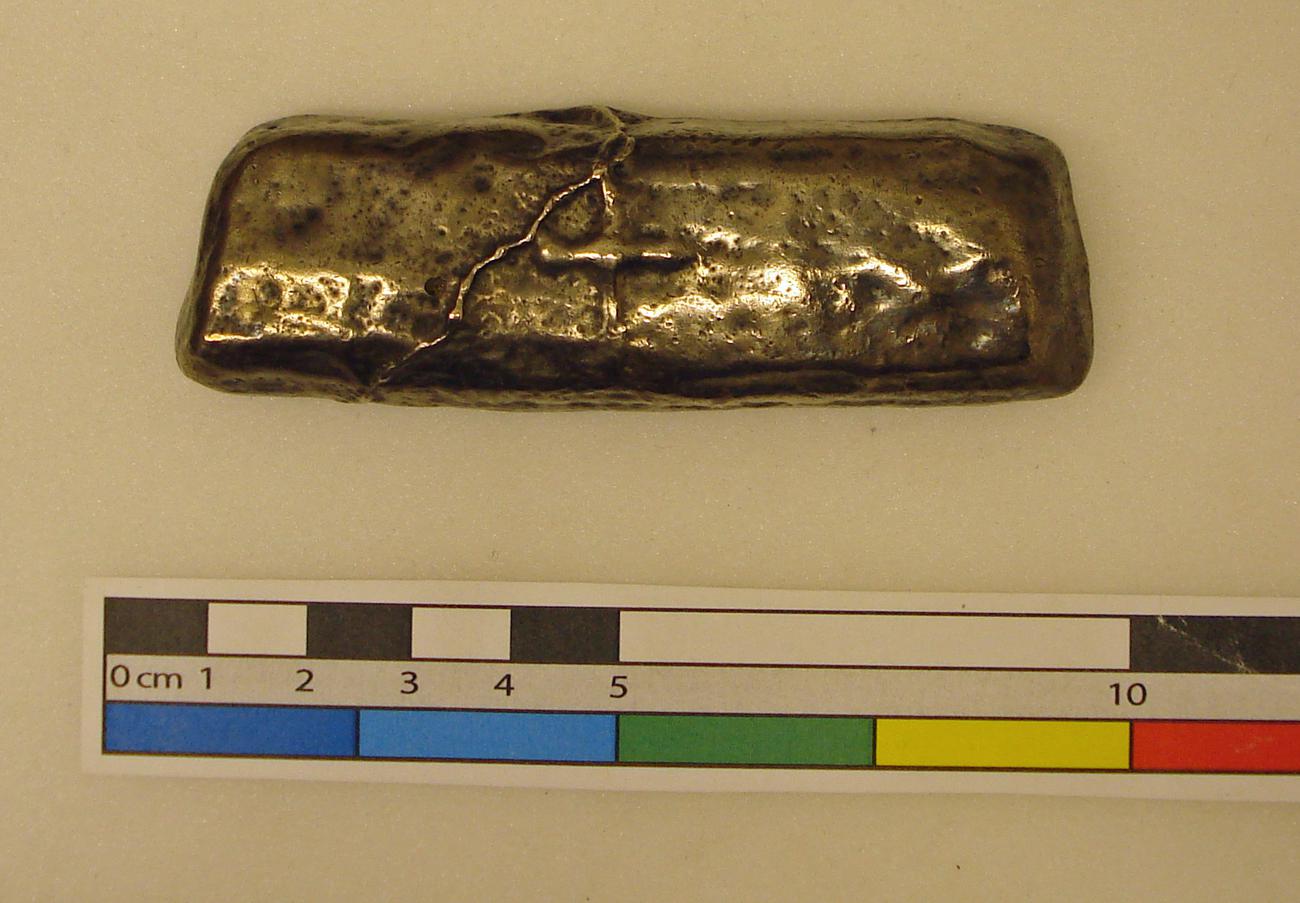
Before you is "The Cuerdale Hoard," a remarkable example of Viking craftsmanship. This silver ingot was cast and shaped with a relief cross on its surface, making it both functional and symbolic.
The hoard comes from a Viking context, and its origin dates to around 905. It was discovered in Cuerdale, near Preston in Lancashire, buried in a lead chest along with thousands of coins and other silver objects. The silver was likely used as currency or trade goods.
This particular silver ingot shows a trapezoidal shape and has a small nick on one side. Its weight and design suggest it was marked for official use.
Presented by Queen Victoria in 1841, this piece gives us a rare glimpse into Viking trade and craftsmanship during the early medieval period.
See it in person
The Cuerdale Hoard is on display in Room 41 at the British Museum on Great Russell Street, Bloomsbury, London — free to enter. Choose British Museum on audioguide.london and take a photo of it to hear this free audio guide in six languages — no app download needed.
New, in beta. British Museum support has just launched and is still improving: over 1,000 objects so far, with more added all the time.