The Crundale buckle
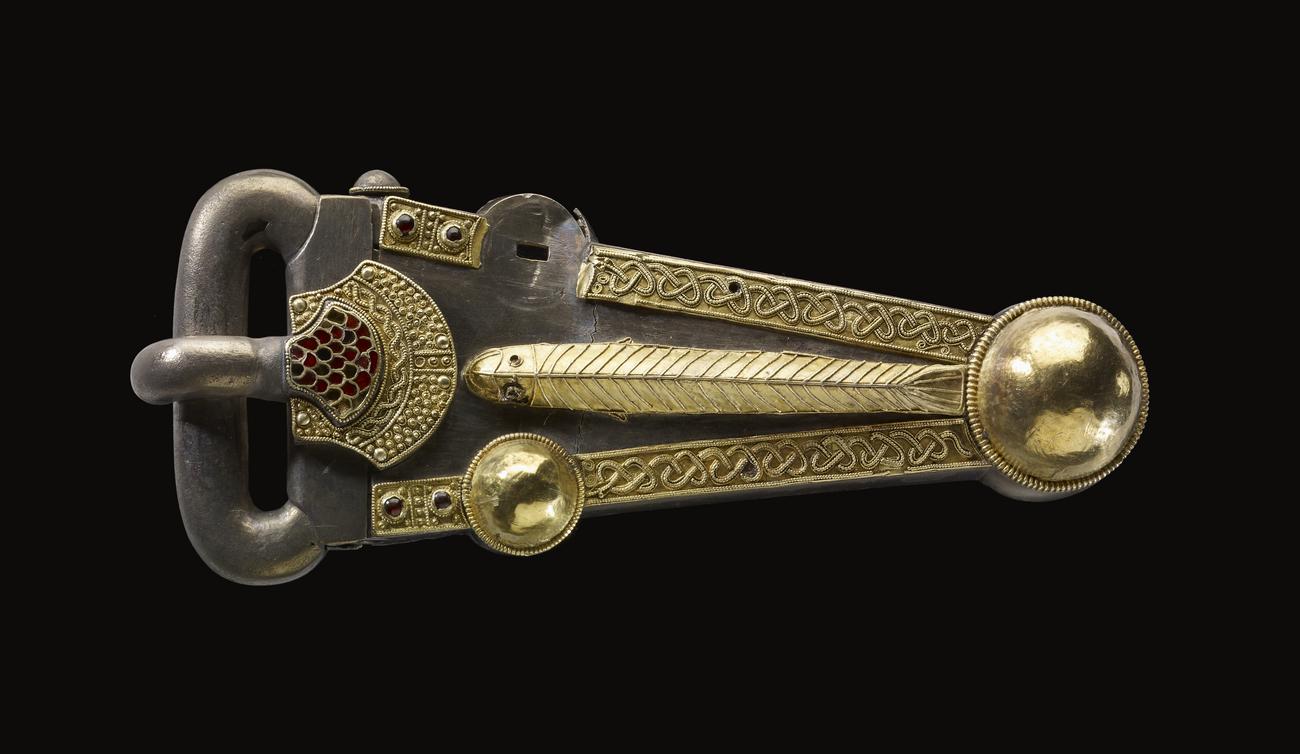
- Gallery: Room 41
- Culture: Early Anglo-Saxon
- Date: 7thC(mid)
- Object type: buckle
- Materials: silver; gold; garnet
- Museum number: 1893,0601.204
- Museum: The British Museum
- Collection record: British Museum website
- Image © The Trustees of the British Museum, shared under a CC BY-NC-SA 4.0 licence.
Listen to the free audio guide
About this object
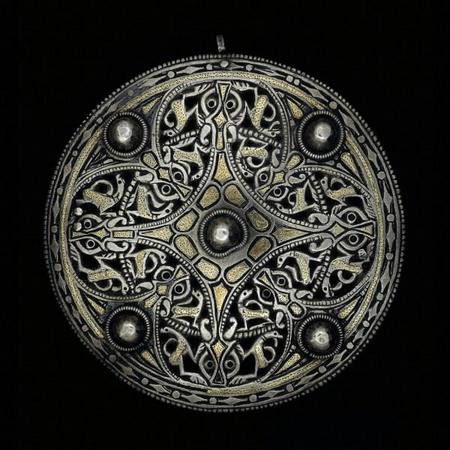
This is "The Crundale Buckle," a remarkable example of Early Anglo-Saxon craftsmanship. Created in the 7th century, this silver buckle was adorned with gold, garnet, and intricate filigree. The design includes a central shield flanked by intricate patterns of collared granules and a striking gold fish in high relief. Small cabochon garnets catch the light, and fine beaded wire outlines the forms.
The backplate is made of silver and features a panel with an incised image of an animal biting its own tail—a symbol not uncommon in this period. Fragments of copper alloy are attached to the piece, suggesting its possible use as a reliquary.
Found in 1861 at Crundale Downs, it was purchased in 1893 from John Durden. This buckle reflects a time of transition, when early Christian symbols began to appear alongside older pagan imagery in English artwork.
See it in person
The Crundale buckle is on display in Room 41 at the British Museum on Great Russell Street, Bloomsbury, London — free to enter. Choose British Museum on audioguide.london and take a photo of it to hear this free audio guide in six languages — no app download needed.
New, in beta. British Museum support has just launched and is still improving: over 1,000 objects so far, with more added all the time.