The Buddha: figure
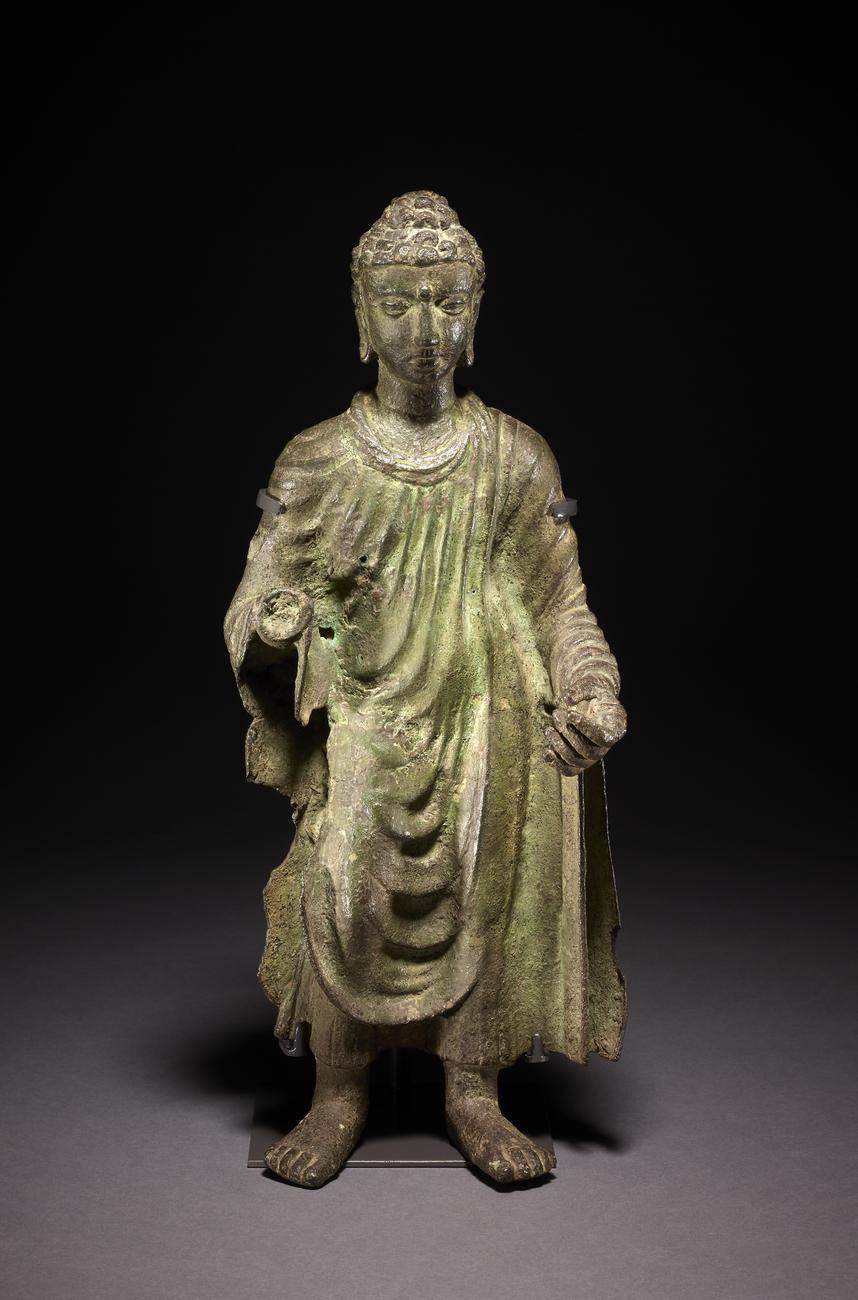
- Gallery: Room 33
- Culture: Kushan
- Made in: Pakistan (probably)
- Date: 4thC-5thC
- Object type: figure
- Materials: brass
- Museum number: 1958,0714.1
- Museum: The British Museum
- Collection record: British Museum website
- Image © The Trustees of the British Museum, shared under a CC BY-NC-SA 4.0 licence.
Listen to the free audio guide
About this object
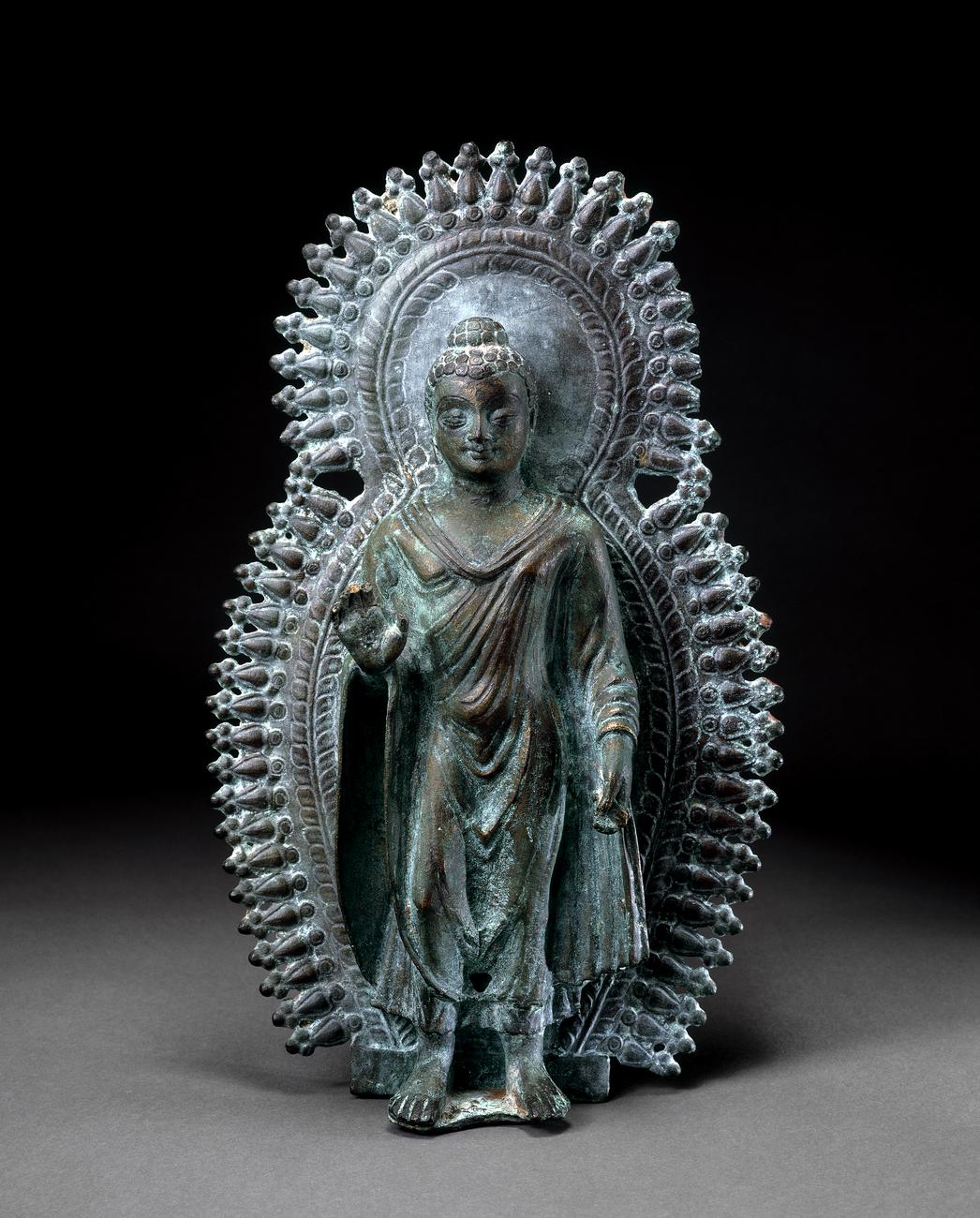
In front of you stands a compelling bronze figure titled "The Buddha," created during the 4th to 5th century in what is now Pakistan. The Buddha is depicted in a gesture of reassurance, with his right hand originally raised in a calming pose. The detailed drapery of his robe reveals intricate folds and ridges, suggesting a mastery of sculptural technique.
This work reflects the Gandhara School, known for its human-like portrayals of the Buddha. You’ll notice a realistic yet spiritual face, with deep-set eyes, a long nose, and a prominent ushnisha—the symbol of wisdom on his head. The folds of the robe follow a unique rhythm, especially on the front and back.
Crafted in brass and cast with care, this rare bronze offers a glimpse into the Kushan era and the early development of Buddhist art in South Asia. It was donated to the museum in 1958, enriching our understanding of ancient religious sculpture.
See it in person
The Buddha: figure is on display in Room 33 at the British Museum on Great Russell Street, Bloomsbury, London — free to enter. Choose British Museum on audioguide.london and take a photo of it to hear this free audio guide in six languages — no app download needed.
New, in beta. British Museum support has just launched and is still improving: over 1,000 objects so far, with more added all the time.