The Arrival
- Artist: Christopher Richard Wynne Nevinson
- Date: c.1913
- Medium: Oil paint on canvas
- Dimensions: support: 762 x 635 mm
- Museum: Tate Britain
- Collection record: Tate Britain website
Listen to the free audio guide
In the museum now? Point your phone at the next artwork and hear its guide.
About this artwork
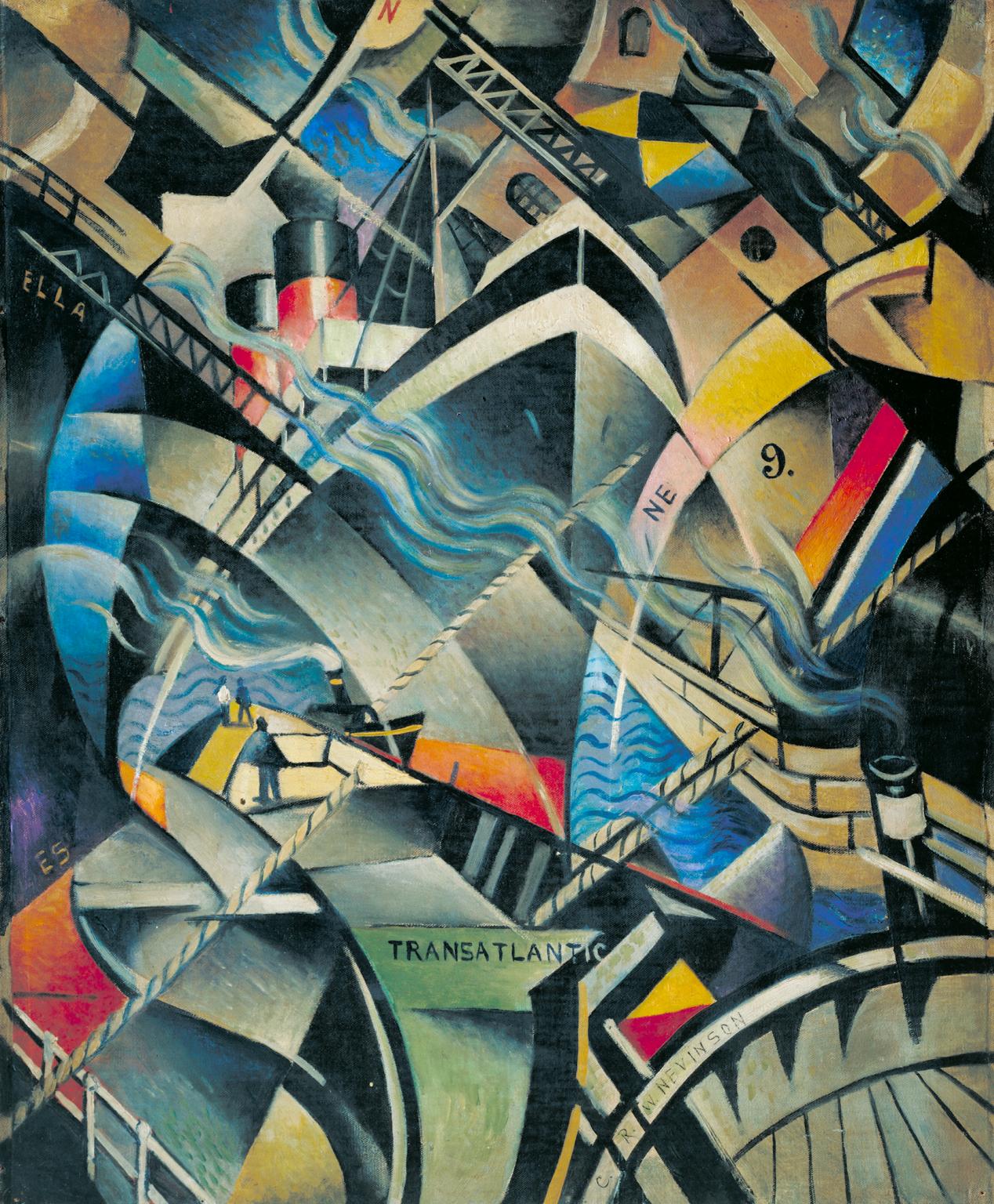
This is the “The Arrival” by Christopher Richard Wynne Nevinson, painted around 1913. The oil on canvas, roughly 76 by 63 centimetres, captures a moment of a ship in motion as seen from the harbour. Nevinson was a key figure in the Vorticist movement, and his fascination with the concept of simultaneity is on full display here. The composition collides geometric planes, fragmented funnels, rising smoke, and a smattering of signage, creating a visual rush that feels like a single instant packed with multiple viewpoints.
When first exhibited in 1915, the work was titled “My Arrival in Dunkirk” to reference the port that British soldiers used to launch into the war. A contemporary reviewer compared it to a Channel steamer that has just collided with a pier, noting the “melting‑pot” of funnels, gangplanks, and distant hotels. Nevinson described the image as a “state of simultaneous mind”, an attempt to portray the chaotic mental state of those moments.
The painting was later displayed in several touring exhibitions, including a 2008–2009 show at the Centre Pompidou and a 2010–2011 Vorticists exhibition. It even inspired the cover art for a 1933 novel, showing how its bold geometry transcended canvas to influence popular culture.
See it in person
The Arrival is in the collection of Tate Britain on Millbank, London — free to enter. Point your phone at any artwork there and audioguide.london plays a free audio guide in six languages — no app download needed.