Tara
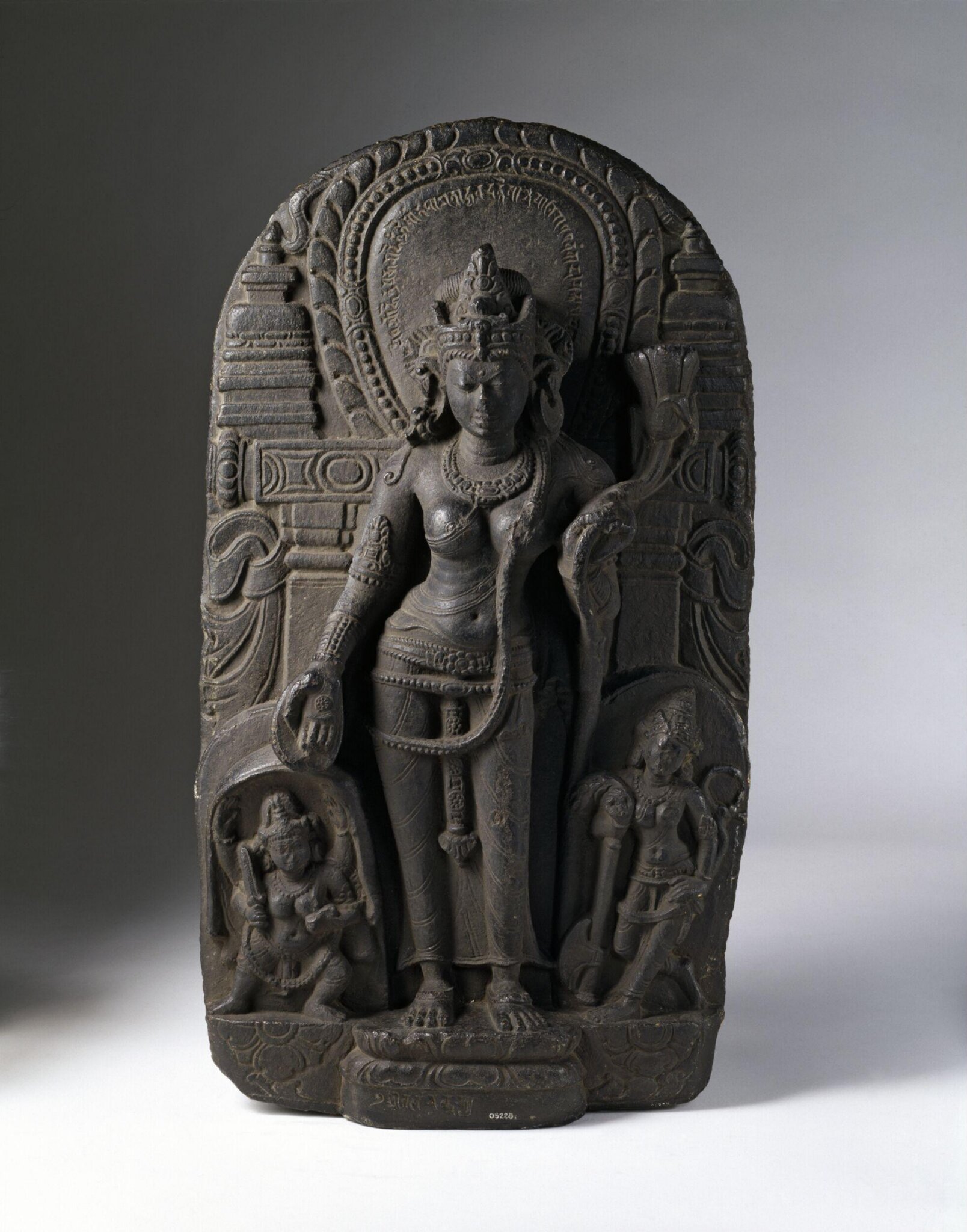
- Gallery: Buddhism, Room 18, The Robert H. N. Ho Family Foundation Galleries of Buddhist Art
- Made in: Bihar
- Date: 12th Century
- Object type: Sculpture
- Materials: Black basalt
- Style: Pala
- Dimensions: Height 57 cm; Height 54.5 cm; Width 32 cm
- Museum: V&A South Kensington
- Collection record: V&A website
- Image © Victoria and Albert Museum, London.
Listen to the free audio guide
In the museum now? Point your phone at the next object and hear its guide.
About this object
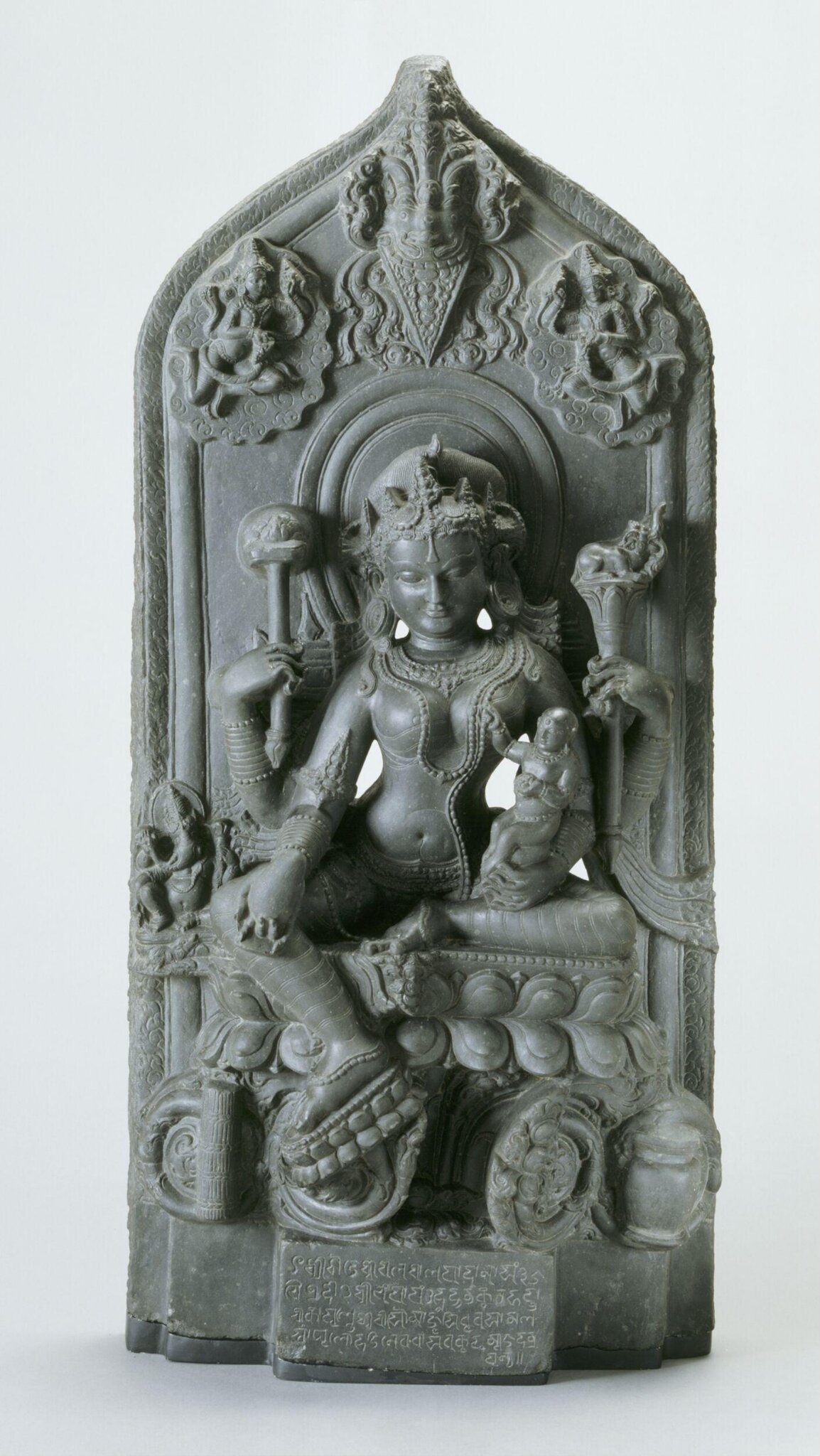
Before you is a striking figure of the goddess Tara, carved from dark black basalt. Created in the twelfth century in Bihar, eastern India, this sculpture represents a female bodhisattva whose name means saviouress.
As you look closely, notice how she holds a delicate, flowering lotus stem in one hand, while her other hand is open in a gesture that signifies the granting of wishes. She is set against an elaborate backplate that frames her entire figure. This detailed structure, featuring upright pillars and a large halo behind her head, makes the sculpture look like a miniature shrine or temple.
If you look around the central figure, you can see two smaller attendant figures acting as guardians. You might also notice a Sanskrit inscription written on the halo. In Buddhist tradition, Tara is widely worshipped for her protective powers and her compassionate nature, often seen as a female manifestation of the lord of compassion.
See it in person
Tara is on display in Buddhism, Room 18, The Robert H. N. Ho Family Foundation Galleries of Buddhist Art at the V&A South Kensington on Cromwell Road, London — free to enter. Choose V&A South Kensington on audioguide.london and take a photo of it to hear this free audio guide in six languages — no app download needed.
New, in beta. V&A support has just launched and is still improving: 1,000 objects with audio so far, with more added all the time.