V&A Highlights
New, in beta. V&A support has just launched and is still improving: 1,000 objects with audio so far, with more added all the time.
The V&A is far too big to see in one visit. If your time is short, these are the objects most people come for, and ones our photo recognition knows well. Each has a free audio commentary on Audioguide.London: just take a photo.
12 objects not to miss
- The Ardabil Carpet (Room 42). One of the largest and finest Islamic carpets in existence, woven in Iran in 1539–40 for the shrine at Ardabil. To protect its colours it is lit for ten minutes on the hour and half-hour.
- The Raphael Cartoons (Room 48a). Raphael’s full-size designs for tapestries for the Sistine Chapel, painted in 1515–16 and lent by the Royal Collection.
- Michelangelo’s David (Room 46b). A full-size plaster cast of the statue in Florence, over five metres tall, in the Cast Courts.
- Trajan’s Column (Room 46a). A cast of the Roman column, so tall that it stands in two halves, with its spiral of carved battle scenes at eye level.
- Samson Slaying a Philistine (Room 50a). Giambologna’s marble group of about 1560–62, made for a fountain in Florence.
- Neptune and Triton (Room 7). Bernini’s marble of 1622–23, carved for a fountain in a Roman garden, one of very few major works by him outside Italy.
- Theseus and the Minotaur (Room 22). Antonio Canova’s first great work in Rome (1782): the hero sits calmly on the monster he has killed.
- The Becket Casket (Room 8). A Limoges enamel reliquary of about 1180–90 showing the murder of Thomas Becket in Canterbury Cathedral.
- The Gloucester Candlestick (Room 8). A gilt candlestick made for Gloucester Abbey in 1107–13, a tangle of climbing men and monsters.
- The Great Bed of Ware (Room 57). An enormous carved oak bed of the 1590s, famous enough to be joked about in Shakespeare’s Twelfth Night.
- The Melville Bed (Room 54a). A towering state bed of crimson velvet, made around 1700 for the Earl of Melville.
- The Leaping Horse (Room 87). Constable’s full-scale oil sketch of about 1825, rougher and livelier than the finished painting.
Room numbers as of October 2026. Objects occasionally move or go on loan, so check the museum’s map on the day.
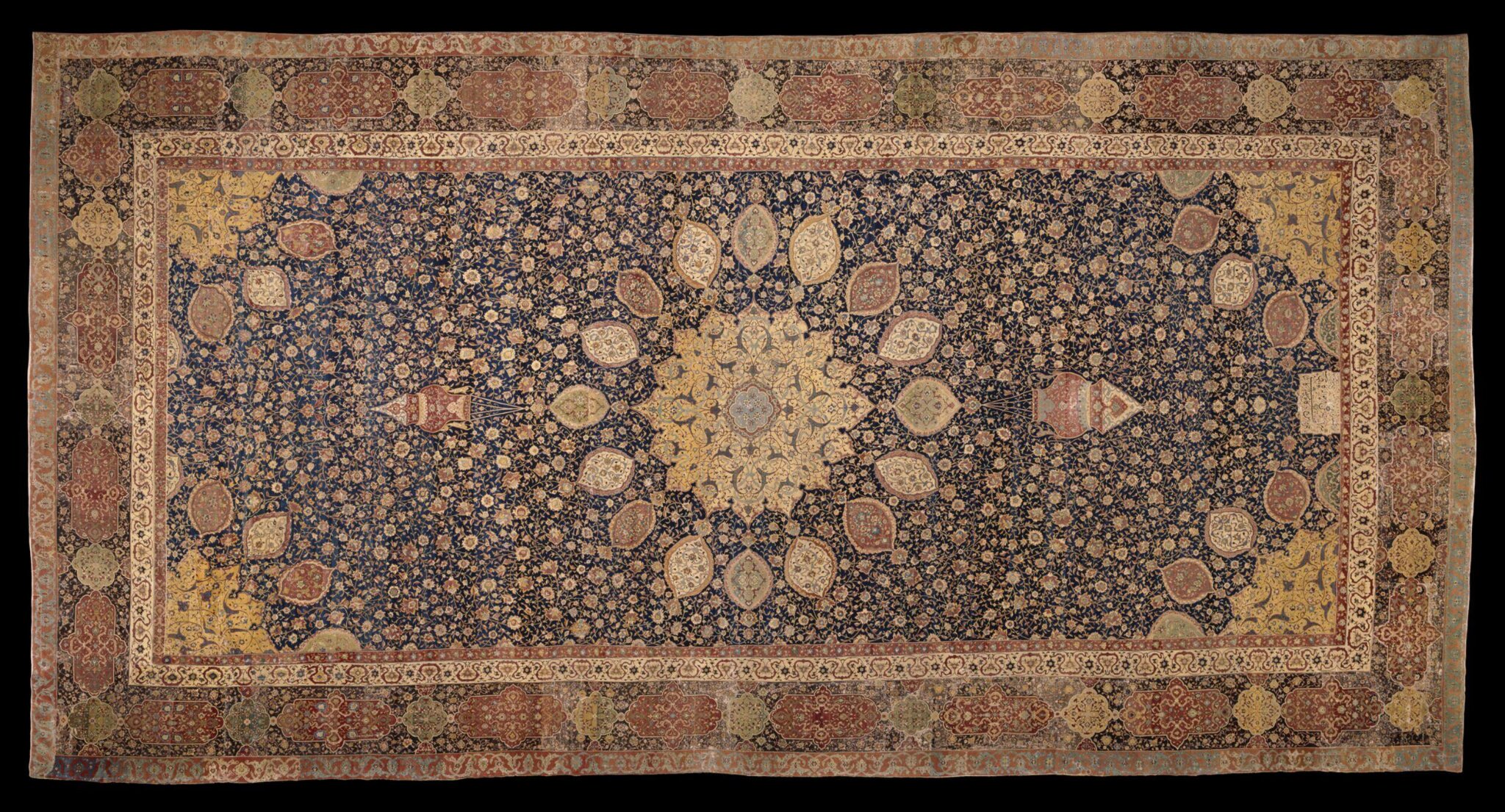
The Ardabil Carpet
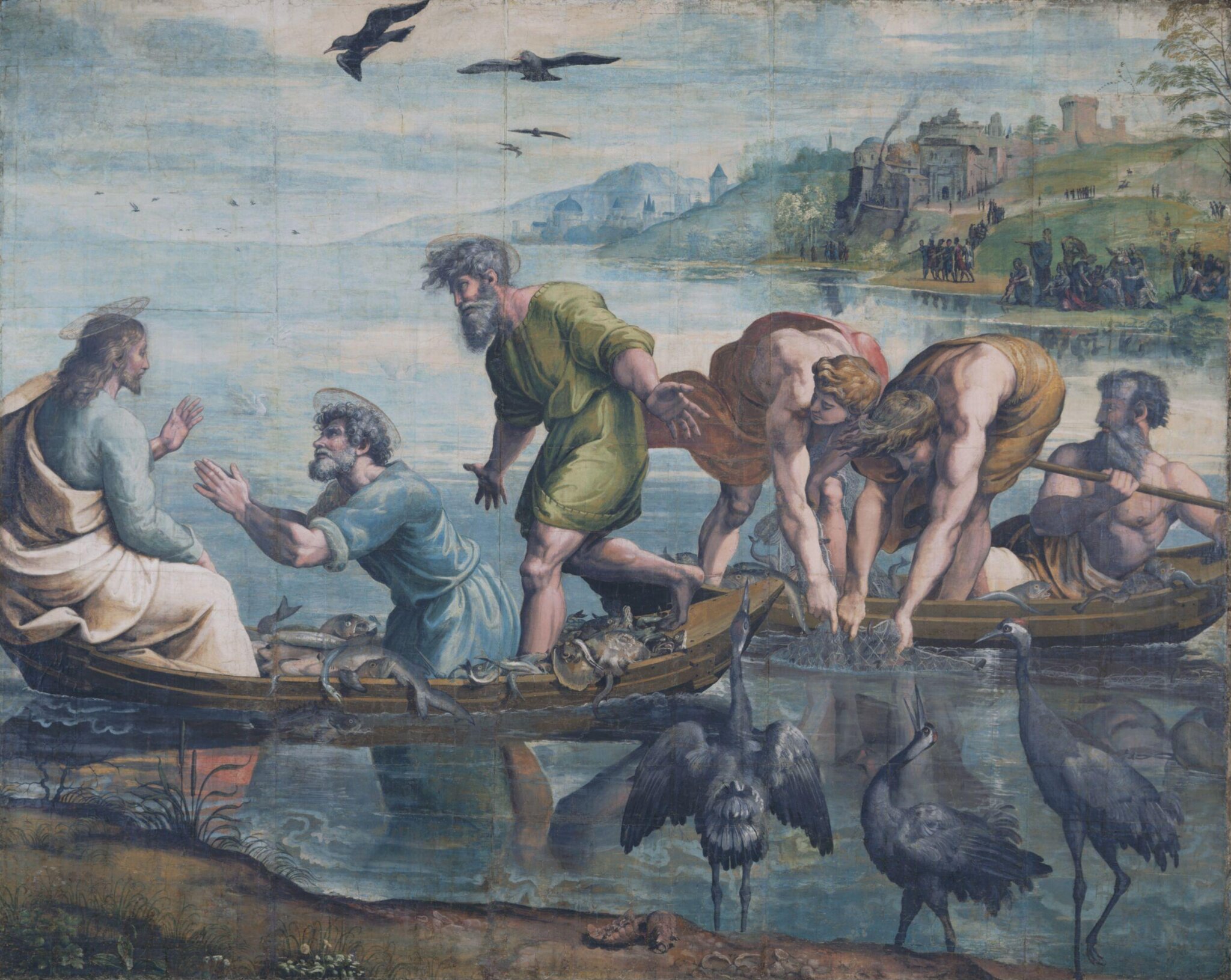
The Miraculous Draught of Fishes (Luke 5: 1-11)

David
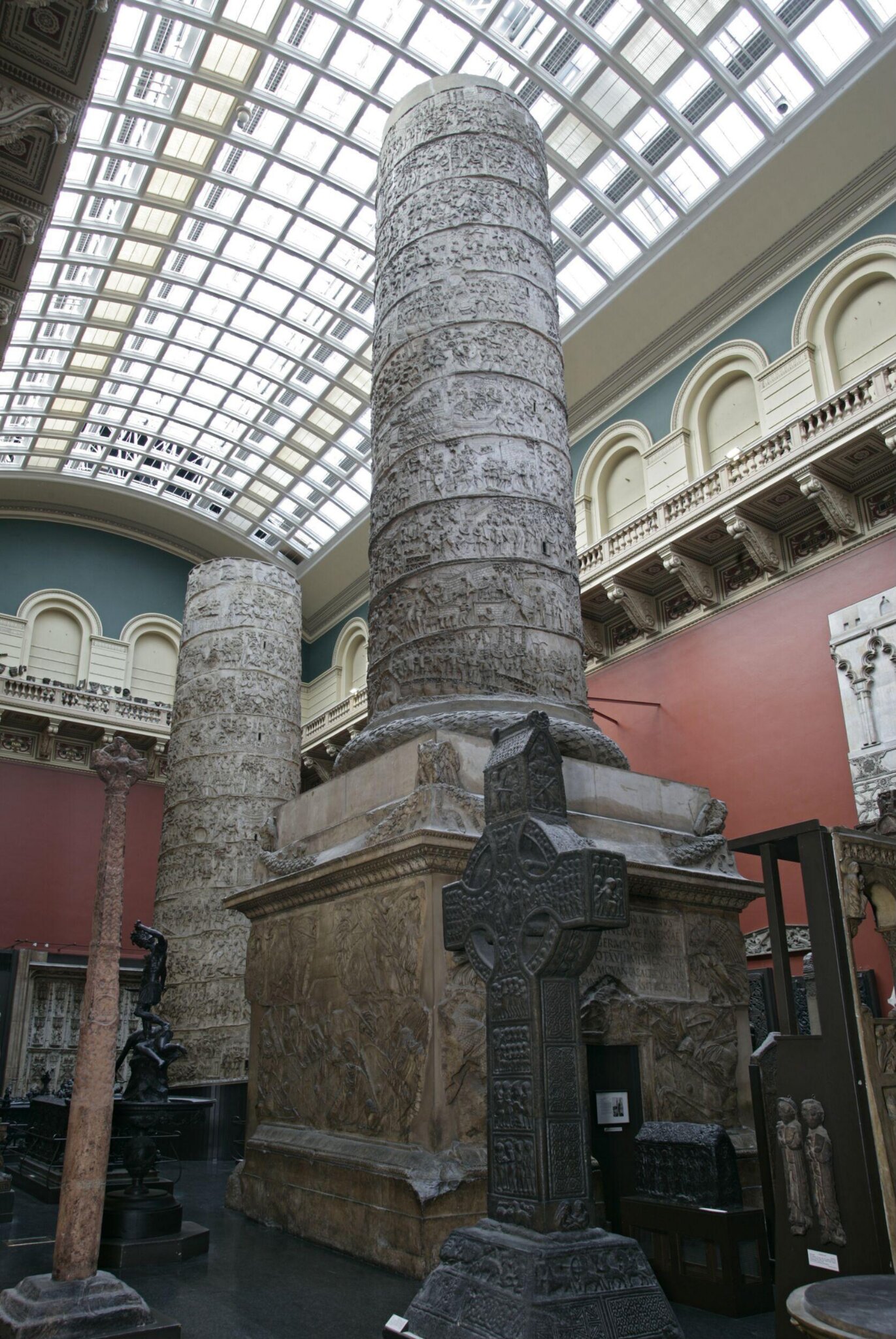
Trajan's Column
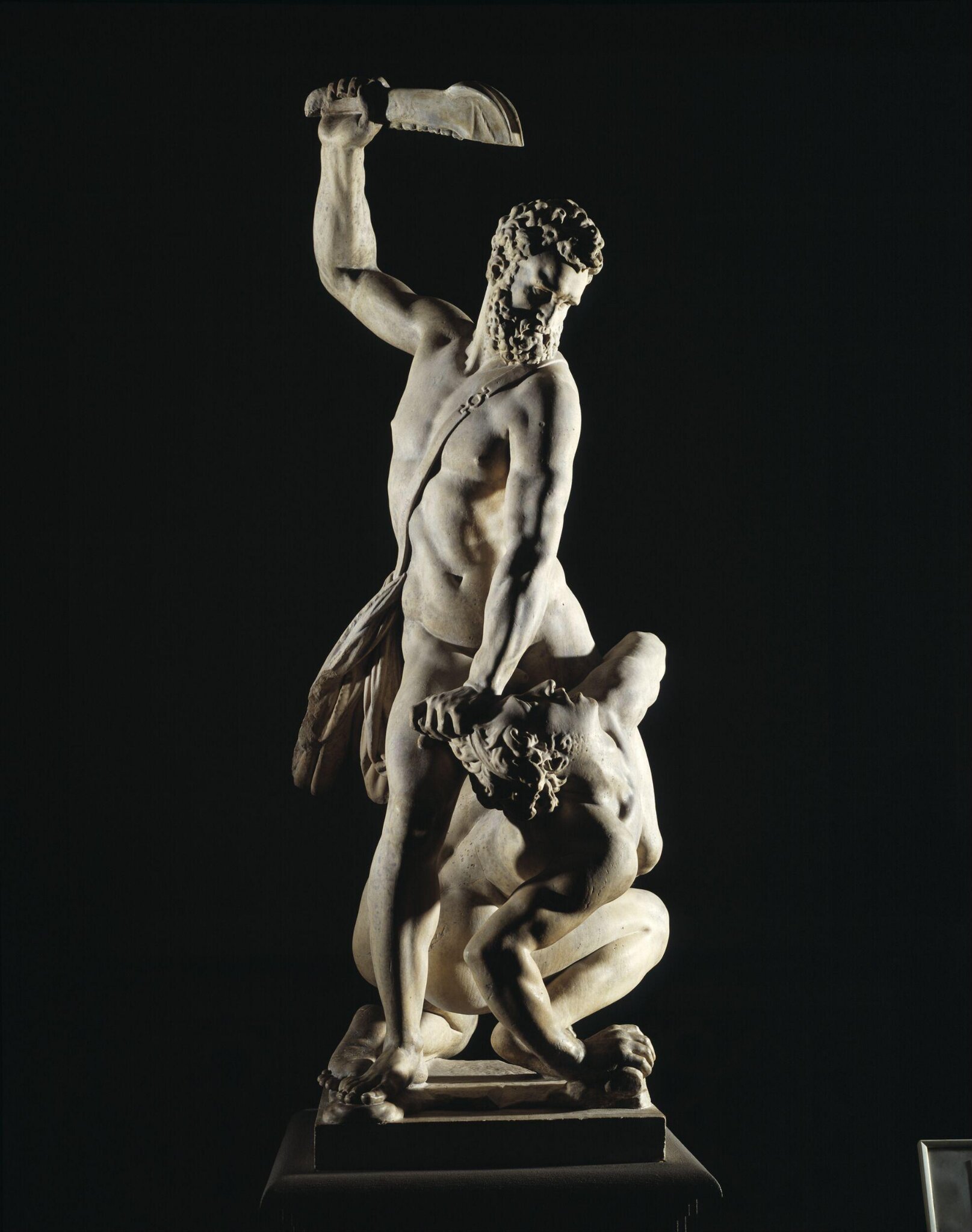
Samson Slaying a Philistine
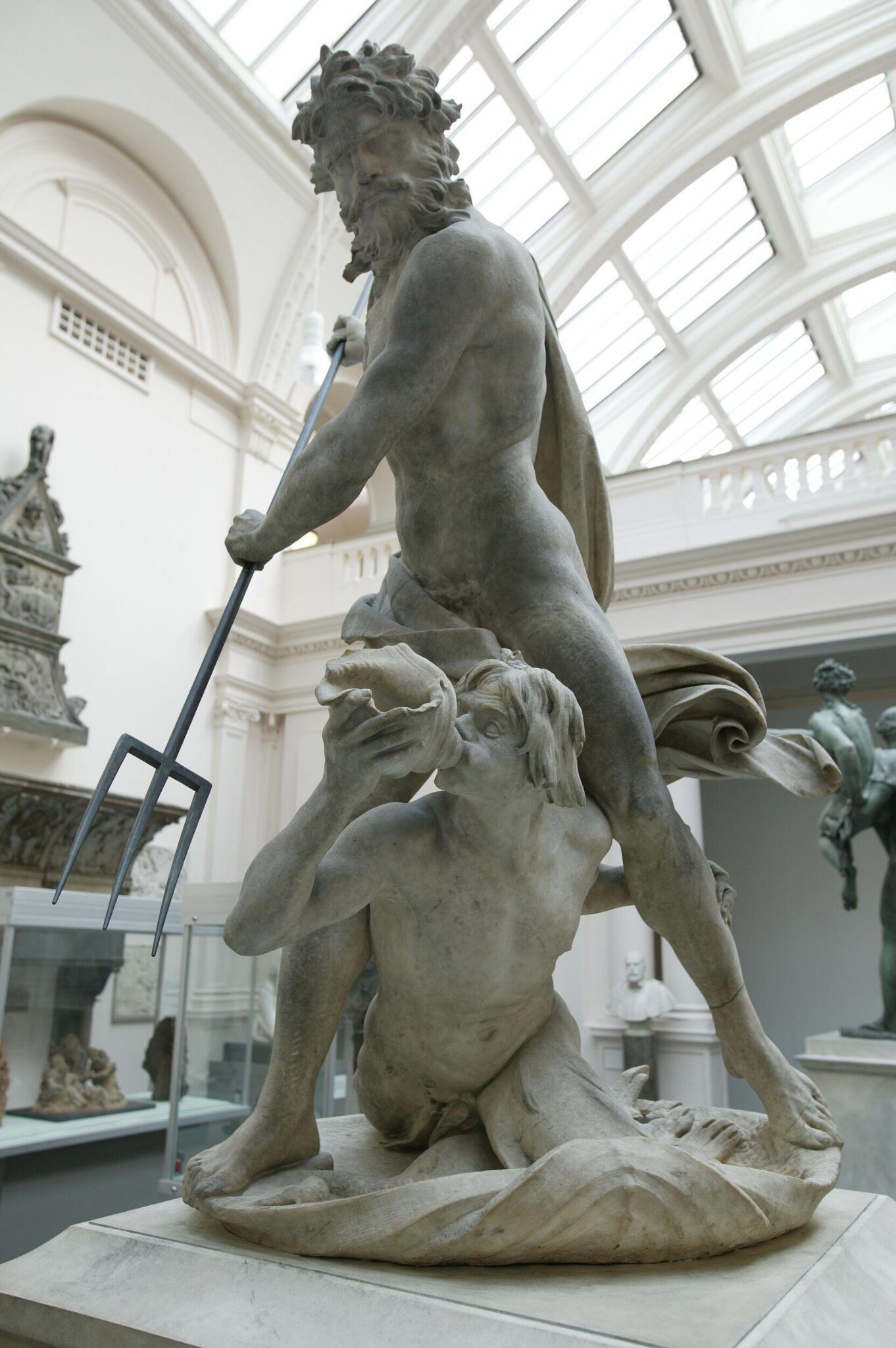
Neptune and Triton
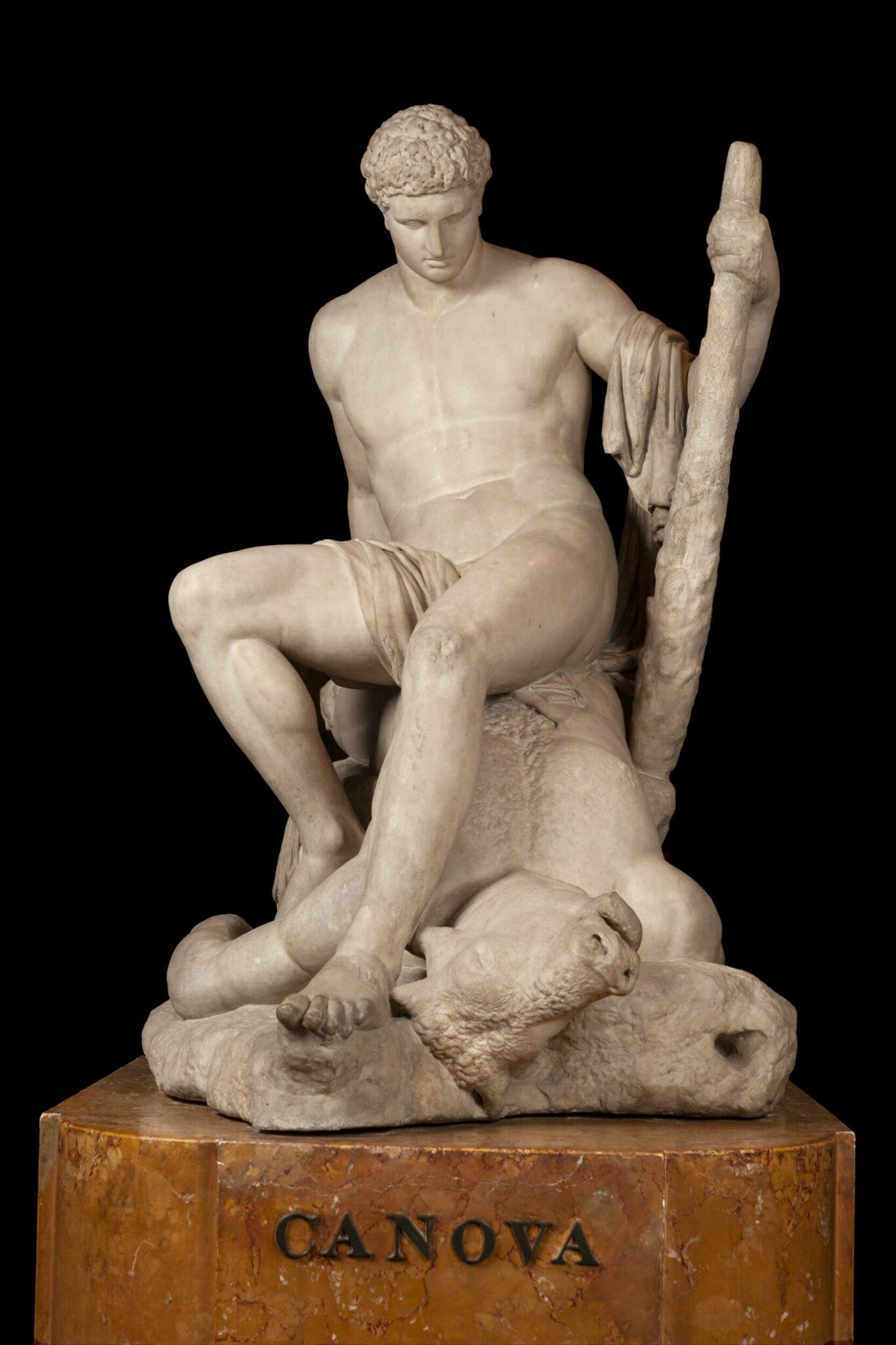
Theseus and the Minotaur
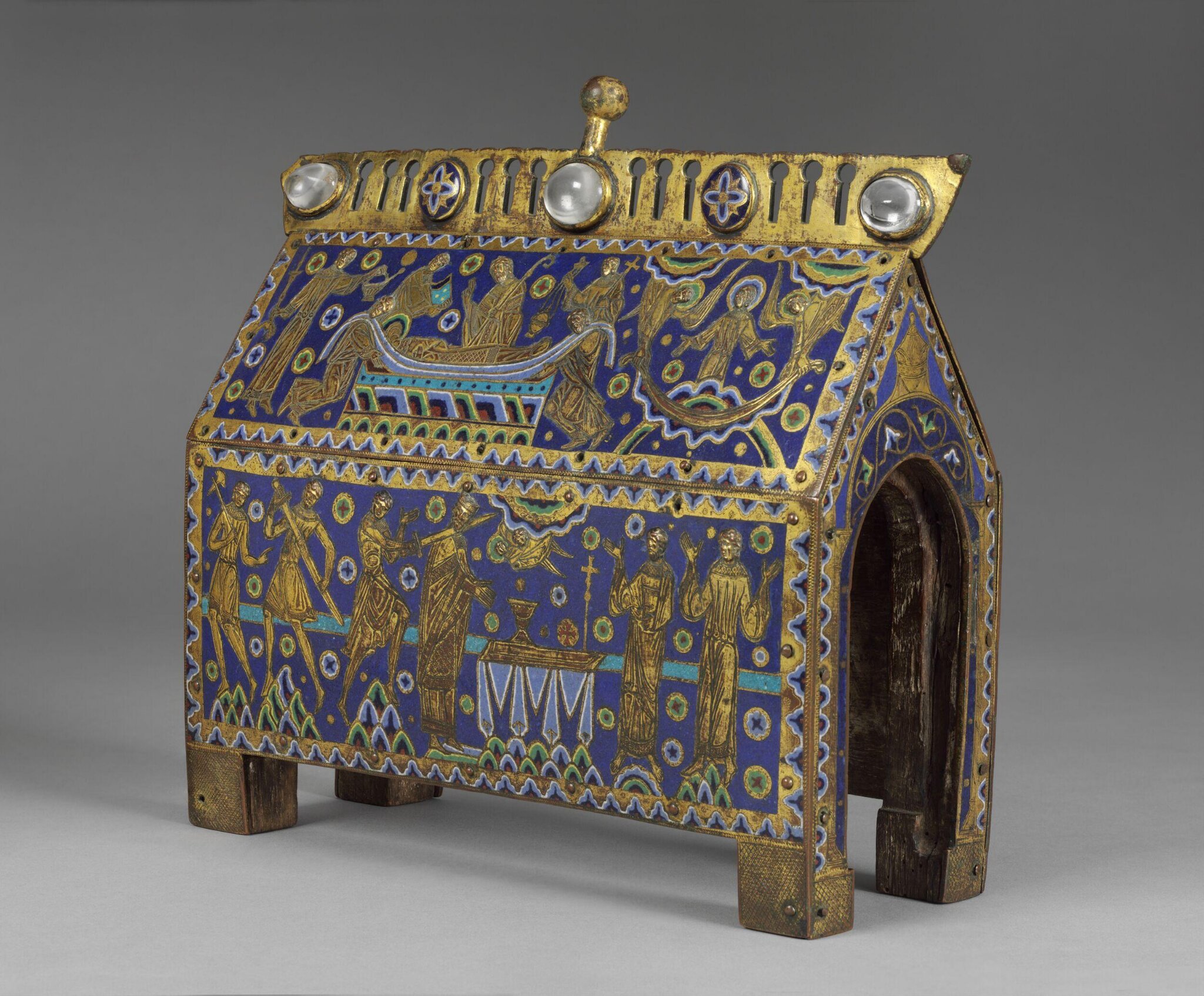
The Becket Casket
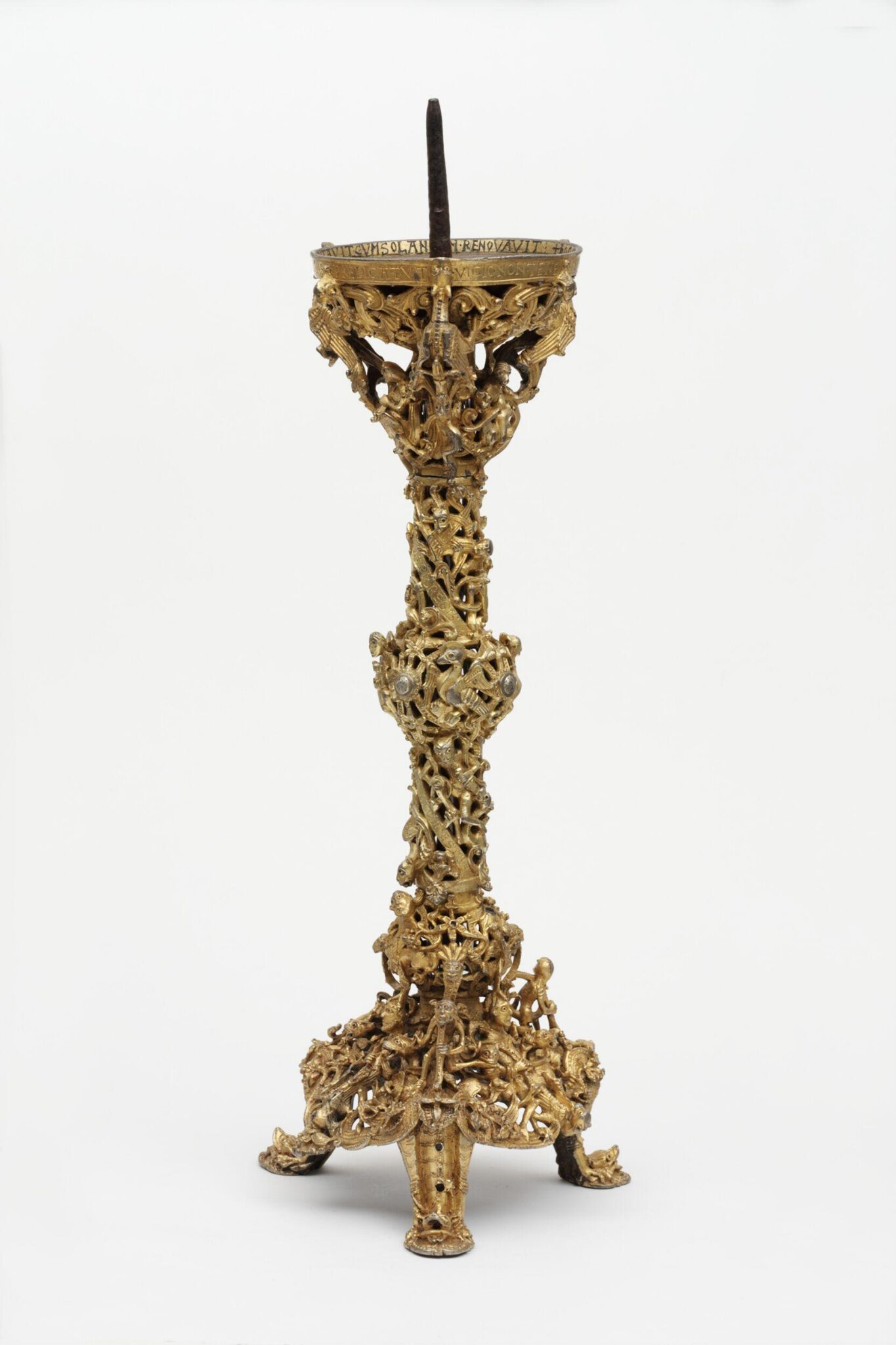
The Gloucester Candlestick
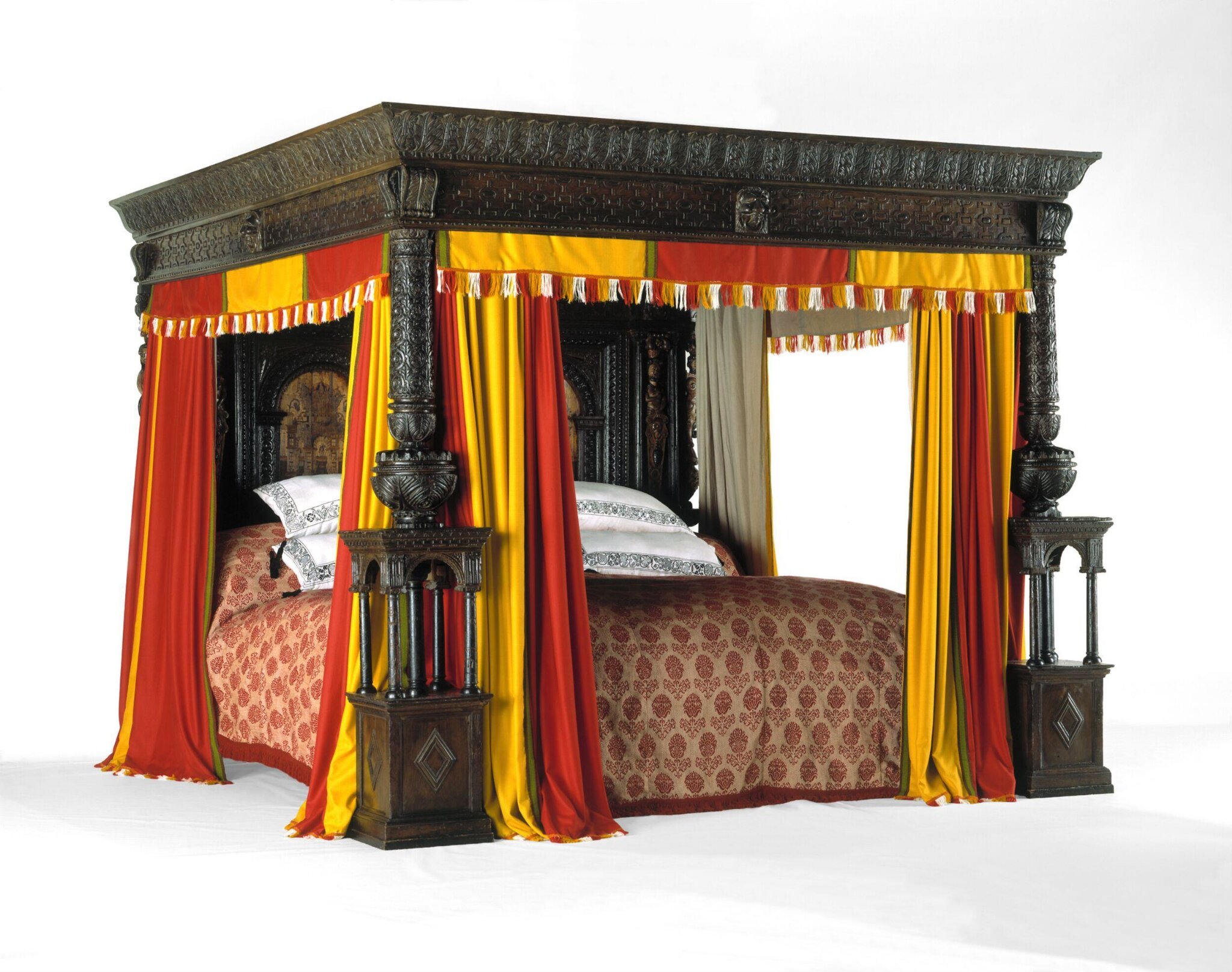
Great Bed of Ware
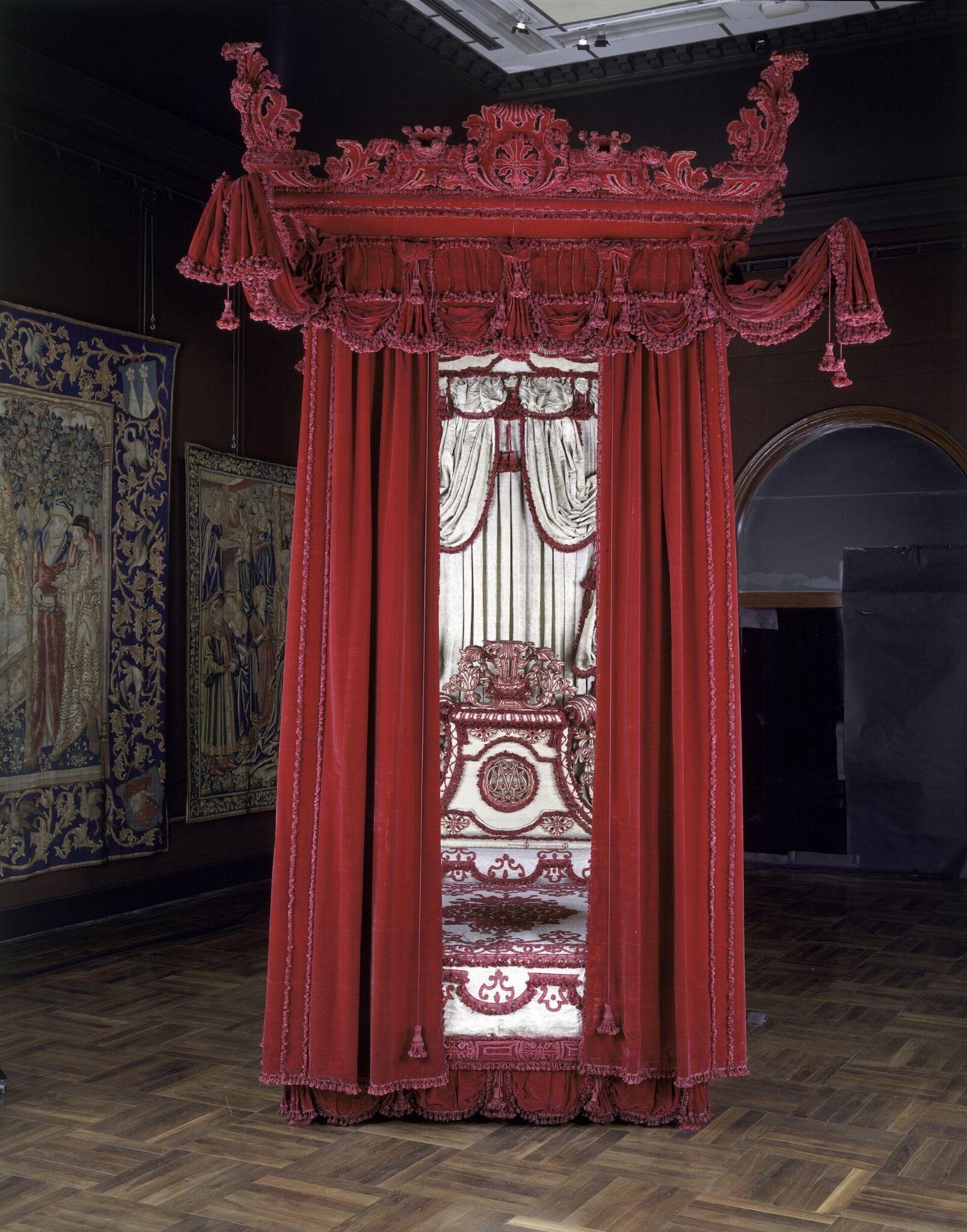
The Melville Bed
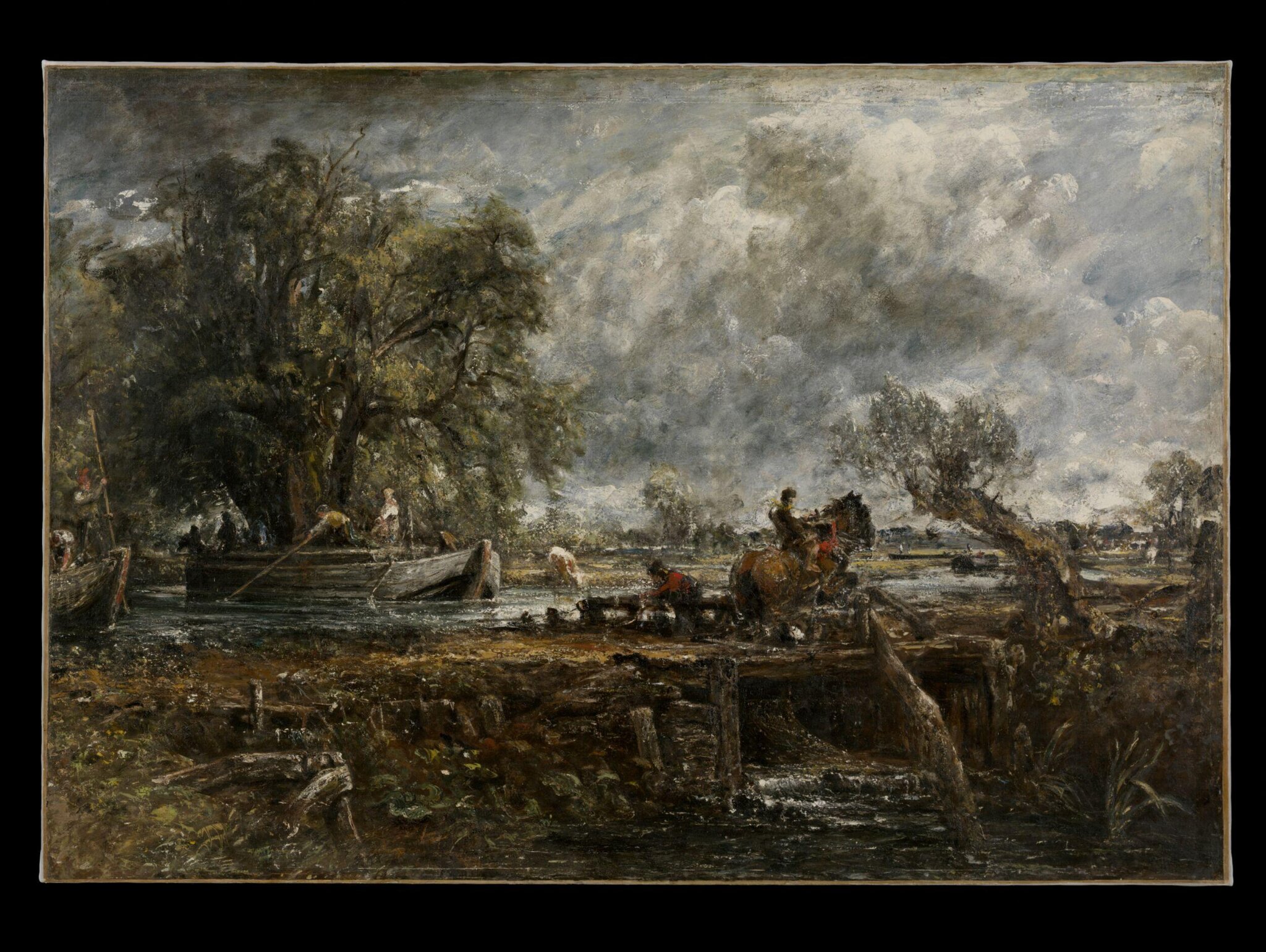
The Leaping Horse (full-scale study)
Images © Victoria and Albert Museum, London.
Getting the audio for each object
Big, famous objects like these are what photo recognition handles best. Choose V&A South Kensington on the home page, take a photo, and the commentary starts. See the free V&A audio guide for tips.
Frequently asked questions
What should I not miss at the V&A?
The Cast Courts, the Raphael Cartoons, the Ardabil Carpet, the Medieval and Renaissance galleries and the British Galleries are what most visitors come for. Every object on this page has a free audio commentary on Audioguide.London.
Where are the Cast Courts?
In Rooms 46a and 46b on the ground floor, a short walk from the Grand Entrance on Cromwell Road. Michelangelo’s David is in Room 46b and Trajan’s Column in Room 46a.
Can I take photos in the V&A?
Yes, in most of the permanent galleries, for personal use. Some exhibitions do not allow photography, so look for the signs.
Find each room’s objects on the museum map
The V&A South Kensington map draws every floor of the museum: tap a room to browse the objects in it, with the ones that already have a free audio guide marked. It shows where the audio-guide objects are before you set out, or when a photo isn’t recognised.