Sunflowers
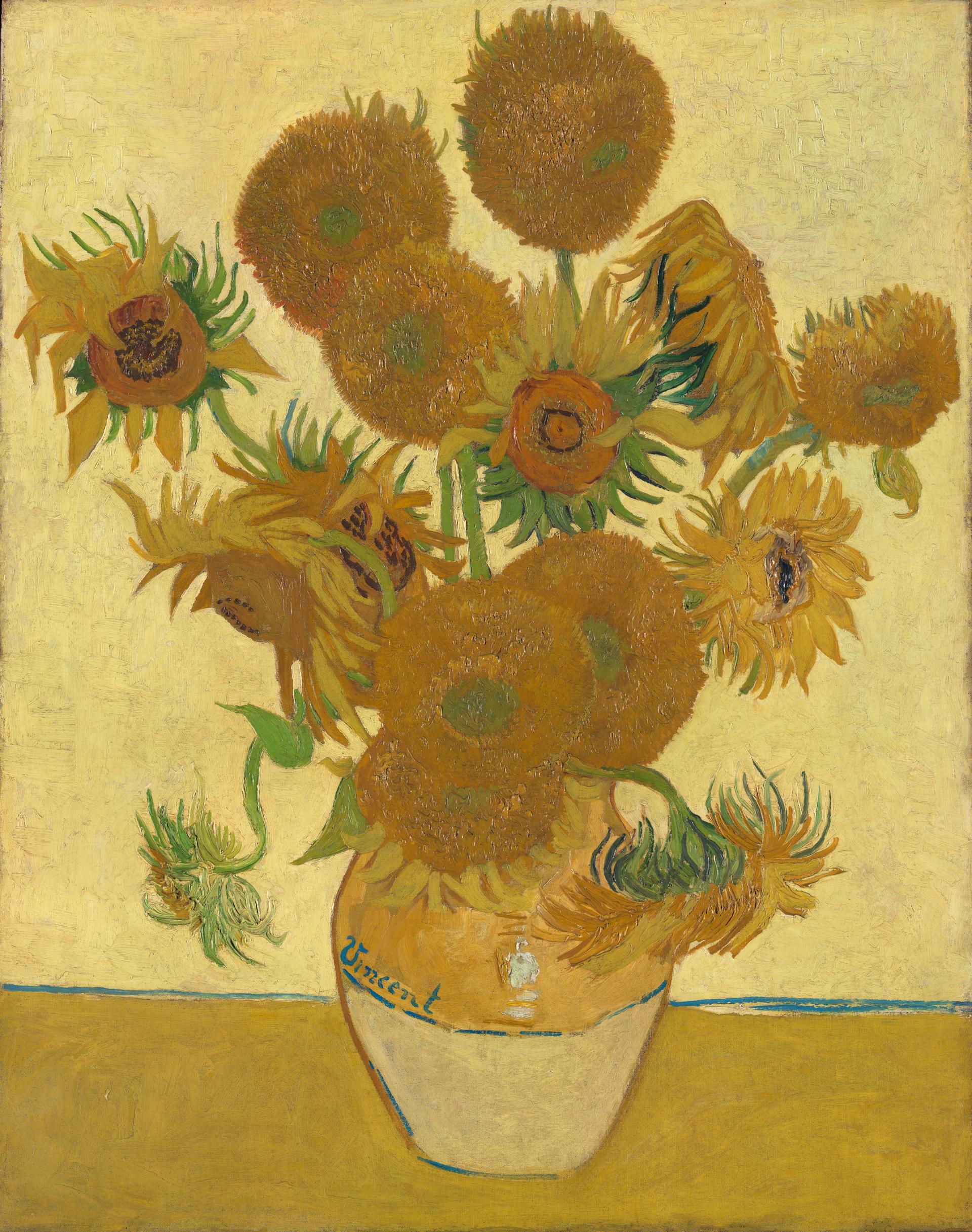
- Artist: Vincent van Gogh
- Date: 1888
- Medium: oil on canvas
- Museum: The National Gallery
- Collection record: The National Gallery website
Listen to the free audio guide
About this artwork
This is "Sunflowers" painted by Vincent van Gogh. Van Gogh made these paintings to decorate his house in Arles in readiness for a visit from his friend and fellow artist, Paul Gauguin. The sunflower is depicted in different stages of its life cycle, from young bud through to maturity and eventual decay.
The painting follows the vanita tradition of Dutch seventeenth-century flower paintings, which emphasizes the transient nature of human actions. Sunflowers were perhaps also intended to be a symbol of friendship and a celebration of the beauty and vitality of nature.
Van Gogh painted seven versions of "Sunflowers" in total between 1888 and 1889. This painting is one of five versions on public display, along with the Van Gogh Museum in Amsterdam, the Neue Pinakothek in Munich, the Philadelphia Museum of Art, and the Sompo Museum in Tokyo.
The painting showcases Van Gogh's expressive style, which he developed during his time in Arles. He limited his palette to just one primary colour - yellow - ranging from rich orange ochre to pale greenish yellow. Yellow was a significant colour for Van Gogh, symbolizing happiness and the beauty of nature.
Van Gogh had a strong bond with nature, and this painting captures the vibrant colours and textures of the sunflowers in different stages of their life cycle. The long strokes and small raised dabs of stippled paint imitate the bristling seed heads, creating a thick impasto effect.
See it in person
Sunflowers hangs in The National Gallery on Trafalgar Square, London — free to enter. Point your phone at any artwork there and audioguide.london plays a free audio guide in six languages — no app download needed.