A Wheatfield, with Cypresses
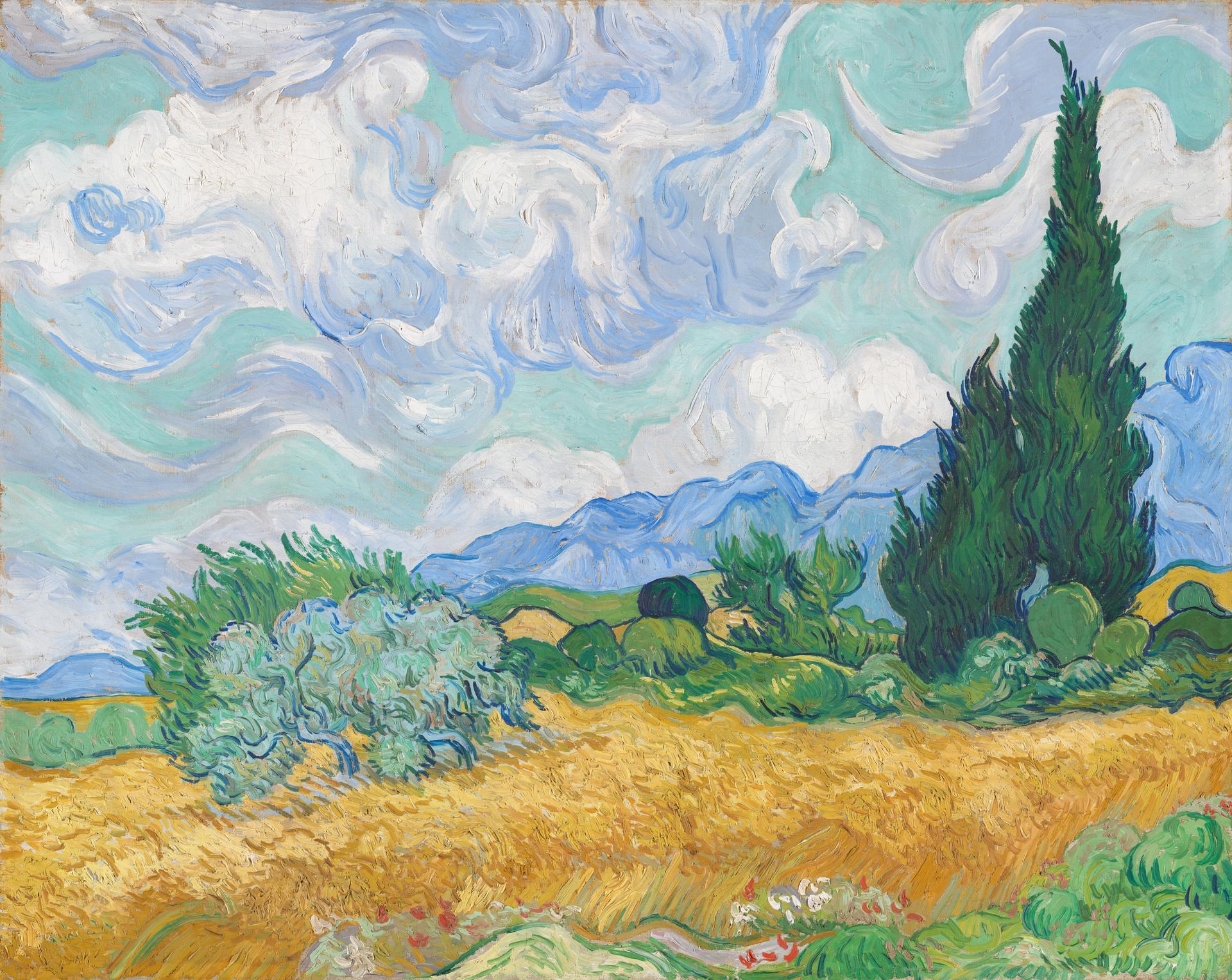
- Artist: Vincent van Gogh
- Date: 1889
- Medium: oil on canvas
- Museum: The National Gallery
- Collection record: The National Gallery website
Listen to the free audio guide
About this artwork
This is "A Wheatfield, with Cypresses" by Vincent van Gogh. Painted in the south of France during the summer of 1889, while he was a patient at the psychiatric hospital of Saint-Paul de Mausole, this painting captures the vibrant spirit of the Provençal landscape.
You can see the typical motifs of the region here: a golden wheat field, tall evergreen cypresses, an olive bush, and in the background, the blue Alpilles mountains. Van Gogh was known to paint outdoors during the strong mistral wind that blows through southern France, and you can sense its energy animating the entire landscape.
The powerful rhythmic lines and swirling brushstrokes are characteristic of Van Gogh's style, conveying his deep connection to nature's vitality. This painting is actually a finished version, created while he was confined to his hospital room in September 1889, after producing an initial study on site just one month earlier.
Van Gogh was deeply inspired by the natural world and saw himself as part of it, much like the wheat that grows in the fields. He wrote about this idea in a letter to his sister, noting that we are all connected to nature's cycles of life and death. This painting is not just a beautiful representation of the landscape but also a deeply personal expression of Van Gogh's own artistic vision and spiritual connection to the world around him.
See it in person
A Wheatfield, with Cypresses hangs in The National Gallery on Trafalgar Square, London — free to enter. Point your phone at any artwork there and audioguide.london plays a free audio guide in six languages — no app download needed.