Landscape with Ploughman
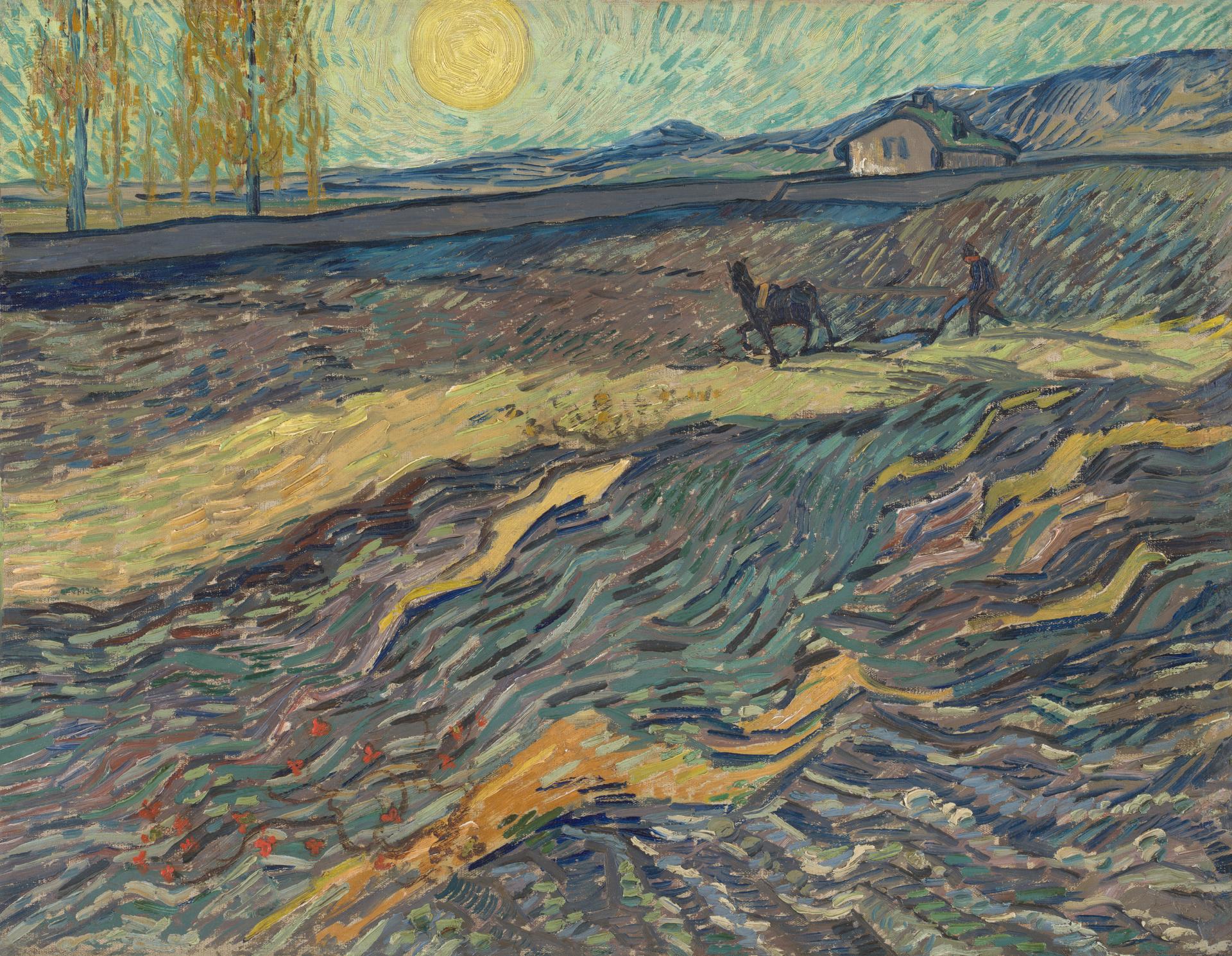
- Artist: Vincent van Gogh
- Date: 1889
- Medium: Oil on canvas
- Museum: The National Gallery
- Collection record: The National Gallery website
Listen to the free audio guide
About this artwork
This is "Landscape with Ploughman" painted in 1889 by Vincent van Gogh. This painting was created during his stay at the asylum in Saint-Rémy, following a severe epileptic attack that had prevented him from painting for some time.
The scene is based on direct observation of the view he could see from his window - a walled-in wheatfield below and the Alpilles mountain range emerging ahead. The hardworking ploughman tilling the soil at dawn becomes a symbol for the artist himself, as Van Gogh wrote to his mother in October 1889, "I am ploughing on my canvases as they do in their fields".
The painting is typical of Van Gogh's work at this date, combining direct observation with personal and aesthetic meaning. The colours are heightened, with a palette of luminous blues and yellow farming tracks breaking up the muddy earth. The brushwork is animated and loaded, demonstrating Van Gogh's increasing recognition that colour and surface had expressive potential.
The painting has an imaginative dimension, with artistic licence taken in the composition - two trees were inserted in the upper left-hand corner, and the size of the mountains was diminished. This work is one of many that celebrated the work of manual labourers, set in landscapes awash with vitality and movement.
See it in person
Landscape with Ploughman hangs in The National Gallery on Trafalgar Square, London — free to enter. Point your phone at any artwork there and audioguide.london plays a free audio guide in six languages — no app download needed.