Study of Trees
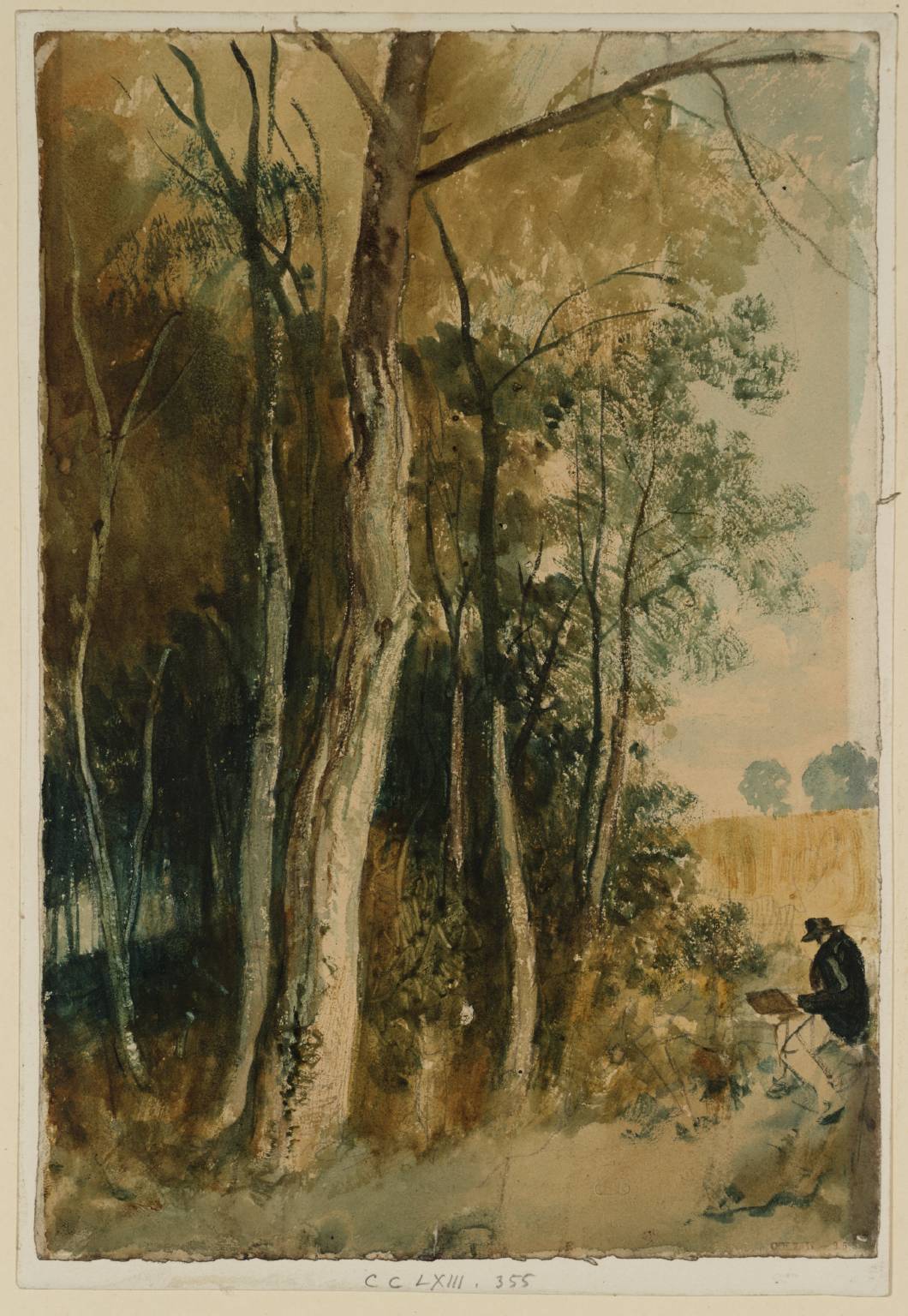
- Artist: Joseph Mallord William Turner
- Date: c.1820–30
- Medium: Graphite and watercolour on paper
- Dimensions: support: 274 x 188 mm
- Museum: Tate Britain
- Collection record: Tate Britain website
Listen to the free audio guide
About this artwork
This is the “Study of Trees” by Joseph Mallord William Turner. Created around 1820‑30, the work is a quick sketch in graphite and watercolour on paper, measuring just 274 × 188 mm. It shows Turner’s early experimentation with light and atmosphere—notice how the pencil lines hint at the trunks’ texture while the washes give a fleeting sense of sky reflected in the foliage.
Turner was renowned for capturing the dynamic quality of nature, and even in a small study he plays with the interplay of shadow and brightness. The piece is part of the Turner Bequest, accepted by the nation in 1856, and now sits in the cataloguing room of Tate Britain.
As you look at this study, think of it as a window into the artist’s process: a moment before a full landscape, a study of form and light that would inform his later, larger works. The use of graphite gives a clear, almost architectural feel to the tree outlines, while the translucent washes suggest the movement of weather. It’s a concise, elegant glimpse into Turner’s evolving mastery of natural scenery.
See it in person
Study of Trees is in the collection of Tate Britain on Millbank, London — free to enter. Point your phone at any artwork there and audioguide.london plays a free audio guide in six languages — no app download needed.