?Study for the ‘Vision of Medea’
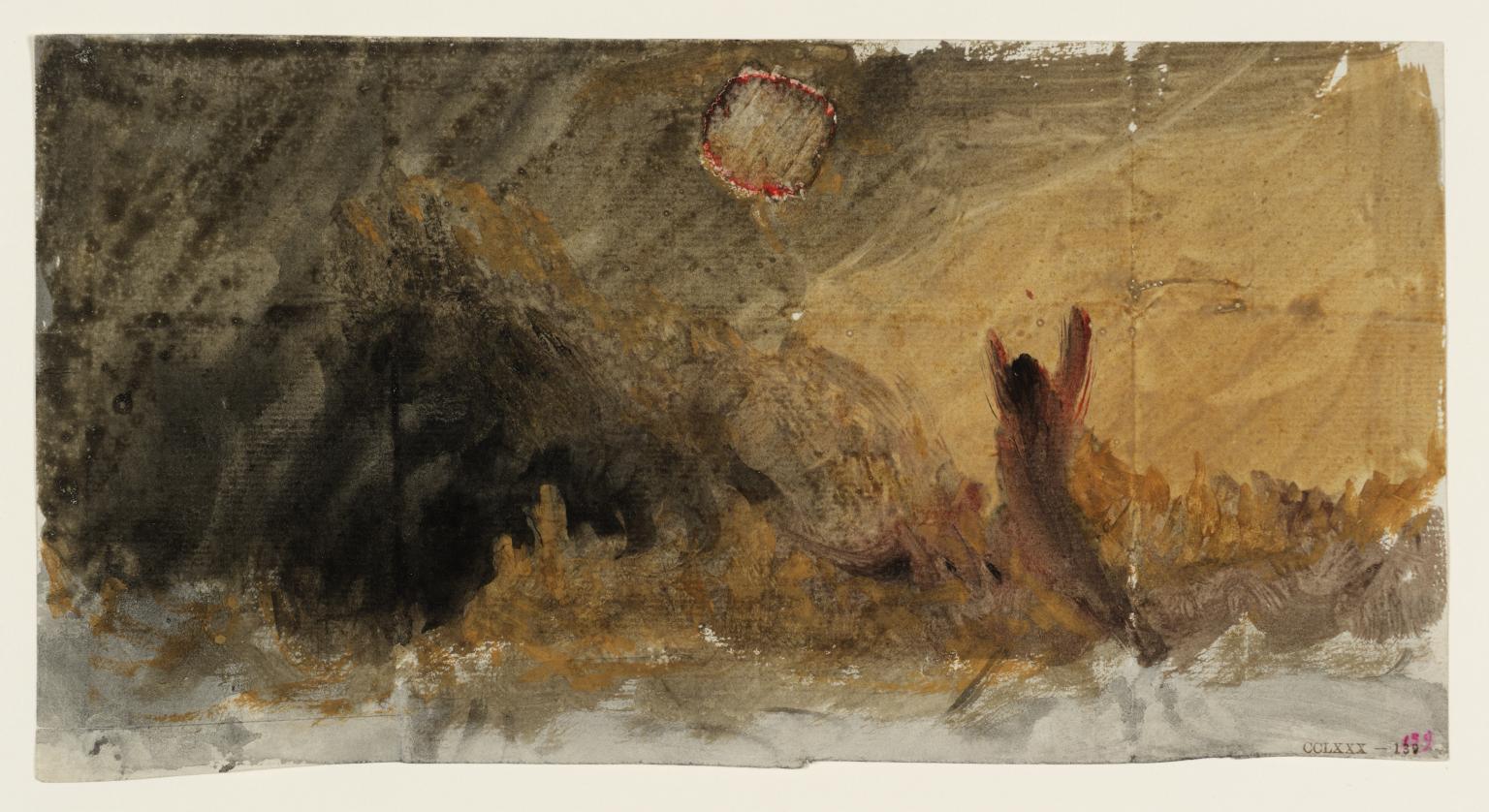
- Artist: Joseph Mallord William Turner
- Date: c.1824–8
- Medium: Gouache on paper
- Dimensions: support: 120 x 227 mm
- Museum: Tate Britain
- Collection record: Tate Britain website
Listen to the free audio guide
About this artwork
This is the “Study for the Vision of Medea” by Joseph Mallord William Turner. Created around 1824‑1828, the piece is a gouache on paper measuring just 120 × 227 mm, a small sketch that hints at Turner’s larger plan for an oil painting of the same mythic subject. Turner, who would later be celebrated for his dramatic landscapes, uses this study to experiment with the dramatic posture of Medea—a woman with arms raised, caught in a moment of sorcery. The background hints at a vague, almost flat landscape, a typical backdrop for the classical myths that fascinated the artist. Medea, known from Greek legend as a witch who turns against her own children, is rendered with a subtle blend of menace and pathos. Turner’s loose brushwork and quick strokes give the figure an almost fleeting, almost ghost‑like quality, suggesting the fleeting nature of inspiration. This study was accepted into the nation’s collection as part of the Turner Bequest in 1856, and today it is on display in Tate Britain’s Gallery 102, where visitors can see firsthand the early stages of one of Turner’s most ambitious mythological projects.
See it in person
?Study for the ‘Vision of Medea’ is in the collection of Tate Britain on Millbank, London — free to enter. Point your phone at any artwork there and audioguide.london plays a free audio guide in six languages — no app download needed.