Still Life
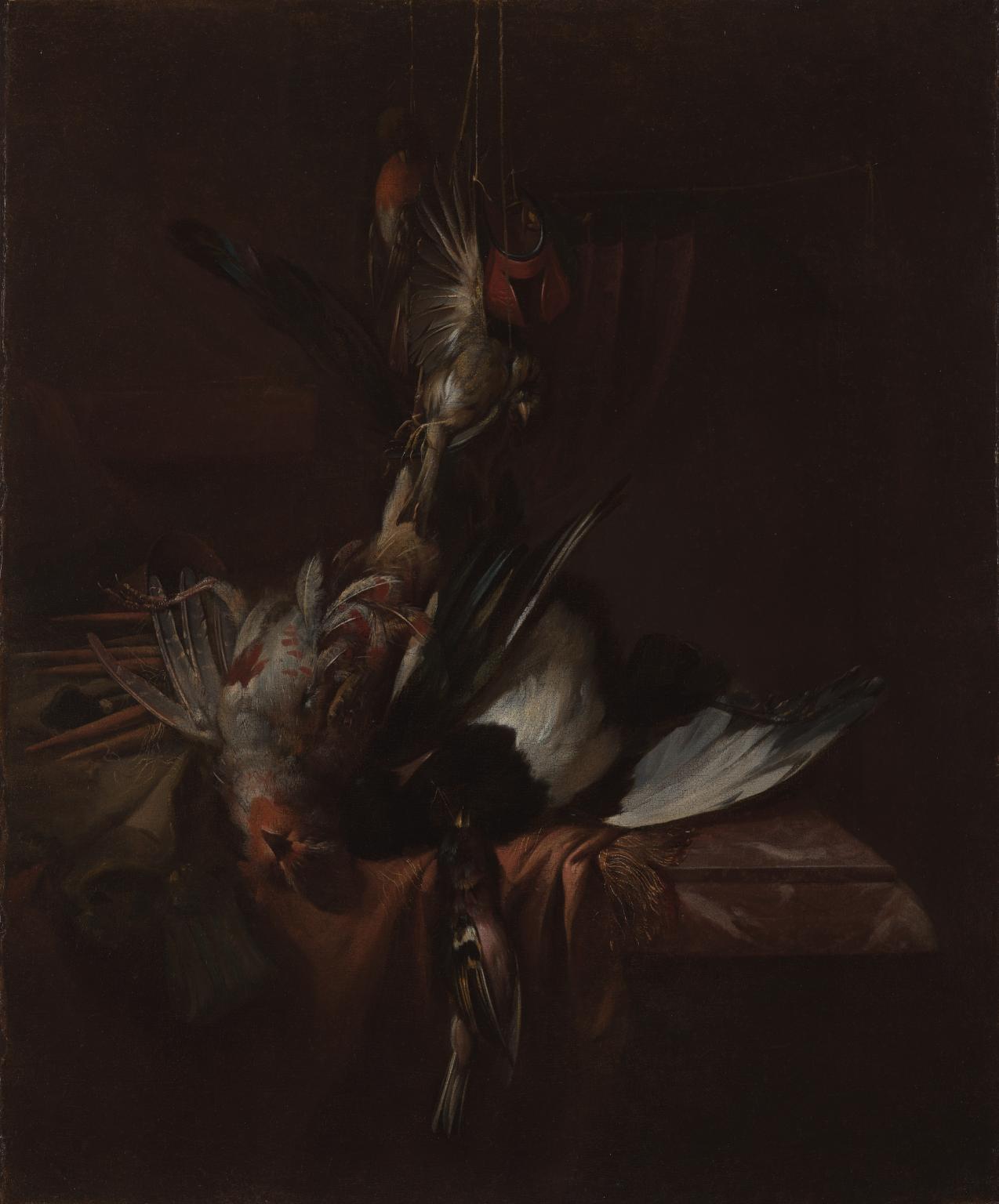
- Artist: William Gow Ferguson
- Date: 1684
- Medium: Oil paint on canvas
- Dimensions: support: 654 x 540 mm
- Museum: Tate Britain
- Collection record: Tate Britain website
Listen to the free audio guide
In the museum now? Point your phone at the next artwork and hear its guide.
About this artwork
This is the “Still Life” by William Gow Ferguson. Painted in 1684 in oil on canvas, the work measures just over 650 × 540 mm and carries the artist’s signature “W G Ferguson f. 1684” on the lower right. The composition is a classic Dutch gamepiece: a partridge and a magpie hang from above, their heads resting on a gold‑fringed cloth over a marble ledge, while a goldfinch and a robin add a splash of colour. Beside them, a falcon’s bonnet, a game bag, a hunting horn and wooden stakes suggest the hunt that supplied the birds.
Ferguson was born in Scotland but trained and worked in Holland, and he travelled through France and Italy. His still lifes were prized for decorating small, informal rooms; a pair of similar paintings were supplied for the Duchess of Lauderdale’s private closet at Ham House in the 1670s. The painting’s dark ground and careful rendering of texture hint at influences from his time in Italy, while the varnish has deepened its rich yellow and blue pigments. Acquired by the gallery in 1955, this piece exemplifies Ferguson’s contribution to the 17th‑century Dutch game‑still‑life tradition and offers a glimpse into the genteel world of hunting and decor of the era.
See it in person
Still Life is in the collection of Tate Britain on Millbank, London — free to enter. Point your phone at any artwork there and audioguide.london plays a free audio guide in six languages — no app download needed.