Still Life
- Artist: Edward Collier
- Date: 1699
- Medium: Oil paint on canvas
- Dimensions: support: 762 x 635 mm
- Museum: Tate Britain
- Collection record: Tate Britain website
Listen to the free audio guide
In the museum now? Point your phone at the next artwork and hear its guide.
About this artwork
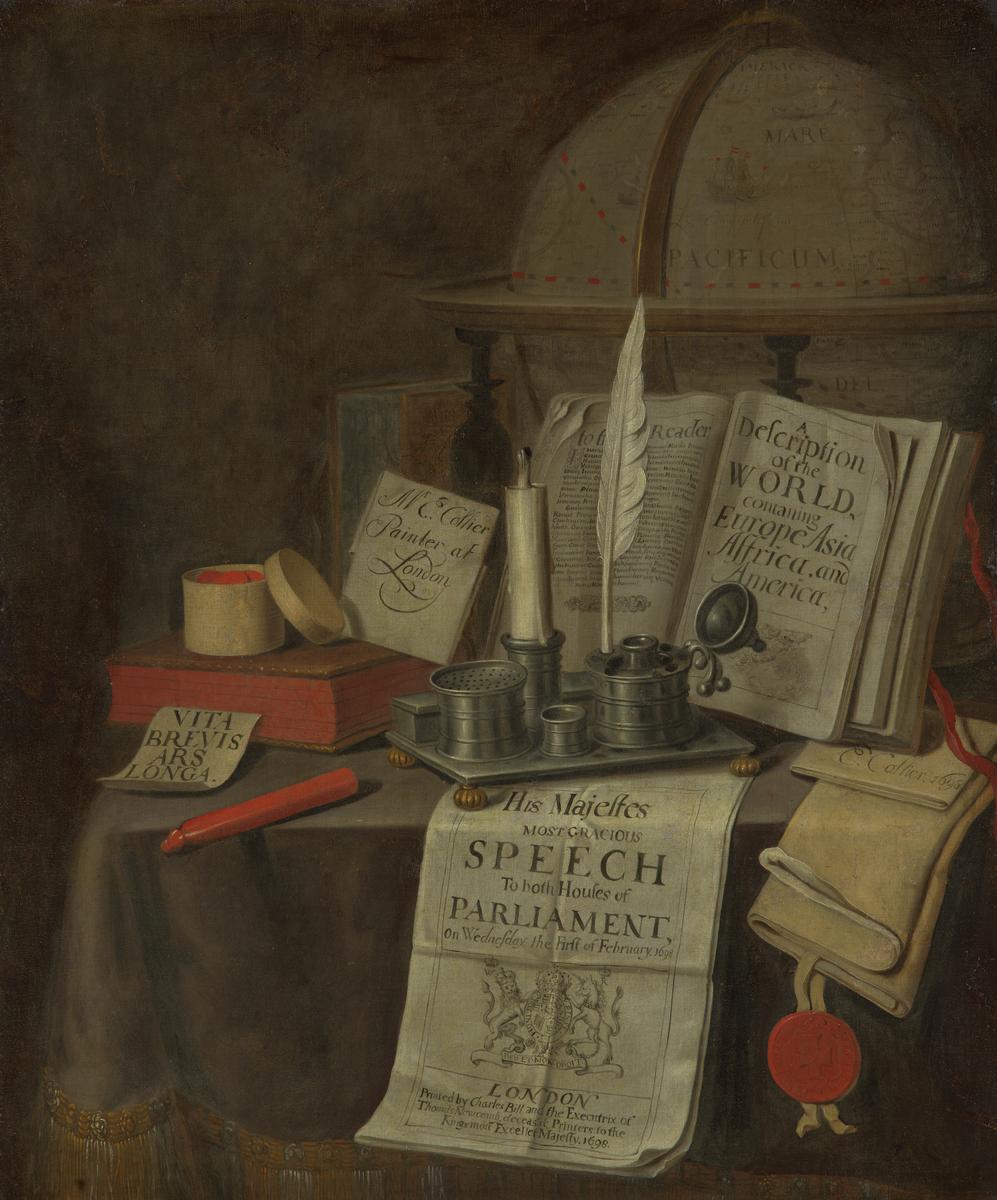
This is the “Still Life” by Edward Collier, painted in 1699 in oil on canvas. At first glance, the scene looks like a tidy study: a polished table, a stack of books, a globe, a quill and a snuffed candle. But Collier turns the ordinary into a quiet meditation on the fleeting nature of life.
The Latin motto “Vita brevis ars longa” – “Life is short, art is long” – sits on a vellum sheet, a reminder that our achievements may outlast our mortal span. The extinguished candle is the classic vanitas symbol: no light, no warmth, a literal death.
The globe, turned to the Pacific, hints at the era’s colonial ambition, while the open atlas titled “A Description of the World” suggests humanity’s limited grasp of the globe. Both point to the inevitable collapse of empire and empire‑dreams.
Under the atlas, a letter bears the hand‑written note “Mr E. Collier – Painter at London” and the date “1698.” The same year appears on a printed transcript of a speech by King William III to Parliament – a political moment about disbanding the army. Collier embeds this contemporary event into a still life, grounding the allegory in a real historical moment.
Together, the objects form a vanitas tableau that speaks to the impermanence of power, wealth, knowledge and, of course, life itself.
See it in person
Still Life is in the collection of Tate Britain on Millbank, London — free to enter. Point your phone at any artwork there and audioguide.london plays a free audio guide in six languages — no app download needed.