Standing cup
- Gallery: Room 2a
- Maker: Christoph Erhart
- Made in: Augsburg
- Date: 1550-1600 (with later alterations before 1866)
- Object type: standing cup
- Materials: silver
- Museum number: WB.137
- Museum: The British Museum
- Collection record: British Museum website
- Image © The Trustees of the British Museum, shared under a CC BY-NC-SA 4.0 licence.
Listen to the free audio guide
In the museum now? Point your phone at the next object and hear its guide.
About this object
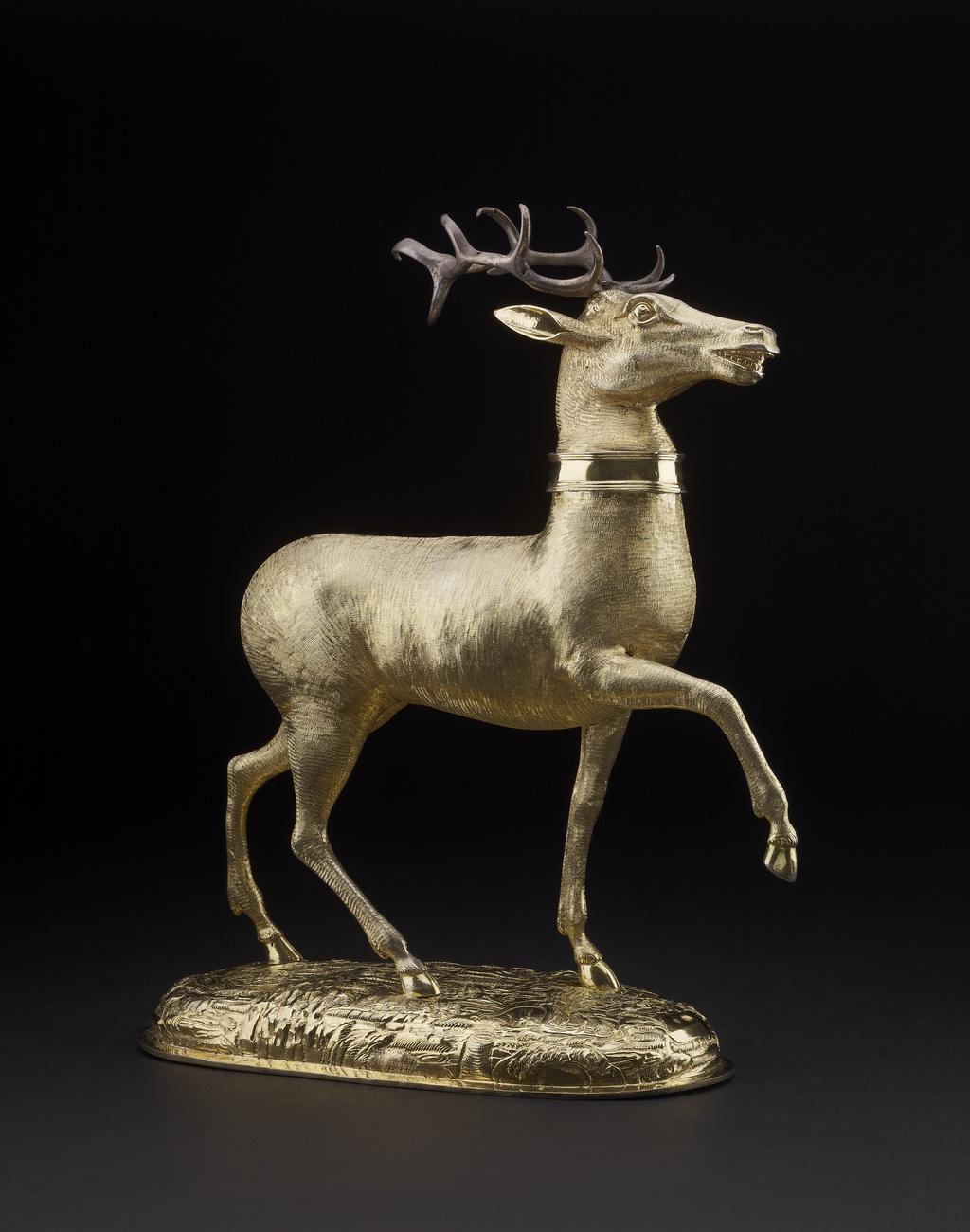
Before you is a striking silver-gilt standing cup crafted in late 16th-century Augsburg by goldsmith Christoph Erhart. The centerpiece is a life-sized stag in motion—"tripping"—suggesting movement and vitality. The stag's head detaches, revealing finely detailed body work that softens at the edges. Below, the oval base pulses with action: chased depictions of snakes, plants, and a remarkably unusual armadillo with an extended tail suggest a fascination with the exotic.
Inscribed marks confirm the piece's origin and maker, including Augsburg’s town assay mark and Erhart’s own initials. Though the detailing on the antlers was later altered in the 19th century, the original craftsmanship remains bold and inventive.
This cup was part of the illustrious Waddesdon Bequest, assembled by Baron Ferdinand Rothschild. It reflects the golden age of Augsburg goldsmithing—a time when artisans like Erhart fused technical skill with imaginative design to create works of art as much as functional objects.
See it in person
Standing cup is on display in Room 2a at the British Museum on Great Russell Street, Bloomsbury, London — free to enter. Choose British Museum on audioguide.london and take a photo of it to hear this free audio guide in six languages — no app download needed.
New, in beta. British Museum support has just launched and is still improving: over 1,000 objects so far, with more added all the time.