Scent-fountain
- Gallery: Room 2a
- Culture: Augsburg
- Made in: Augsburg (?)
- Date: 1576-1600; 1800s (finial)
- Object type: scent-fountain
- Materials: seychelles nut (half of a nut of the female double coconut palm [Lodoicea maldivica] which now grows on only two islands in the Seychelles in the East Indian Ocean); silver
- Museum number: WB.125
- Museum: The British Museum
- Collection record: British Museum website
- Image © The Trustees of the British Museum, shared under a CC BY-NC-SA 4.0 licence.
Listen to the free audio guide
In the museum now? Point your phone at the next object and hear its guide.
About this object
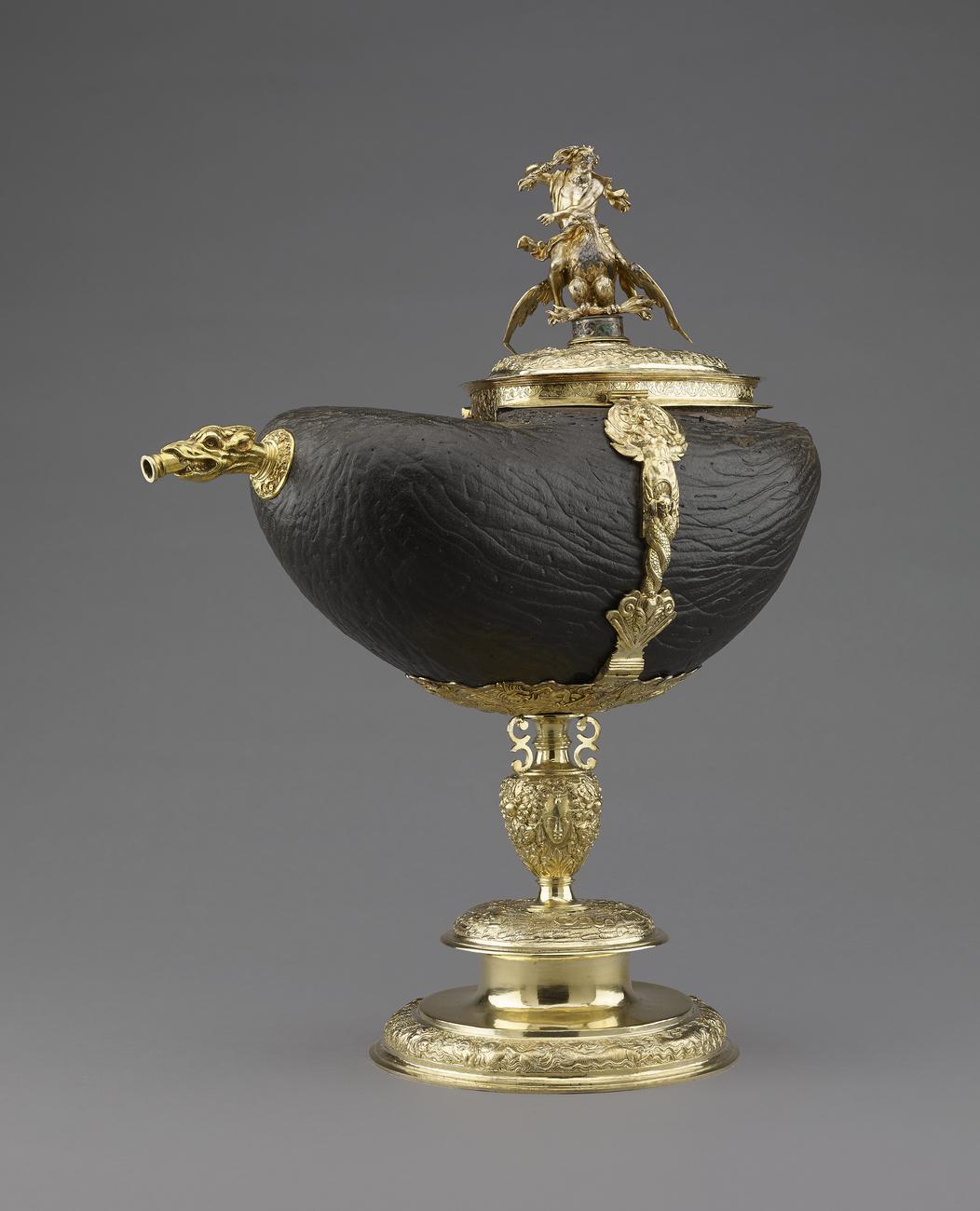
Before you stands a remarkable scent-fountain shaped like a grand vase, its body crafted from half a rare Seychelles nut mounted in rich silver-gilt. The elegant form is embossed, chased, and engraved with intricate details. At the top, an alluring triangular mouth is rimmed with engraved scrolls and linked to the base by two bands, each representing a winged allegorical female figure with serpentine tails. On one end, a spout molded as a fantastical animal’s head emerges. The stem holds three beautifully carved female masks amid swags of fruit, while the foot and base are adorned with scenes of swimming dolphins and reptiles. The cover, similarly detailed, once featured a modern addition: Jupiter astride his eagle. Thought to have been crafted in Augsburg around 1600, this masterpiece blends exotic materials with refined European craftsmanship, once held by the Rothschild family.
See it in person
Scent-fountain is on display in Room 2a at the British Museum on Great Russell Street, Bloomsbury, London — free to enter. Choose British Museum on audioguide.london and take a photo of it to hear this free audio guide in six languages — no app download needed.
New, in beta. British Museum support has just launched and is still improving: over 1,000 objects so far, with more added all the time.