St Benedetto, Looking towards Fusina
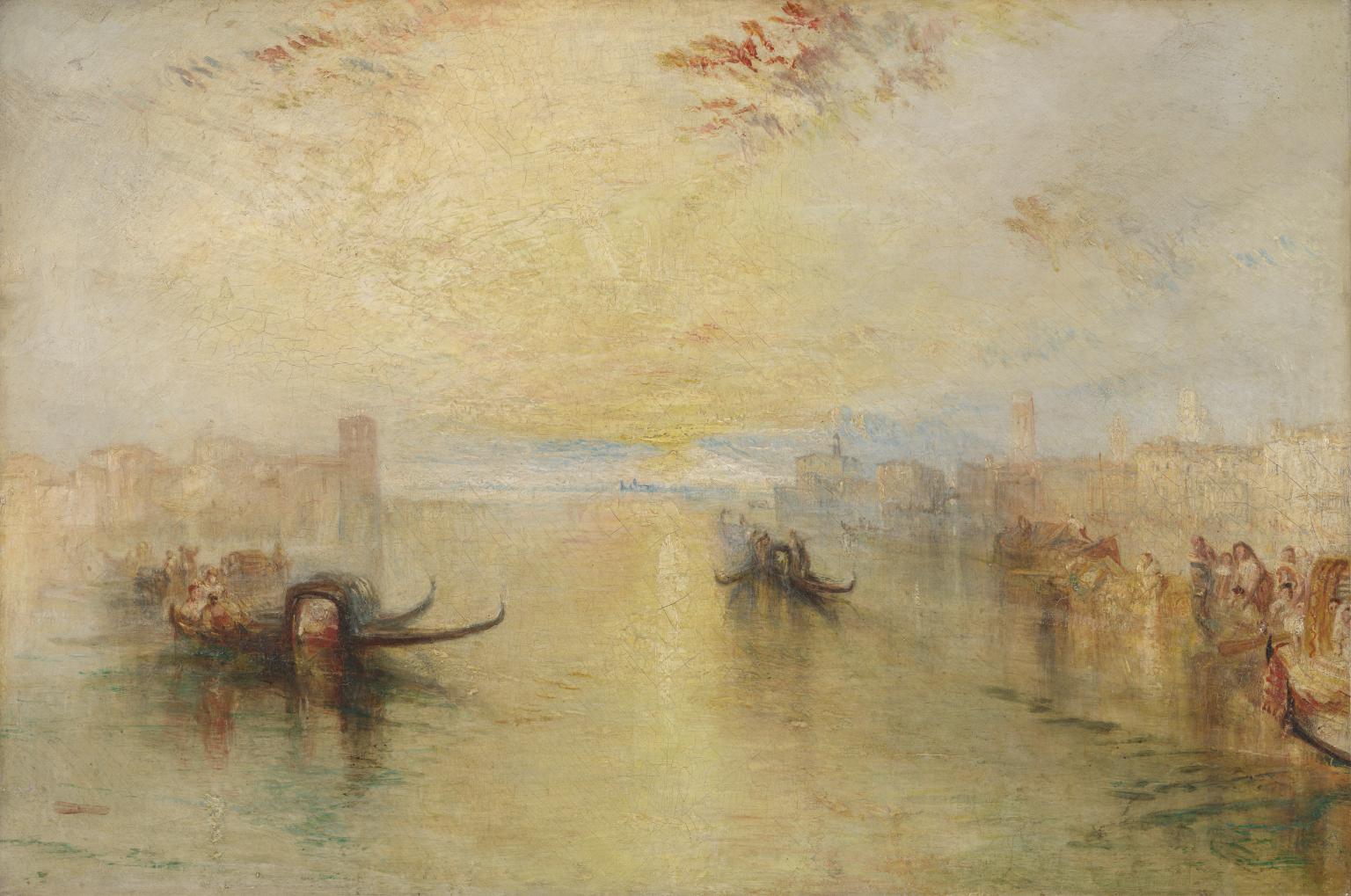
- Artist: Joseph Mallord William Turner
- Date: exhibited 1843
- Medium: Oil paint on canvas
- Dimensions: support: 622 x 927 mm
- Museum: Tate Britain
- Collection record: Tate Britain website
Listen to the free audio guide
About this artwork
This is the “St Benedetto, Looking towards Fusina” by Joseph Mallord William Turner. Painted in 1843, it captures a fleeting Venetian vista from the Giudecca Canal, gazing east across the water toward the mainland town of Fusina. Turner never put an actual church of San Benedetto on the horizon, but he used that name to suggest the spirit of the city rather than a literal landmark.
The canvas is an oil on canvas that Turner composed with the kind of loose, luminous brushwork that makes his seascapes feel almost translucent. Light flickers across the water, while the sky swirls in dusky purples edged with scarlet. The scene feels like a memory of sunset, as if the river itself were reflecting the fading day.
John Ruskin, a contemporary critic, praised the painting by saying that, “without one single accurate detail, it was the likest thing to what it is meant for… of all that I have ever seen.” That comment underscores how Turner’s skill lay not in meticulous realism but in distilling the emotional essence of place.
The work entered the Turner Bequest in 1856, a collection of his later oils. Though the title is a bit fanciful, the painting remains a vivid reminder of how the artist felt about Venice—its light, its water, its fleeting moments.
See it in person
St Benedetto, Looking towards Fusina is in the collection of Tate Britain on Millbank, London — free to enter. Point your phone at any artwork there and audioguide.london plays a free audio guide in six languages — no app download needed.