Self-Portrait
- Artist: Christian Schad
- Date: 1927
- Medium: Oil paint on wood
- Dimensions: support: 760 × 620 mm
- Museum: Tate Modern
- Collection record: Tate Modern website
Listen to the free audio guide
About this artwork
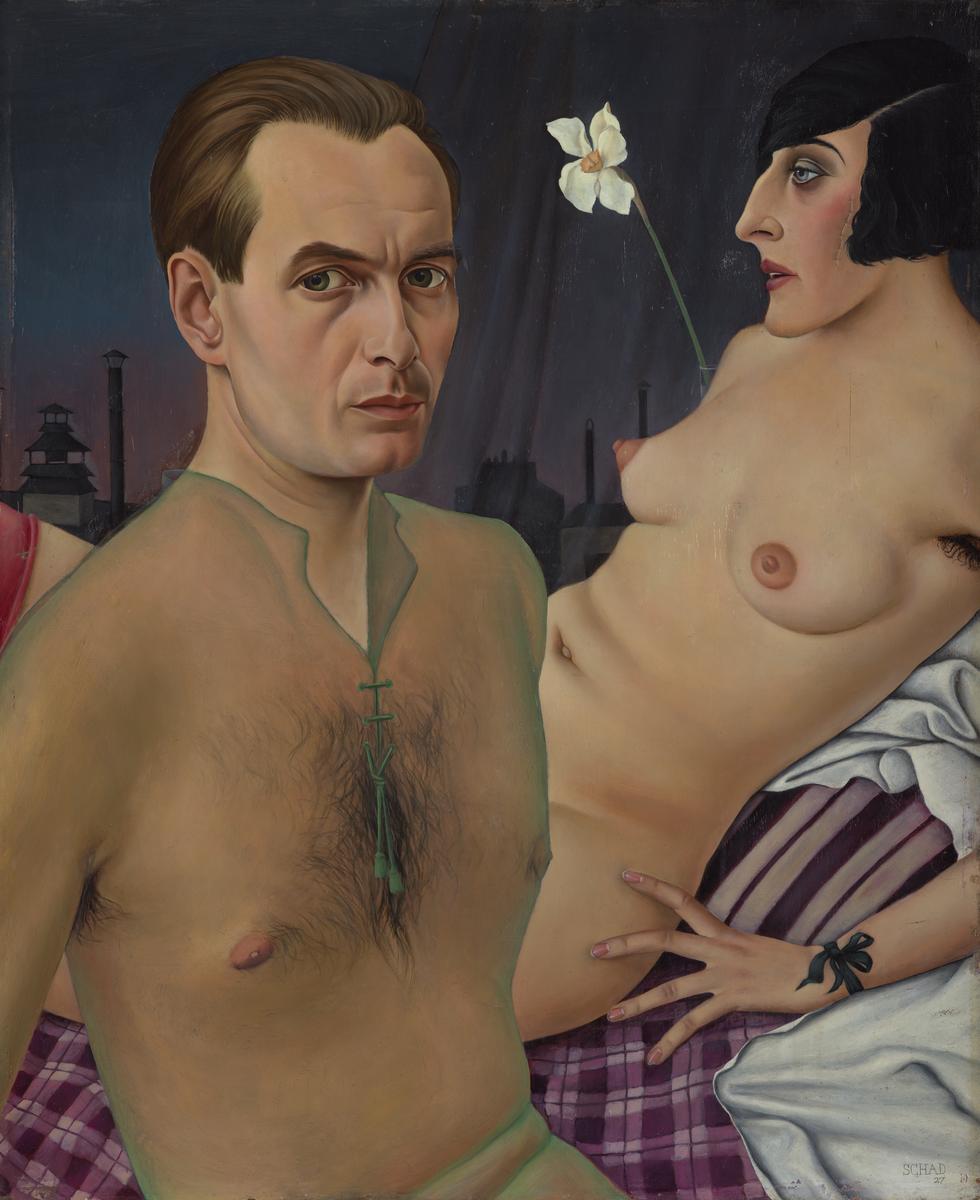
This is the "Self-Portrait" by Christian Schad. Painted in 1927 on a wooden panel, the piece shows the artist in a translucent green shirt, his face turned slightly, staring straight at us. Behind him sits a young woman, naked except for a scar that runs vertically down her cheek, a reminder of Neapolitan punishments. A single narcissus blooms beside her, a symbol of vanity. The composition is loaded with symbolism—Schad himself said no one is free from narcissism. The painting isn’t about passion or violence; it’s a quiet allegory of self‑reflection. Created while Schad lived in Vienna, the work sits at the crossroads of Expressionism and the New Objectivity, a movement that prized precise realism. In this intimate scene, the artist and model become mirror images, each reflecting the other's identity and desire for control. The oil on wood gives a subtle depth that invites you to linger, noticing the fragile transparency of the shirt and the sharp scar on the woman’s face.
See it in person
Self-Portrait is in the collection of Tate Modern on Bankside, London — free to enter. Point your phone at any artwork there and audioguide.london plays a free audio guide in six languages — no app download needed.