Seated Buddha
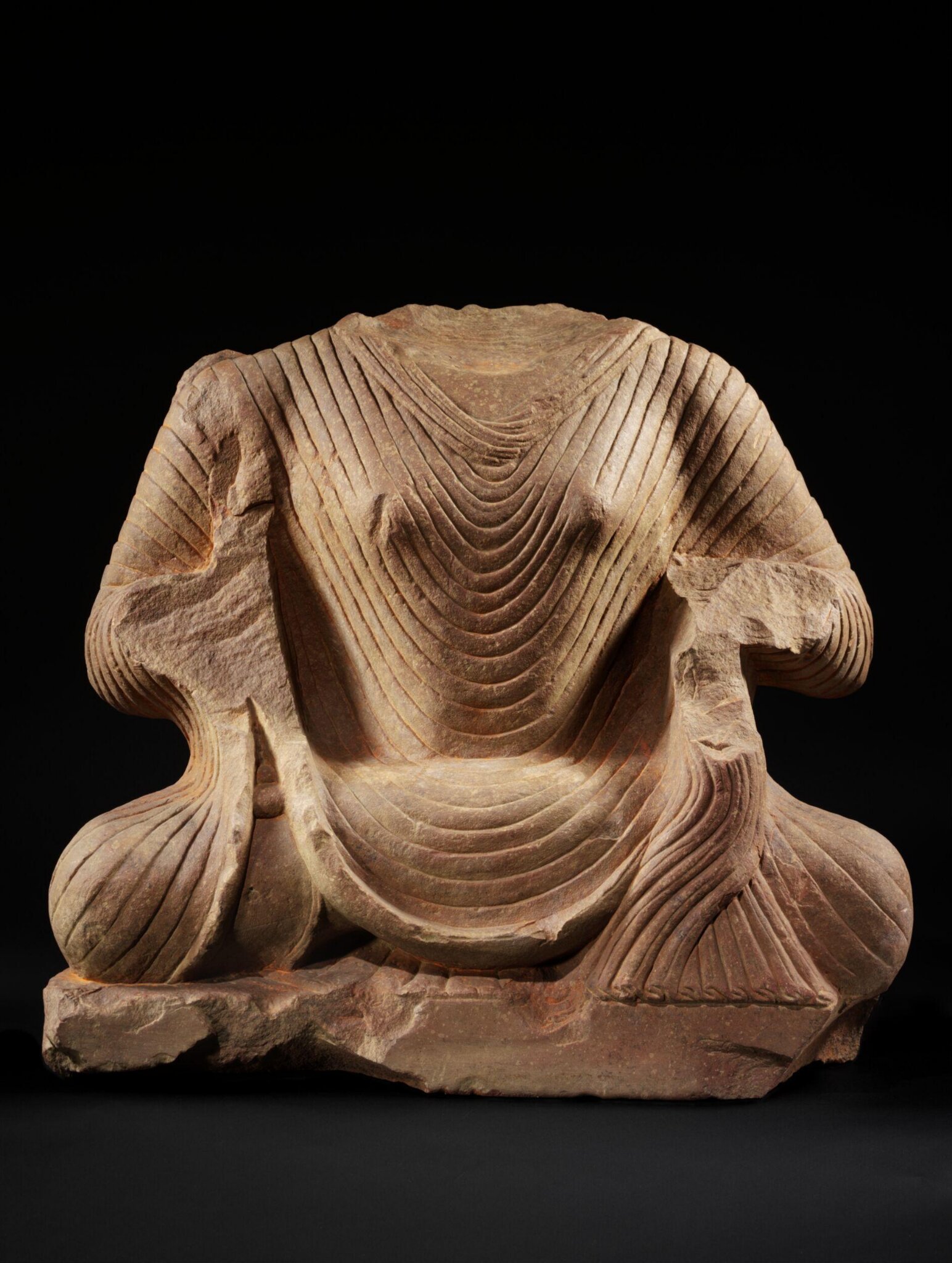
- Gallery: Buddhism, Room 47f, The Robert H. N. Ho Family Foundation Galleries of Buddhist Art
- Made in: Mathura
- Date: early 3rd century
- Object type: Sculpture
- Materials: Sculpted sandstone
- Style: Kushan
- Dimensions: Height 68.5 cm; Width 77 cm; Depth 37 cm
- Museum: V&A South Kensington
- Collection record: V&A website
- Image © Victoria and Albert Museum, London.
Listen to the free audio guide
In the museum now? Point your phone at the next object and hear its guide.
About this object
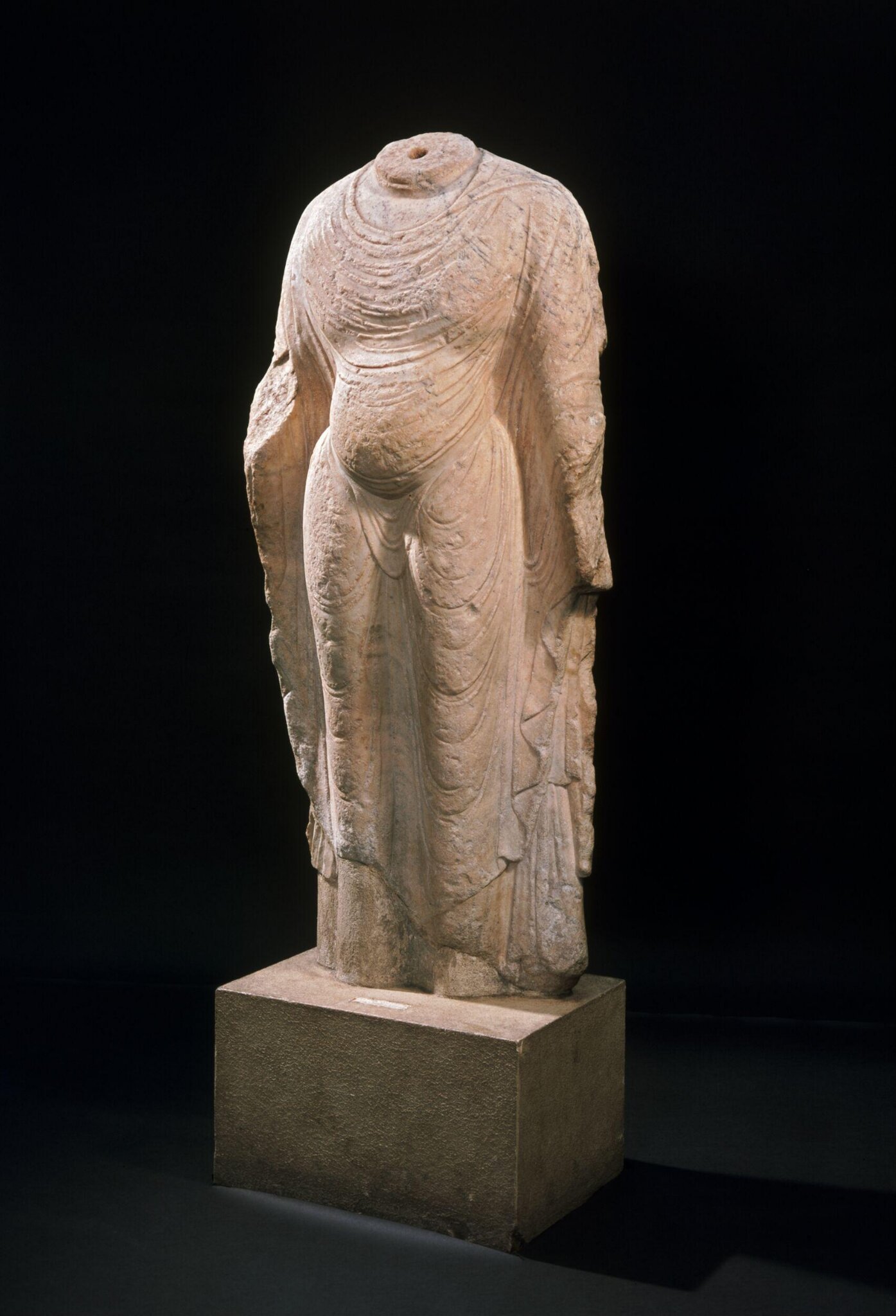
Before you is a "Seated Buddha" carved from pink mottled sandstone. This over-life sized figure comes from Mathura in northern India and dates back to the third century.
Notice the powerful presence of the torso. The chest is fully expanded to represent prana, or yogic breath, which symbolizes spiritual power. The figure is seated in a strict meditative position with legs crossed tightly. He wears a monastic robe with deeply incised folds that wrap around both shoulders, a style that emerged during the Kushan dynasty.
While the head and hands are missing, we can imagine the original pose. The right hand was likely raised in a gesture to bestow freedom from fear, while the left hand probably held the edges of the pleated robes. This sculpture is a significant example of the Mathura style, reflecting a period of artistic development where the robes were drawn up over both shoulders rather than leaving one shoulder exposed.
See it in person
Seated Buddha is on display in Buddhism, Room 47f, The Robert H. N. Ho Family Foundation Galleries of Buddhist Art at the V&A South Kensington on Cromwell Road, London — free to enter. Choose V&A South Kensington on audioguide.london and take a photo of it to hear this free audio guide in six languages — no app download needed.
New, in beta. V&A support has just launched and is still improving: 1,000 objects with audio so far, with more added all the time.