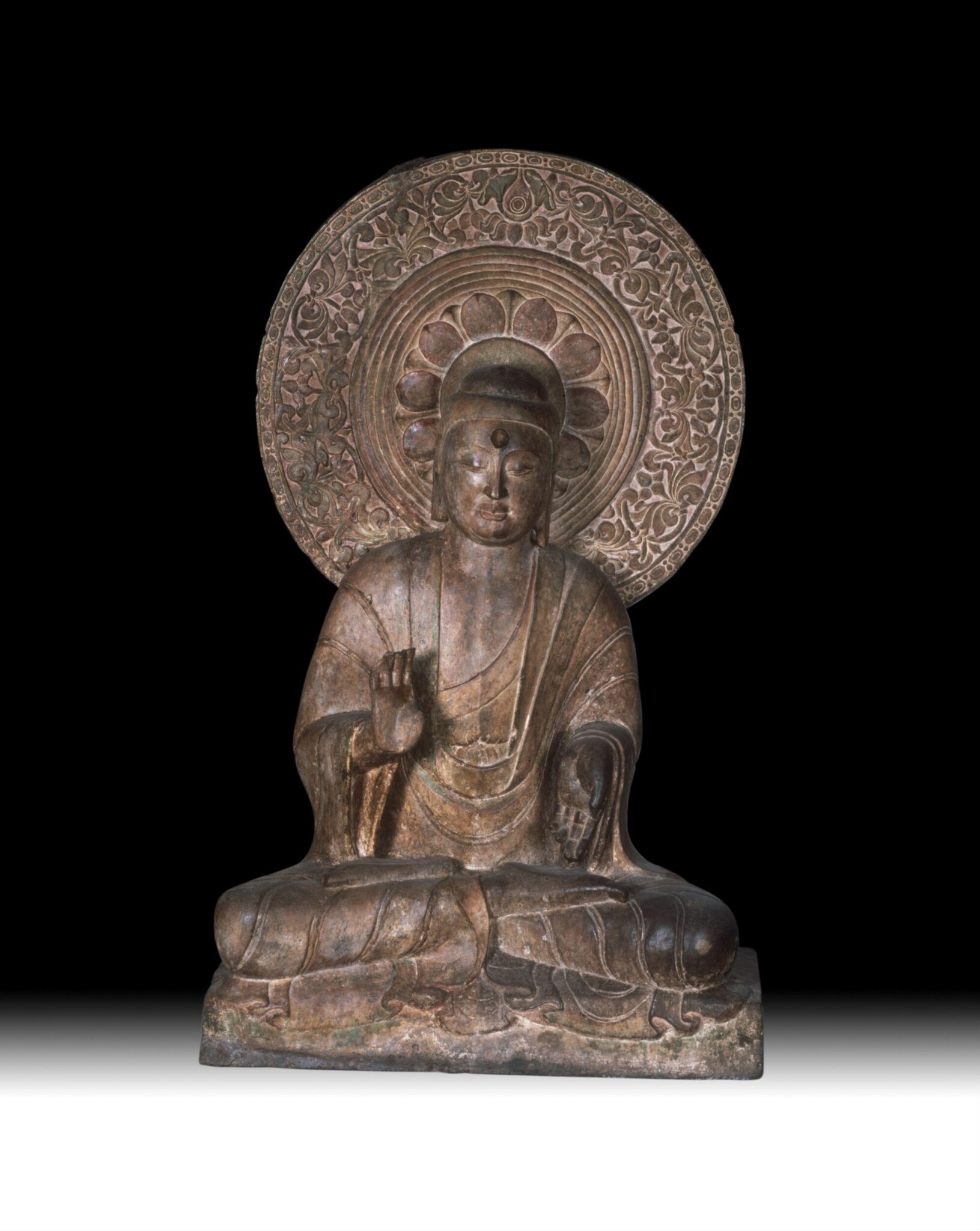
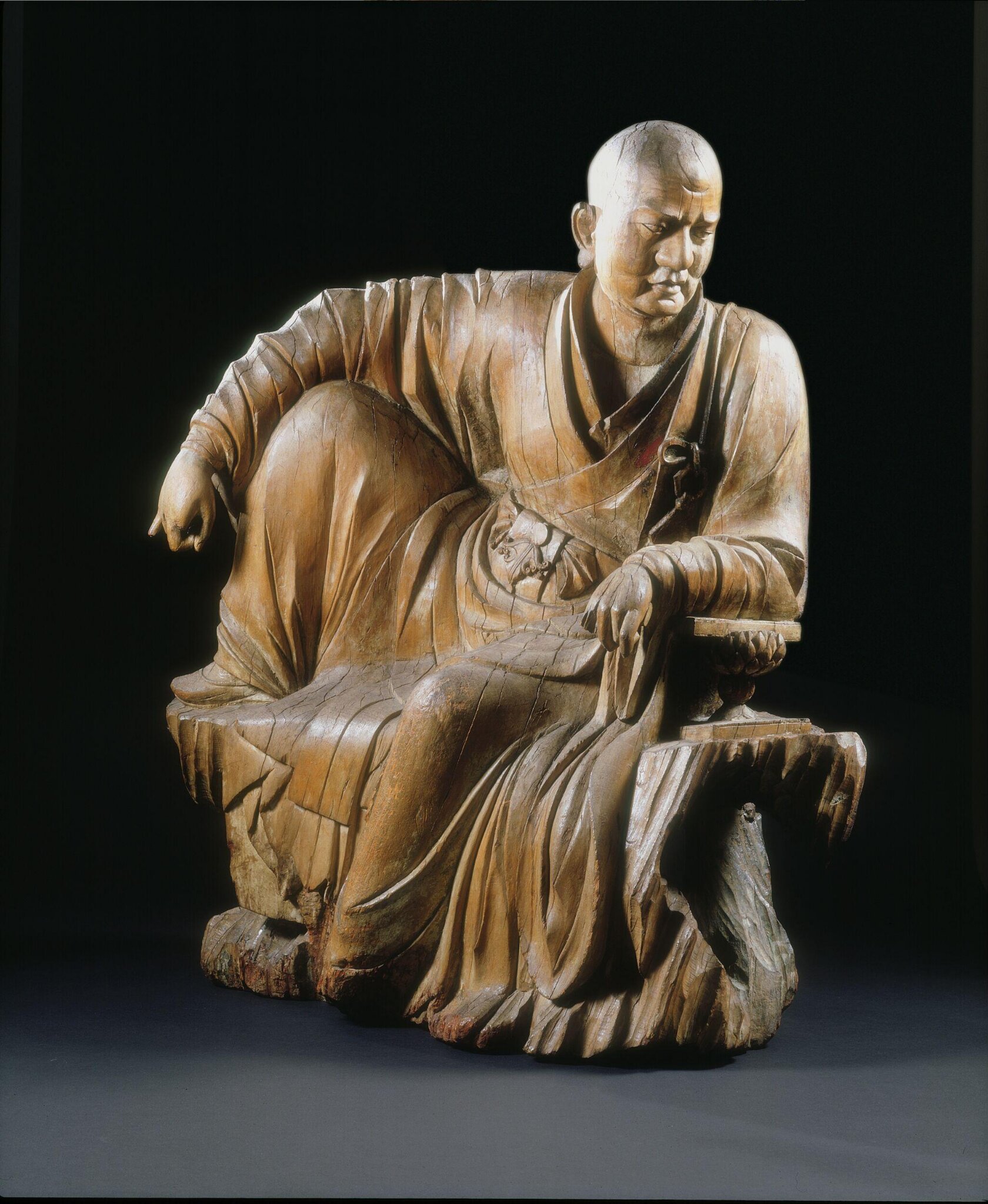
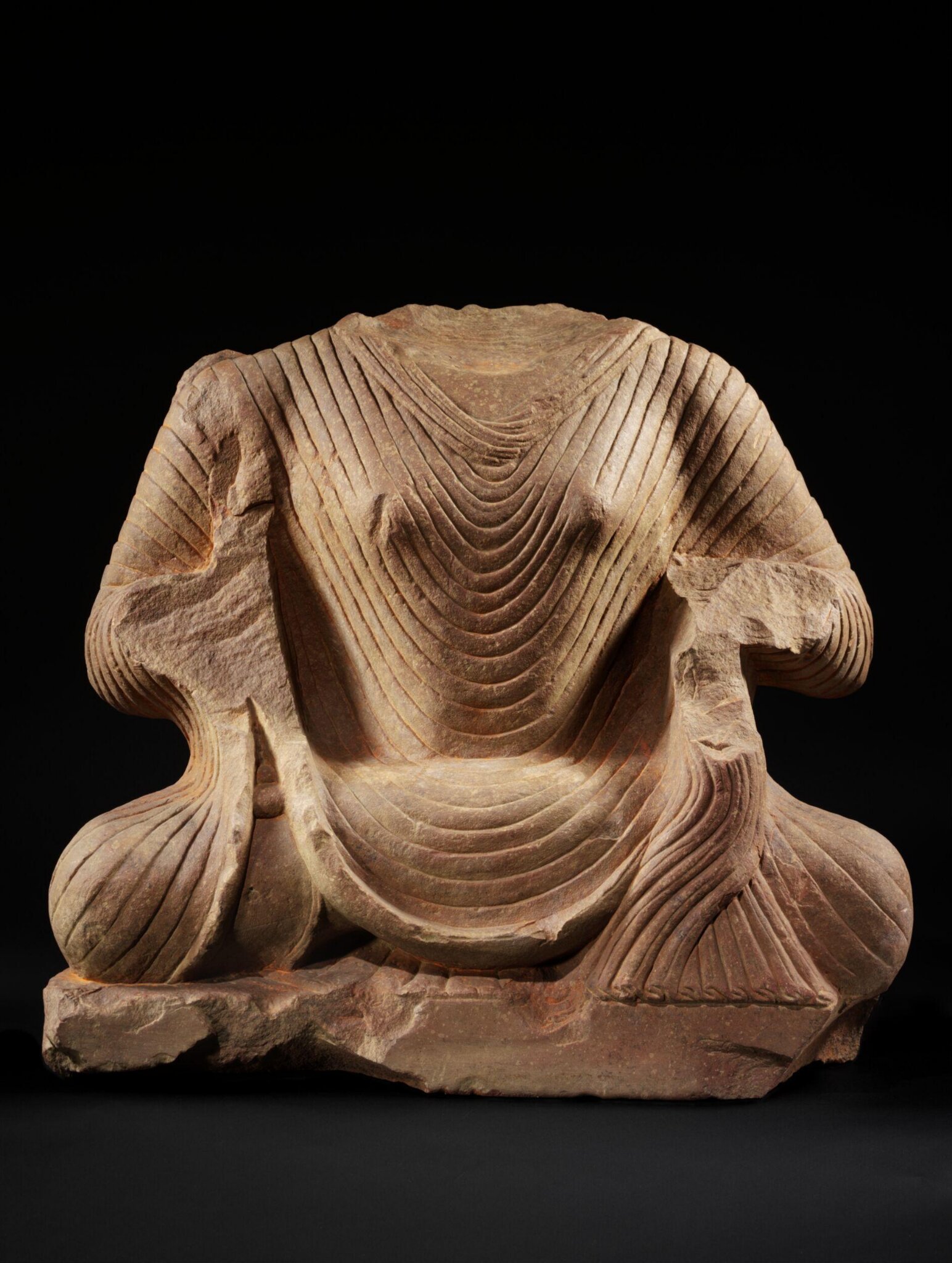
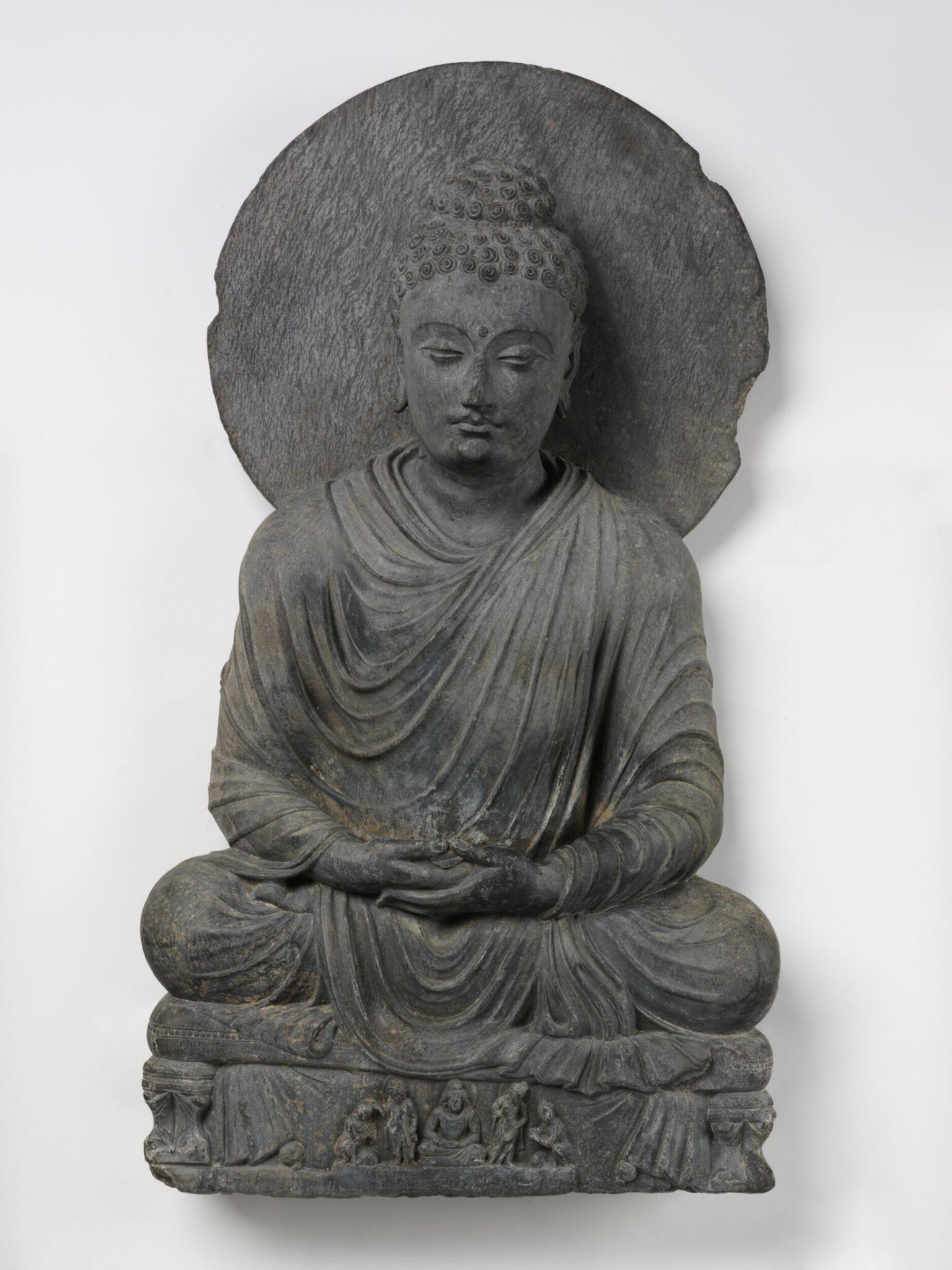
Figure of Buddha
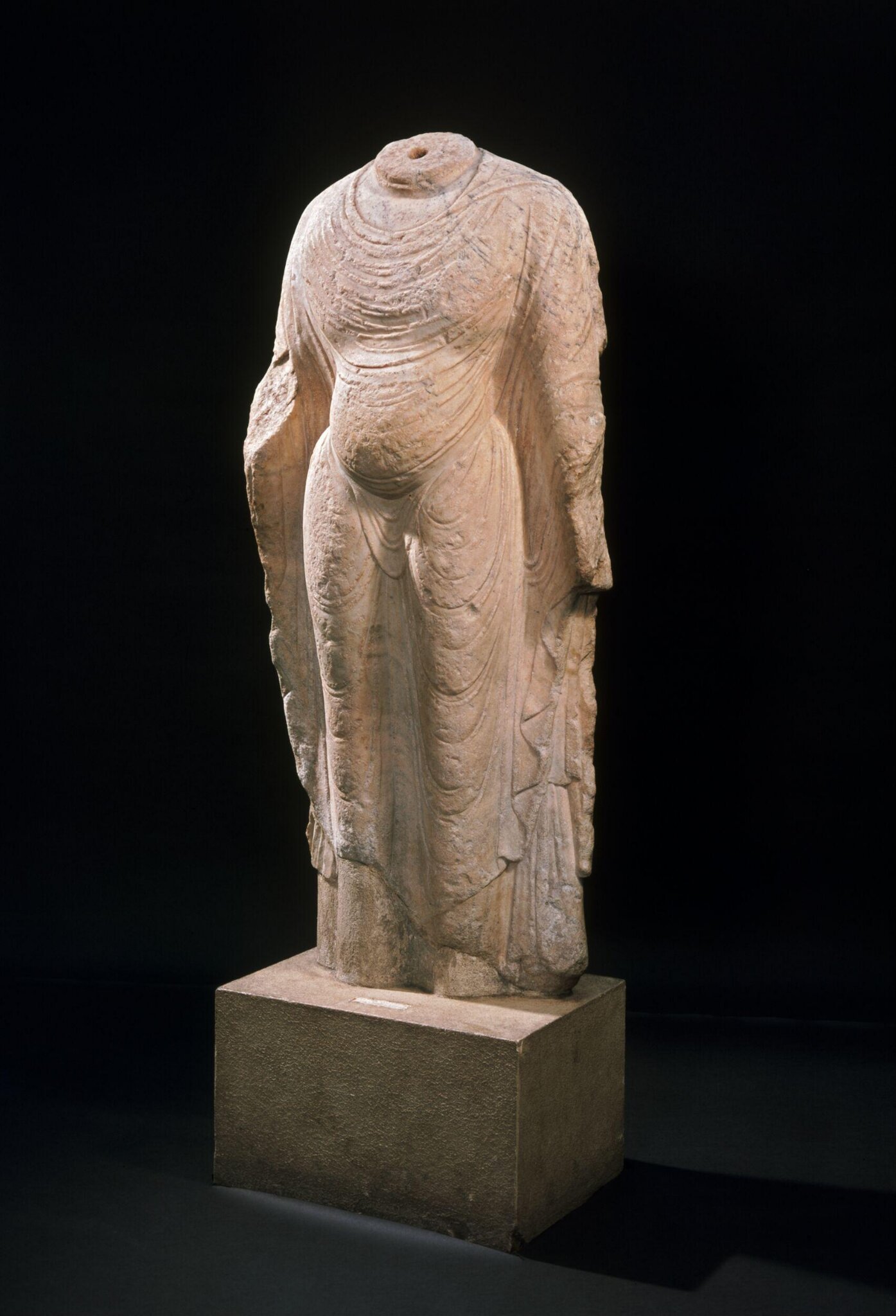
- Gallery: Buddhism, Room 47f, The Robert H. N. Ho Family Foundation Galleries of Buddhist Art
- Made in: Quyang
- Date: 618-906
- Object type: Figure
- Materials: Marble, carved
- Style: Tang
- Dimensions: Height 191 cm; Height 151 cm; Width 70 cm
- Museum: V&A South Kensington
- Collection record: V&A website
- Image © Victoria and Albert Museum, London.
Listen to the free audio guide
In the museum now? Point your phone at the next object and hear its guide.
About this object
Before you is a "Figure of Buddha" carved from white marble with subtle black streaks. This full-bodied figure likely once stood within a temple complex. While the head and hands are now missing, the torso remains a powerful presence.
The sculpture was carved from a single block of stone, though the missing limbs would have been added separately. You can see the skill of the artist in the undulating folds of the robe. These folds are placed at increasing distances to create a sense of grace and volume.
This style reflects the mid-Tang period, a time when Buddhist figures were sculpted with ample, rounded torsos. This fuller form shows an awareness of Indian sculptural traditions, contrasting with the flatter styles of earlier centuries. Notice how the carving behind the figure helps give volume to the back. This work originated in Quyang city, in the Hebei province of China, and represents a significant moment in the evolution of Chinese sculpture.
See it in person
Figure of Buddha is on display in Buddhism, Room 47f, The Robert H. N. Ho Family Foundation Galleries of Buddhist Art at the V&A South Kensington on Cromwell Road, London — free to enter. Choose V&A South Kensington on audioguide.london and take a photo of it to hear this free audio guide in six languages — no app download needed.
New, in beta. V&A support has just launched and is still improving: 1,000 objects with audio so far, with more added all the time.