Sarre Brooch
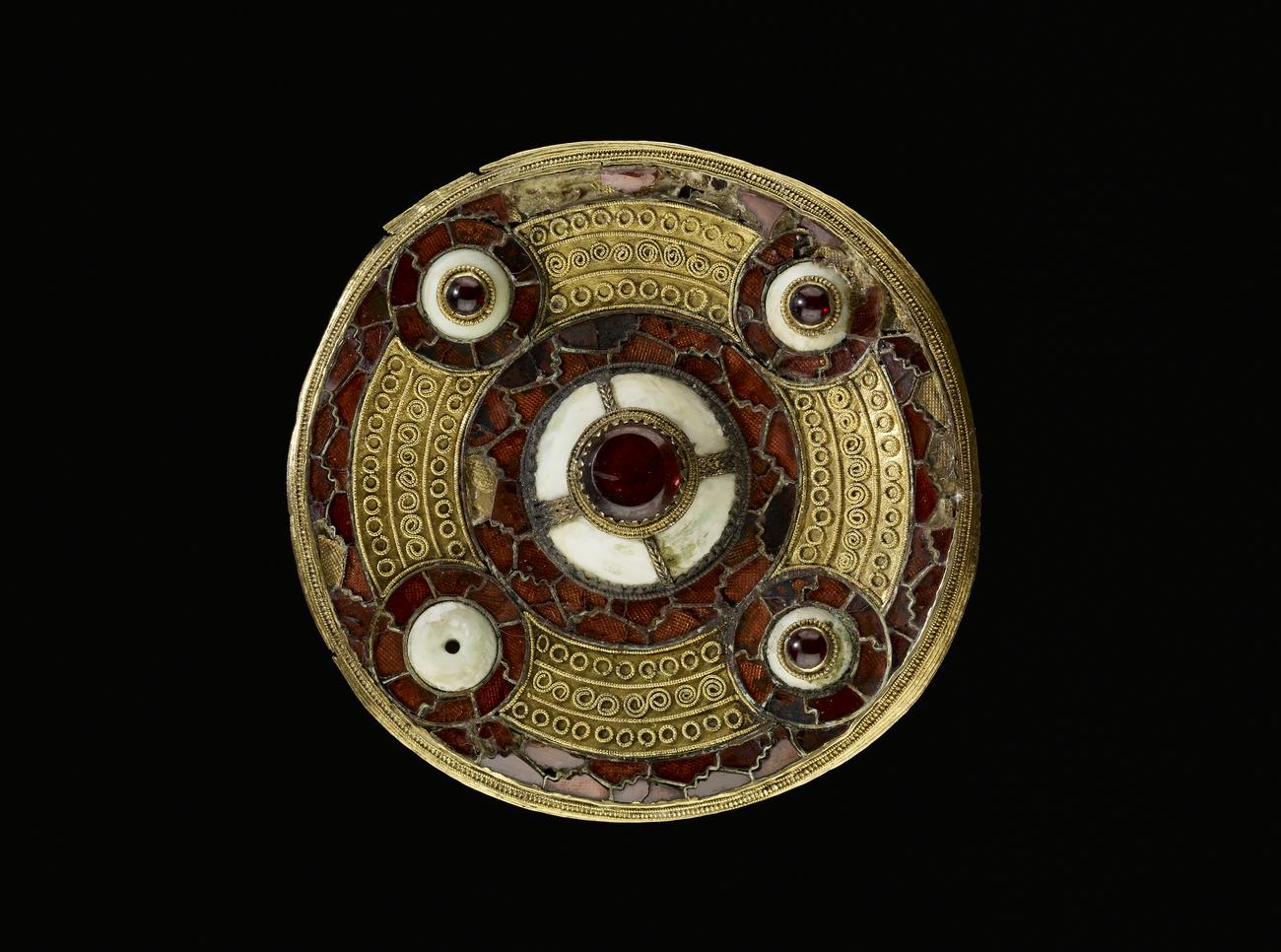
- Gallery: Room 41
- Culture: Early Anglo-Saxon
- Date: 7thC(early)
- Object type: disc brooch
- Materials: gold; garnet; white paste; copper alloy
- Museum number: 1860,1024.1
- Museum: The British Museum
- Collection record: British Museum website
- Image © The Trustees of the British Museum, shared under a CC BY-NC-SA 4.0 licence.
Listen to the free audio guide
In the museum now? Point your phone at the next object and hear its guide.
About this object
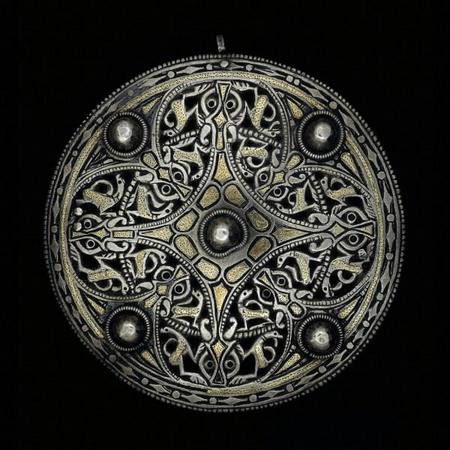
This is the Sarre Brooch, a striking example of Early Anglo-Saxon jewelry from the seventh century. Before you is a gilded copper-alloy disc brooch, carefully crafted in three layered plates. The central boss, made of white shell, is surrounded by cloisonné garnets, with four satellite bosses arranged in a cross shape. The brooch's design is divided into three zones, each filled with intricate cloisonné and inlaid with precious materials like gold, garnets, and shell.
Ornate gold panels between the bosses feature S-shaped scrolls and small circular elements known as annulets. On the reverse, an ornate pin made of copper alloy holds the brooch in place, while a safety loop ensures it stays secure. The pin and catchplate are edged with stylized animal and bird motifs carved in relief.
Found in 1860 in Kent, this brooch reflects a fashion shift among women, who adopted these large, decorative brooches over earlier paired styles. The brooch, together with its accompanying necklace, hints at connections between the Anglo-Saxon world and distant Mediterranean and Byzantine regions through the imported garnets and copper-alloy designs.
See it in person
Sarre Brooch is on display in Room 41 at the British Museum on Great Russell Street, Bloomsbury, London — free to enter. Choose British Museum on audioguide.london and take a photo of it to hear this free audio guide in six languages — no app download needed.
New, in beta. British Museum support has just launched and is still improving: over 1,000 objects so far, with more added all the time.