Safavid dynasty tile
- Gallery: Room 43
- Culture: Safavid dynasty
- Made in: Isfahan (town); Iran (Isfahan)
- Date: 17thC (and possbly later)
- Object type: tile, spandrel
- Materials: stonepaste
- Museum number: 1937,1217.1
- Museum: The British Museum
- Collection record: British Museum website
- Image © The Trustees of the British Museum, shared under a CC BY-NC-SA 4.0 licence.
Listen to the free audio guide
About this object
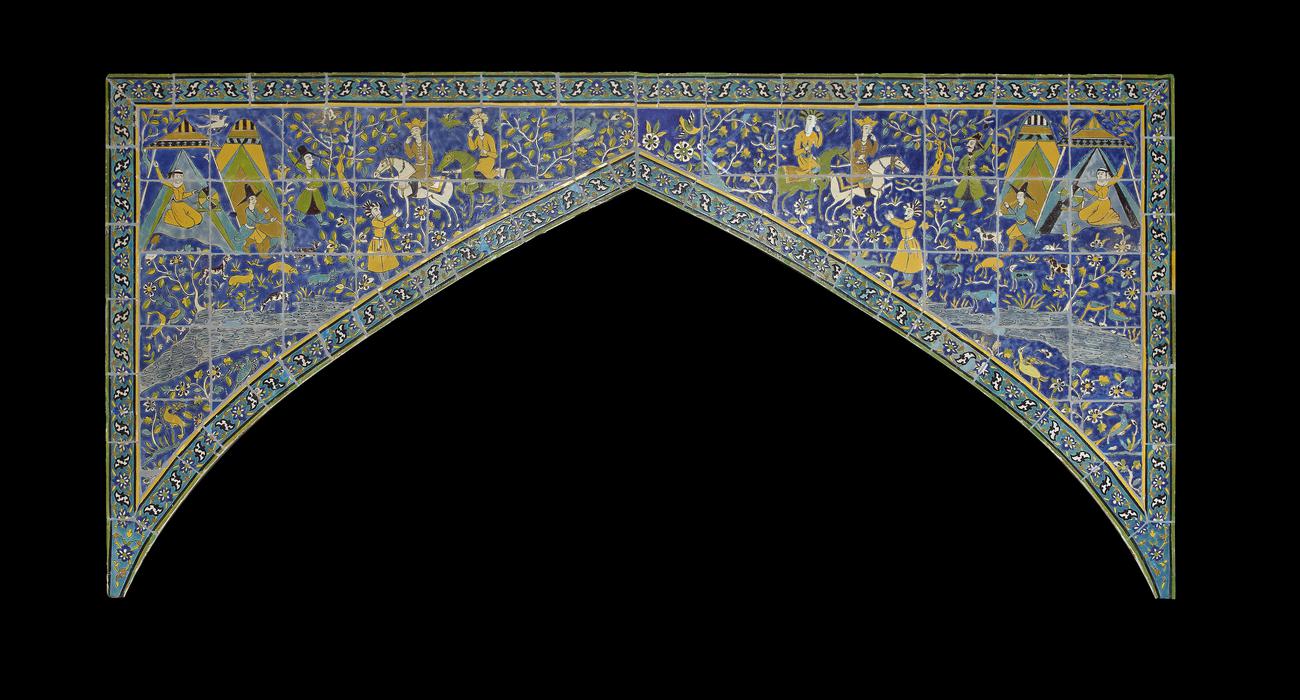
This tile, from the Safavid dynasty, comes from Isfahan and shows an elegant outdoor scene. Created using the cuerda seca technique, the tile features colored glazes separated by fine, dry lines, often used in Persian art. This spandrel was likely part of a palace or residence, with scenes replicated on both sides in mirror image. You'll notice pitched tents, a princely figure on horseback, and individuals playing the ney or spinning thread. Two figures wear wide-brimmed European hats, hinting at cultural exchanges of the time. Made in Iran during the 17th century, this piece reflects the artistic and cultural richness of Isfahan. The tile’s mirrored scenes allowed it to be viewed equally from either side, a clever design choice that enhanced its decorative function. Its original location remains uncertain, but its artistry remains clear.
See it in person
Safavid dynasty tile is on display in Room 43 at the British Museum on Great Russell Street, Bloomsbury, London — free to enter. Choose British Museum on audioguide.london and take a photo of it to hear this free audio guide in six languages — no app download needed.
New, in beta. British Museum support has just launched and is still improving: over 1,000 objects so far, with more added all the time.