Lyre
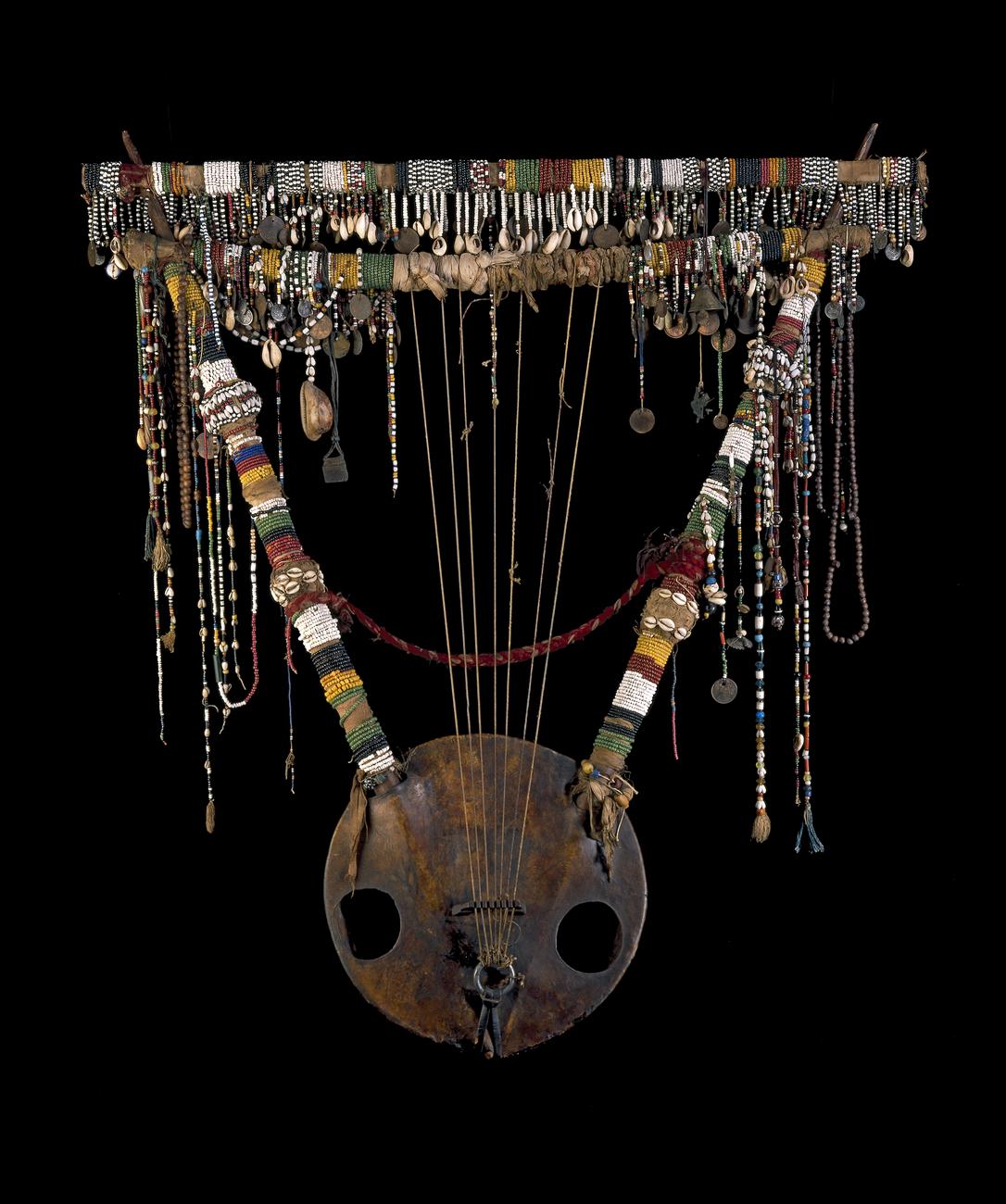
- Gallery: Room 43
- Culture: Sudan
- Made in: Sudan (?); Egypt (?)
- Date: 1900 (circa)
- Object type: lyre
- Materials: wood; skin; glass; cowrie shell; metal; gut; iron
- Museum number: Af1917,0411.1
- Museum: The British Museum
- Collection record: British Museum website
- Image © The Trustees of the British Museum, shared under a CC BY-NC-SA 4.0 licence.
Listen to the free audio guide
About this object
This is a large, wooden lyre with a semi-spherical resonator, covered in skin and studded with two circular apertures that form an expressive face. The instrument features seven strings stretched across wooden cross pieces, which are adorned with an array of charms, coins, and beads. Known as the "kissar" in local culture, this instrument was used in ceremonies to induce trance-like states and drive out perceived evil spirits.
Originating from Sudan, the "kissar" is closely linked to Zār rituals, where music is used to reach a spiritual balance, especially among women. The objects attached to the lyre, including glass beads and coins, may reflect a wide range of cultural influences and are believed to appeal to various spirits. The instrument's form has ancient roots, tracing back thousands of years to early lyres found in Mesopotamia and Egypt. It continues to play a vital role in cultural celebrations today.
See it in person
Lyre is on display in Room 43 at the British Museum on Great Russell Street, Bloomsbury, London — free to enter. Choose British Museum on audioguide.london and take a photo of it to hear this free audio guide in six languages — no app download needed.
New, in beta. British Museum support has just launched and is still improving: over 1,000 objects so far, with more added all the time.