Sacha Jason Guyana Dreams
- Artist: Sir Frank Bowling OBE RA
- Date: 1989
- Medium: Acrylic paint and resin on canvas
- Dimensions: support: 1780 x 1360 mm
- Museum: Tate Britain
- Collection record: Tate Britain website
Listen to the free audio guide
About this artwork
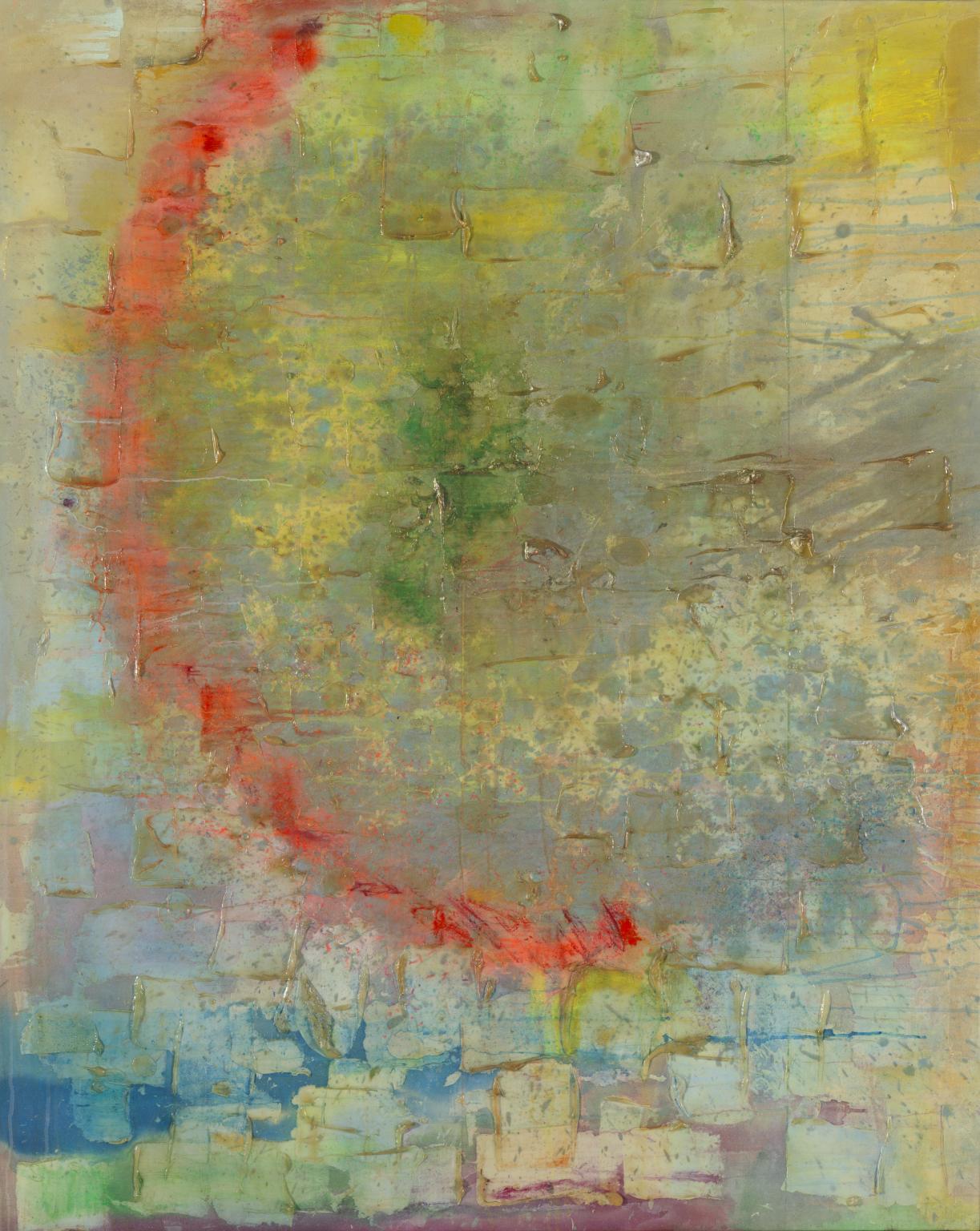
This is the “Sacha Jason Guyana Dreams” by Sir Frank Bowling. Created in 1989, the work is a large acrylic and resin on canvas that captures the moment Bowling returned to his birthplace with his son Sacha. While standing by the sea wall in Georgetown, the artist saw in the heat haze—everything flattened and glowing—a visual echo of the way he had been painting for years. The painting records that instant of recognition, making the abstract surface a kind of living memory of light.
Bowling’s style here is distinctly non‑representational. He layers thick acrylic gels, then rubs the surface with a spatula, creating rippling lines that suggest the shifting light on water. The texture feels sculptural, almost tactile, as if the paint itself rises. The color palette—splashes of green, yellow, blue, and a striking pink semicircle—mirrors the fleeting warmth of a Guyanese sunrise or sunset over the estuary.
The piece reflects Bowling’s long‑standing fascination with light, a trait he inherited from English landscape painters like Turner and Constable, but re‑imagined through his own Caribbean experience. It’s a powerful reminder that abstraction can still capture the emotional core of a place, and that the most ordinary sight—heat haze over the sea—can become a profound visual language.
See it in person
Sacha Jason Guyana Dreams is in the collection of Tate Britain on Millbank, London — free to enter. Point your phone at any artwork there and audioguide.london plays a free audio guide in six languages — no app download needed.