Royal Massacre Series 1
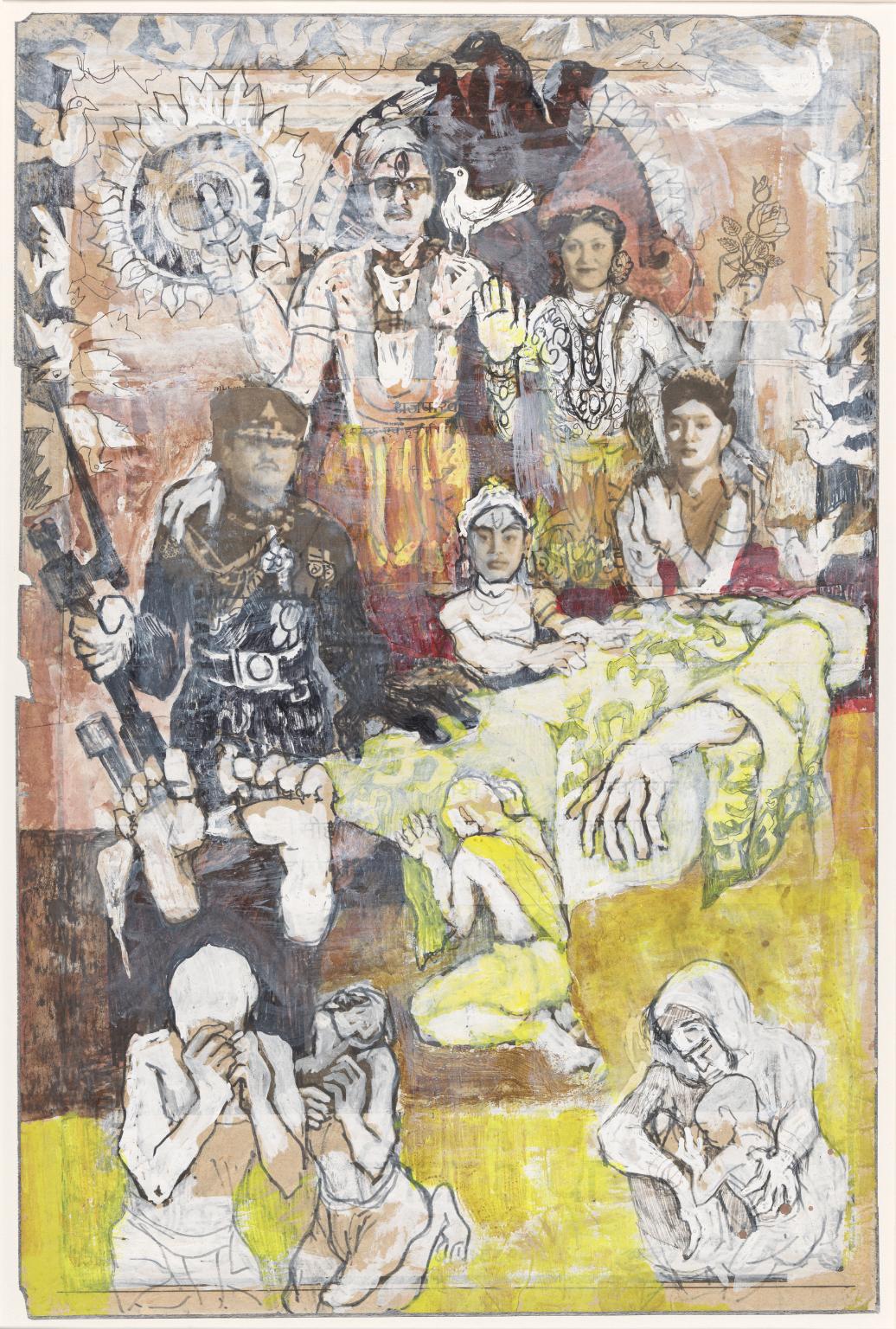
- Artist: Shashi Bikram Shah
- Date: 2001
- Medium: Ink, acrylic paint, gouache and correction fluid on printed paper
- Dimensions: support: 475 × 315 mm
- Museum: Tate Modern
- Collection record: Tate Modern website
Listen to the free audio guide
About this artwork
This is the “Royal Massacre Series 1” by Shashi Bikram Shah, created in 2001. The piece is a striking collage of ink, acrylic paint, gouache and correction fluid layered over printed paper. The surface feels almost tactile, with the dark inks cutting through the vibrant acrylic washes, while the bright gouache highlights add a sudden splash of color. The correction fluid, usually a quick fix, here becomes a bold line that frames the composition, suggesting a narrative of violence and revelation.
The title hints at the historical “Royal Massacre,” a reference to a turbulent event in Nepal’s past, yet Shah’s work is far from a straightforward historical retelling. Instead, he turns the printed sheet into a kind of document, a fragmented record that invites viewers to question what’s shown and what’s omitted. The medium itself—printed paper with layers of hand‑applied paint—underscores the idea that history is both written and rewritten, visible and invisible.
In short, Shah’s work compels you to look closely at the overlap between ink, paint, and the act of documentation, turning a simple sheet of paper into a powerful visual commentary on memory and power.
See it in person
Royal Massacre Series 1 is in the collection of Tate Modern on Bankside, London — free to enter. Point your phone at any artwork there and audioguide.london plays a free audio guide in six languages — no app download needed.