Rhyl Sands
- Artist: David Cox
- Date: c.1854
- Medium: Oil paint on canvas
- Dimensions: support: 454 x 630 mm
- Museum: Tate Britain
- Collection record: Tate Britain website
Listen to the free audio guide
About this artwork
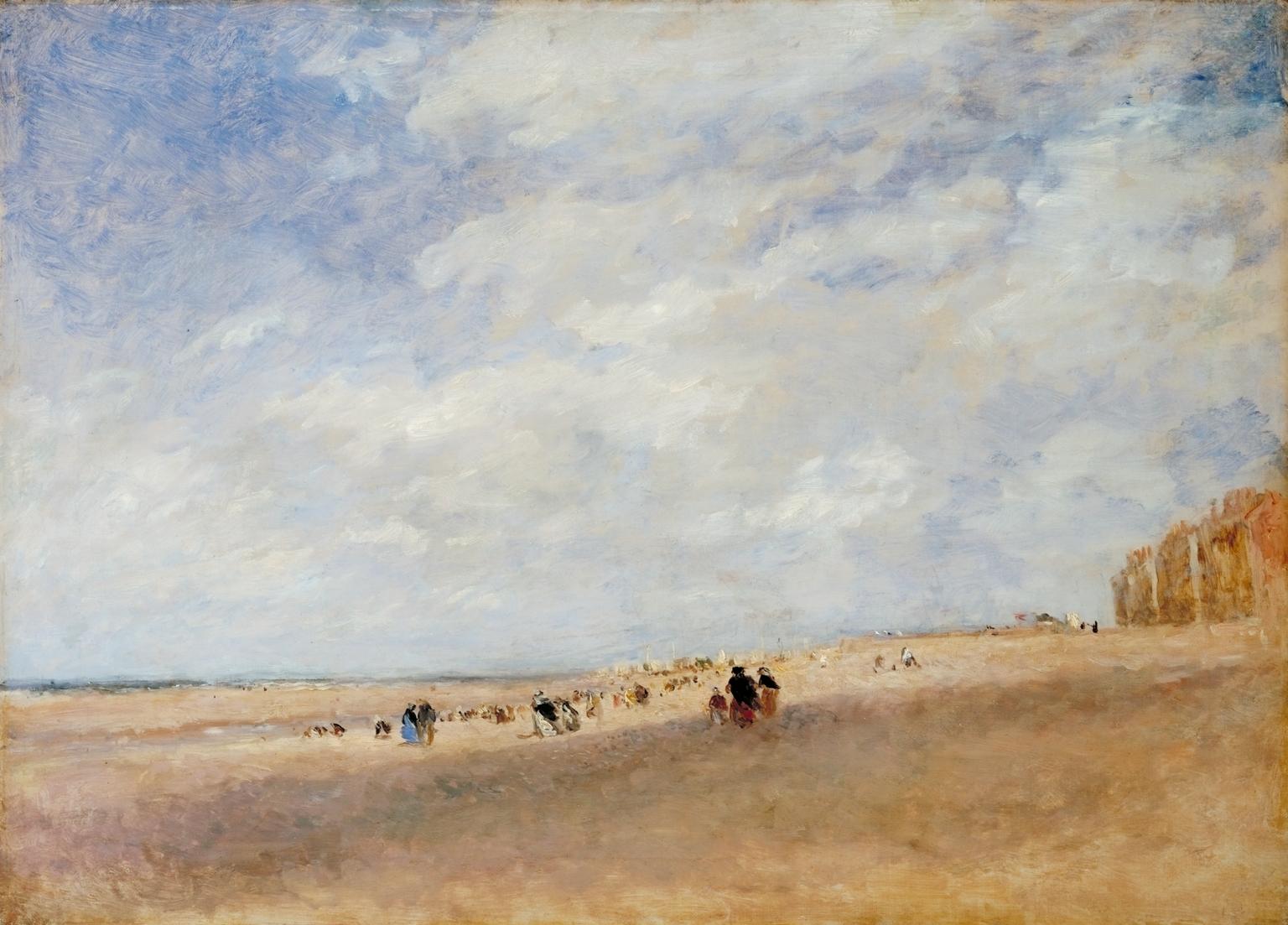
This is “Rhyl Sands” by David Cox, an oil on canvas from around 1854. Cox, who settled near Birmingham in 1841, began regular visits to north Wales, making Rhyl a stop on his way to his favourite town, Betws‑y‑Coed. Primarily a watercolourist, he took up oil painting seriously in the 1840s, and this work shows him working with total mastery and a style that stands out in 1850s British landscape.
The scene is a lively seafront at Rhyl, with a wide sandy shore, a patch of dark sea, and a few figures—a Welsh woman on horseback and a couple of shrimpers with nets. The sky is bright and fresh, almost as if painted with watercolour, and clouds give a gentle, almost playful touch. Cox’s handling is sketch‑like and energetic, a technique that even his contemporaries described as “odd and unusual.” His own notes reveal he felt some misgivings about whether his method aligned with accepted practice, yet he persisted.
Displayed at Tate Britain, “Rhyl Sands” captures both the physical beauty of the Welsh coast and Cox’s distinctive, confident approach to oil painting on canvas.
See it in person
Rhyl Sands is in the collection of Tate Britain on Millbank, London — free to enter. Point your phone at any artwork there and audioguide.london plays a free audio guide in six languages — no app download needed.