Repose on the Flight into Egypt
- Artist: Glyn Warren Philpot
- Date: 1922
- Medium: Oil paint on canvas
- Dimensions: support: 749 x 1161 x 25 mm
- Museum: Tate Britain
- Collection record: Tate Britain website
Listen to the free audio guide
About this artwork
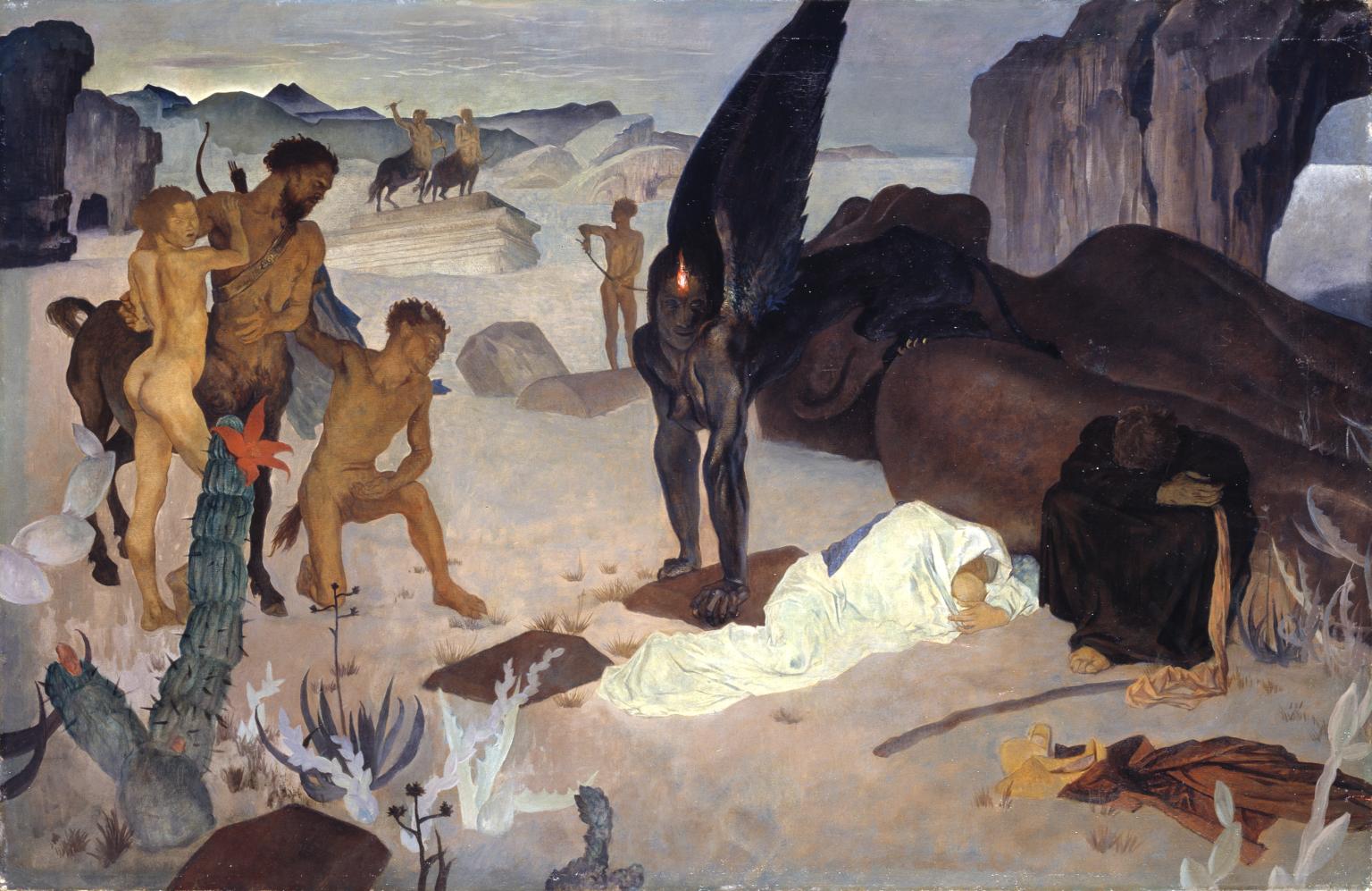
This is the “Repose on the Flight into Egypt” by Glyn Warren Philpot, painted in 1922. On the surface you see the familiar scene of Mary, Joseph and the infant Jesus on the run to Egypt. But Philpot flips the narrative: behind them, a ruined tower looms, and in the foreground a collection of mythic beasts— a sphinx, a satyr and three centaurs— stare over the family. These creatures carry the echo of pagan myths about boundless sexuality, hinting at a world that the new Christian faith seeks to replace.
The composition feels dream‑like, almost surreal. The broken architecture in the background, the oversized cactus‑like form in the foreground, all add a surreal, almost uncanny quality. Scholars suggest that Philpot, a devout Catholic, was wrestling with his own attraction to men, and the painting becomes a visual dialogue between faith and desire.
The oil on canvas is rendered with a subtle palette that lets the figures blend into a soft, twilight landscape. As you look, notice how the holy figures are crouched and almost hidden, while the mythological watchers loom large—a striking tension between sacred and profane.
See it in person
Repose on the Flight into Egypt is in the collection of Tate Britain on Millbank, London — free to enter. Point your phone at any artwork there and audioguide.london plays a free audio guide in six languages — no app download needed.