(Relief in Relief)
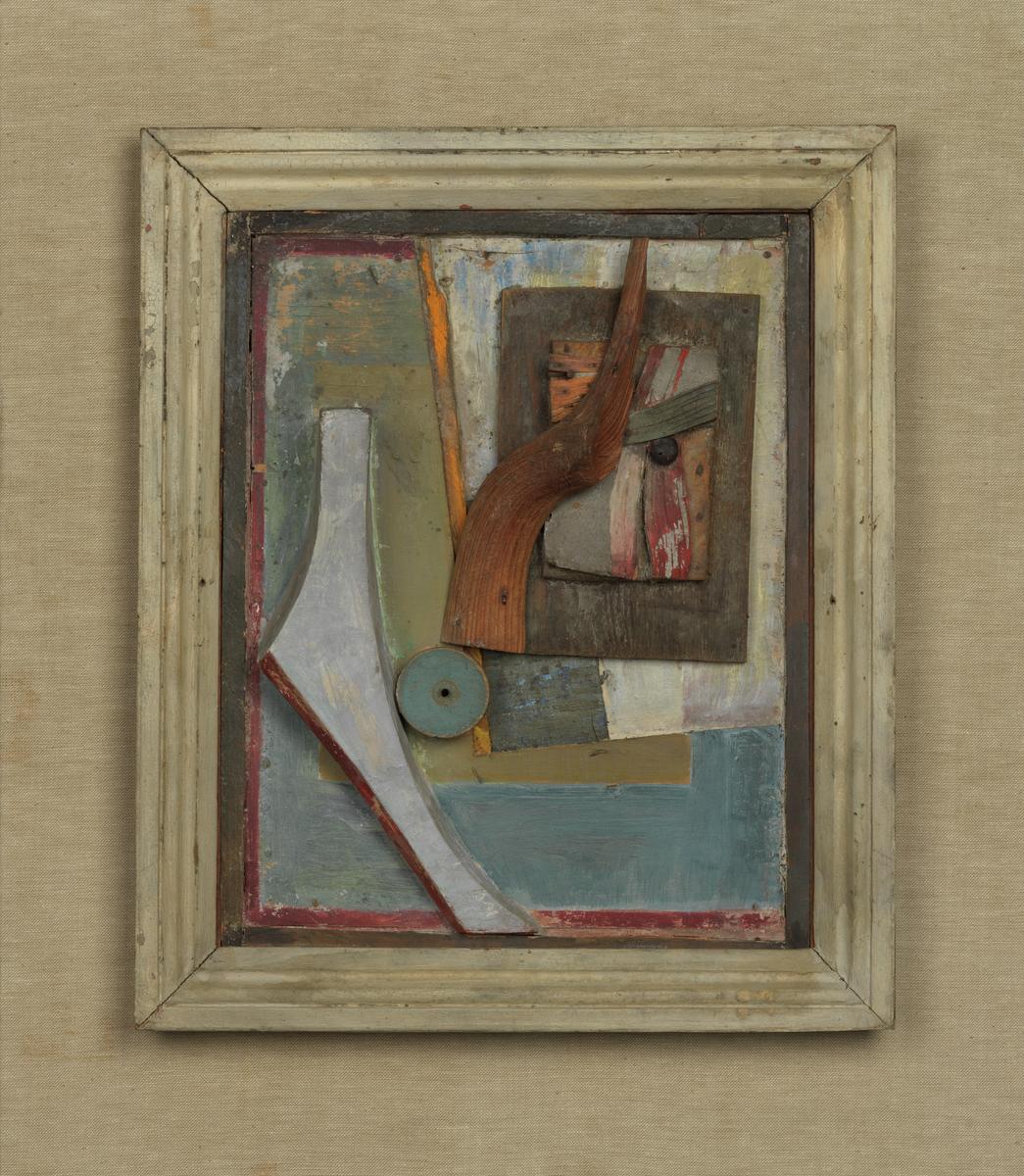
- Artist: Kurt Schwitters
- Date: c.1942–5
- Medium: Oil paint on wood and plaster
- Dimensions: object: 495 x 413 x 102 mm
- Museum: Tate Modern
- Collection record: Tate Modern website
Listen to the free audio guide
About this artwork
This is the "Relief in Relief" by Kurt Schwitters. A Dada‑inspired collage from the early 1940s, it shows Schwitters’ signature Merz technique – taking discarded everyday items like bus tickets, labels and even driftwood and turning them into an abstract assemblage. The piece is built on a wooden backing, plastered over, then painted in a flat white that frames the object itself. The sculptural shape at the top is thought to be modeled in plaster of Paris over wood, giving the work a three‑dimensional quality that blurs the line between painting and sculpture. Schwitters created it while living in London, after years of internment in camps during the war. He took months to source the right materials, keeping his work in a sort of private workshop until he felt it was ready. The white frame is original, a modest, old frame he could afford. The title "Relief in Relief" marks it as part of his Merz series, though it first appeared under the name "Many Angles" in 1958.
See it in person
(Relief in Relief) is in the collection of Tate Modern on Bankside, London — free to enter. Point your phone at any artwork there and audioguide.london plays a free audio guide in six languages — no app download needed.