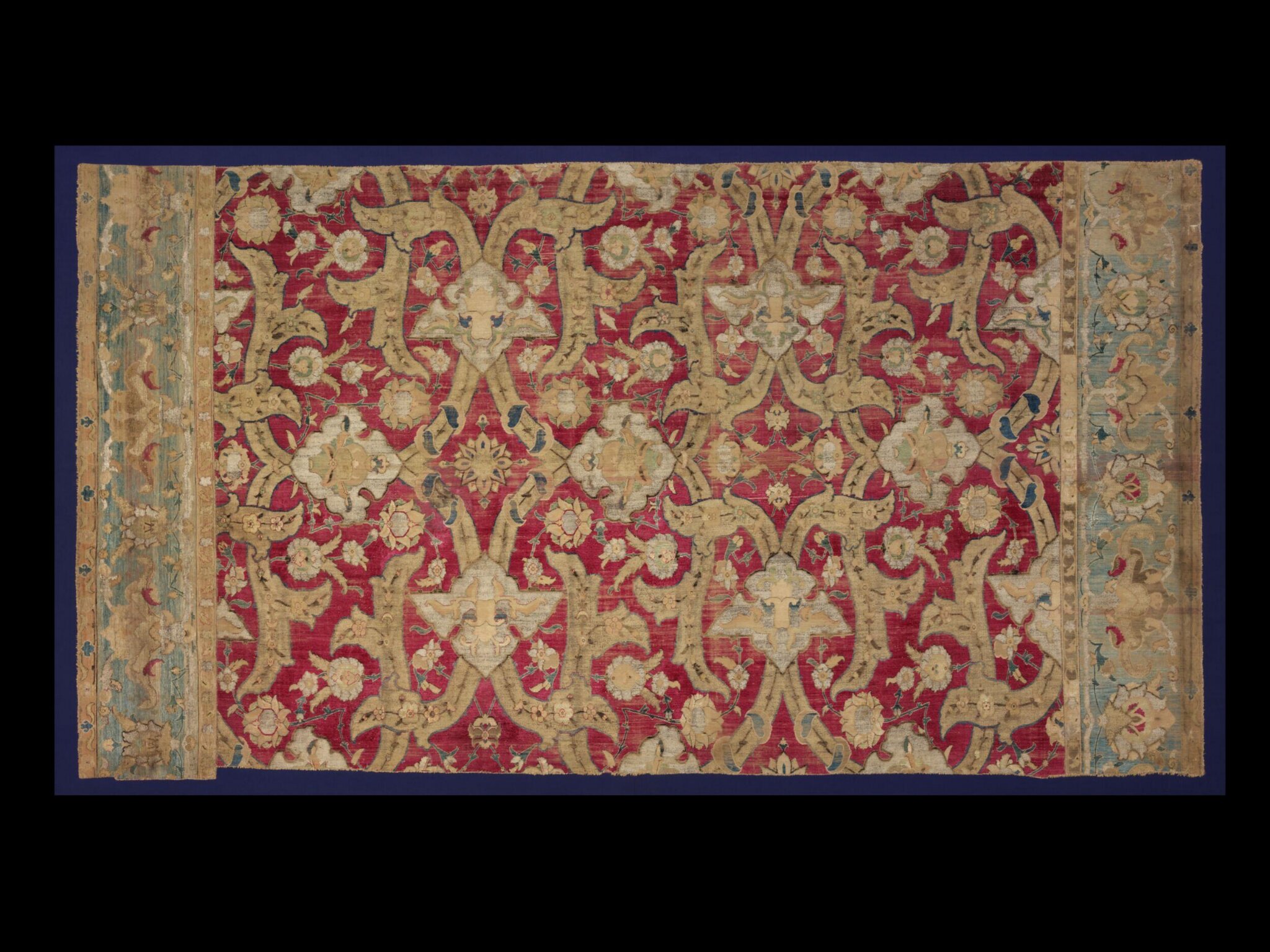
'Polonaise' carpet
- Gallery: Islamic Middle East, Room 42, The Jameel Gallery
- Made in: Isfahan
- Date: 1600-1625
- Object type: Carpet
- Materials: Silk warp and weft, silk pile with metal-wrapped thread
- Style: Safavid
- Dimensions: Length 259 cm; Width 144.8 cm
- Museum: V&A South Kensington
- Collection record: V&A website
- Image © Victoria and Albert Museum, London.
Listen to the free audio guide
In the museum now? Point your phone at the next object and hear its guide.
About this object
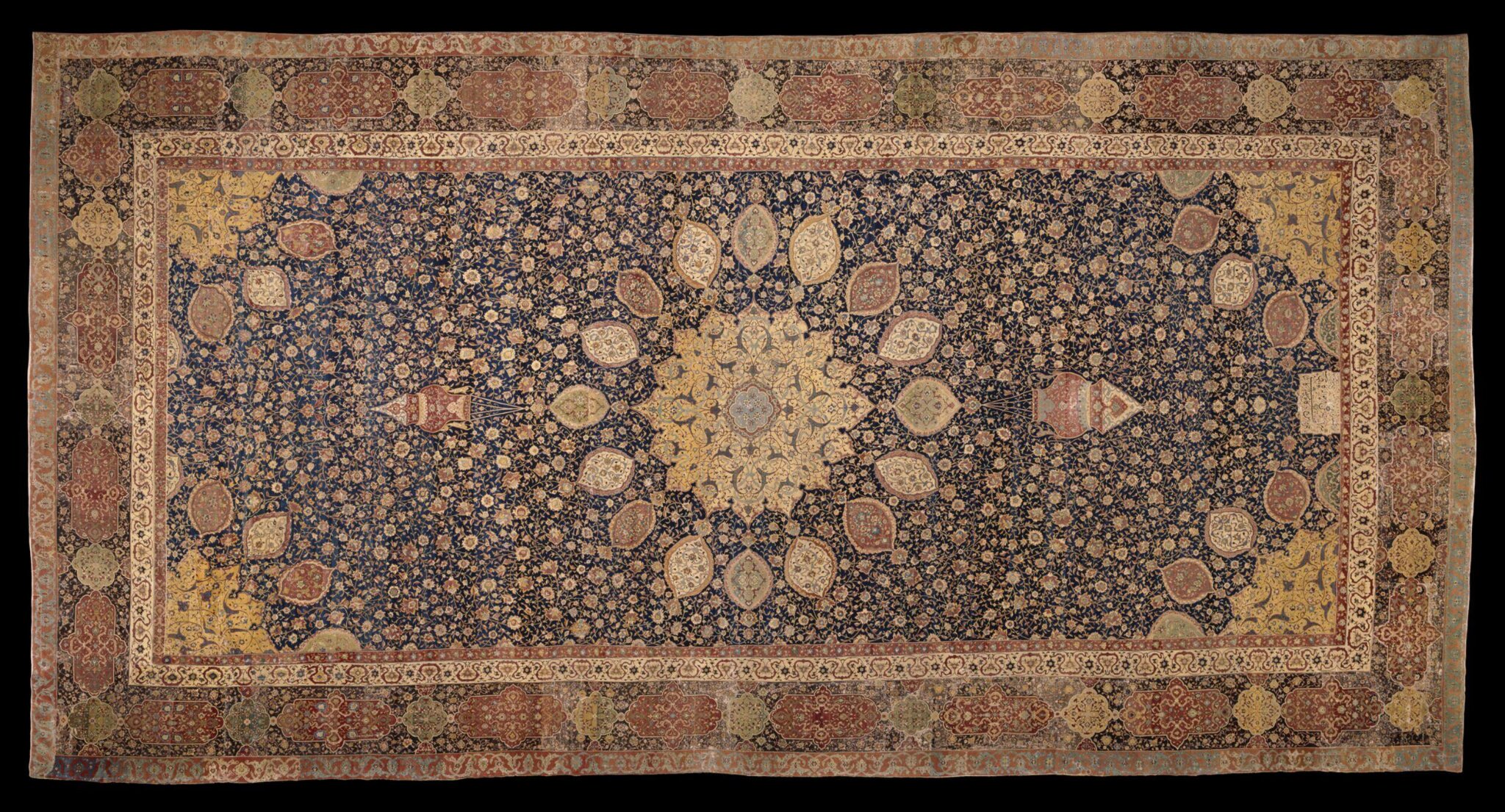
Before you is a fragment of a "Polonaise" carpet, featuring a striking strapwork design in red and yellow silk. If you look closely, you can see the shimmer of gold and silver-wrapped thread woven into the silk pile. This piece likely comes from Isfahan, in Safavid Iran, and was created between 1600 and 1625.
The name "Polonaise" carpet is actually a bit of a historical misunderstanding. While these carpets were made in Iran, they arrived in Europe during the early 17th century through trade or as royal gifts. Because many of these pieces were discovered in Poland, they were mistaken for Polish products, which led to the name we use today.
The design you see here is very similar to a massive carpet donated to a shrine in Iraq, likely by Shah Abbas the Great. This fragment offers a beautiful glimpse into the intricate craftsmanship of Persian silk weaving from the early 17th century.
See it in person
'Polonaise' carpet is on display in Islamic Middle East, Room 42, The Jameel Gallery at the V&A South Kensington on Cromwell Road, London — free to enter. Choose V&A South Kensington on audioguide.london and take a photo of it to hear this free audio guide in six languages — no app download needed.
New, in beta. V&A support has just launched and is still improving: 1,000 objects with audio so far, with more added all the time.