Piccadilly Circus
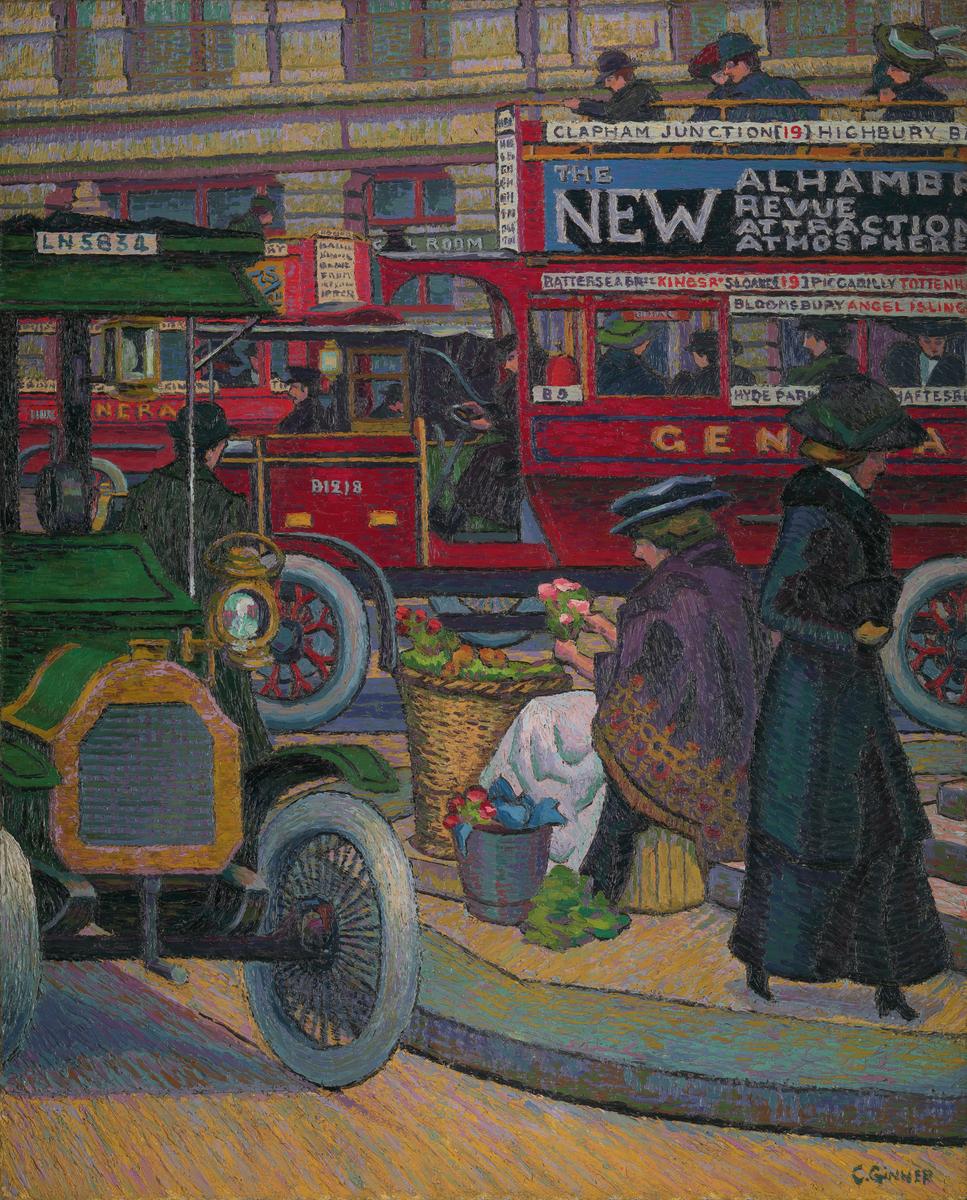
- Artist: Charles Ginner
- Date: 1912
- Medium: Oil paint on canvas
- Dimensions: support: 813 x 660 mm
- Museum: Tate Britain
- Collection record: Tate Britain website
Listen to the free audio guide
About this artwork
This is the “Piccadilly Circus” by Charles Ginner. Painted in 1912, oil on canvas, it captures London’s most famous junction at a time when neon signs and motor traffic were reshaping the city. Ginner, who had just moved from France to join the Camden Town Group, layers cars, buses and hurried pedestrians with a painterly hand that shows the influence of Van Gogh’s bold brushwork. From the low viewpoint he gives the flower seller a feeling of being squeezed between the street’s frantic flow. A passing bus even advertises the latest music‑hall show at the Alhambra Theatre, adding a layer of everyday commercial life to the scene. Small details—car registration plates, the bus’s poster—anchor the composition in a particular moment of urban modernity. The painting is a snapshot of the hustle, the glow of advertising, and the intersection of different social types in early twentieth‑century London. It remains a striking example of how Ginner turned a busy street into a vibrant, almost theatrical tableau, reflecting both the energy and the claustrophobia of the age.
See it in person
Piccadilly Circus is in the collection of Tate Britain on Millbank, London — free to enter. Point your phone at any artwork there and audioguide.london plays a free audio guide in six languages — no app download needed.