Percival Delivering Belisane from the Enchantment of Urma
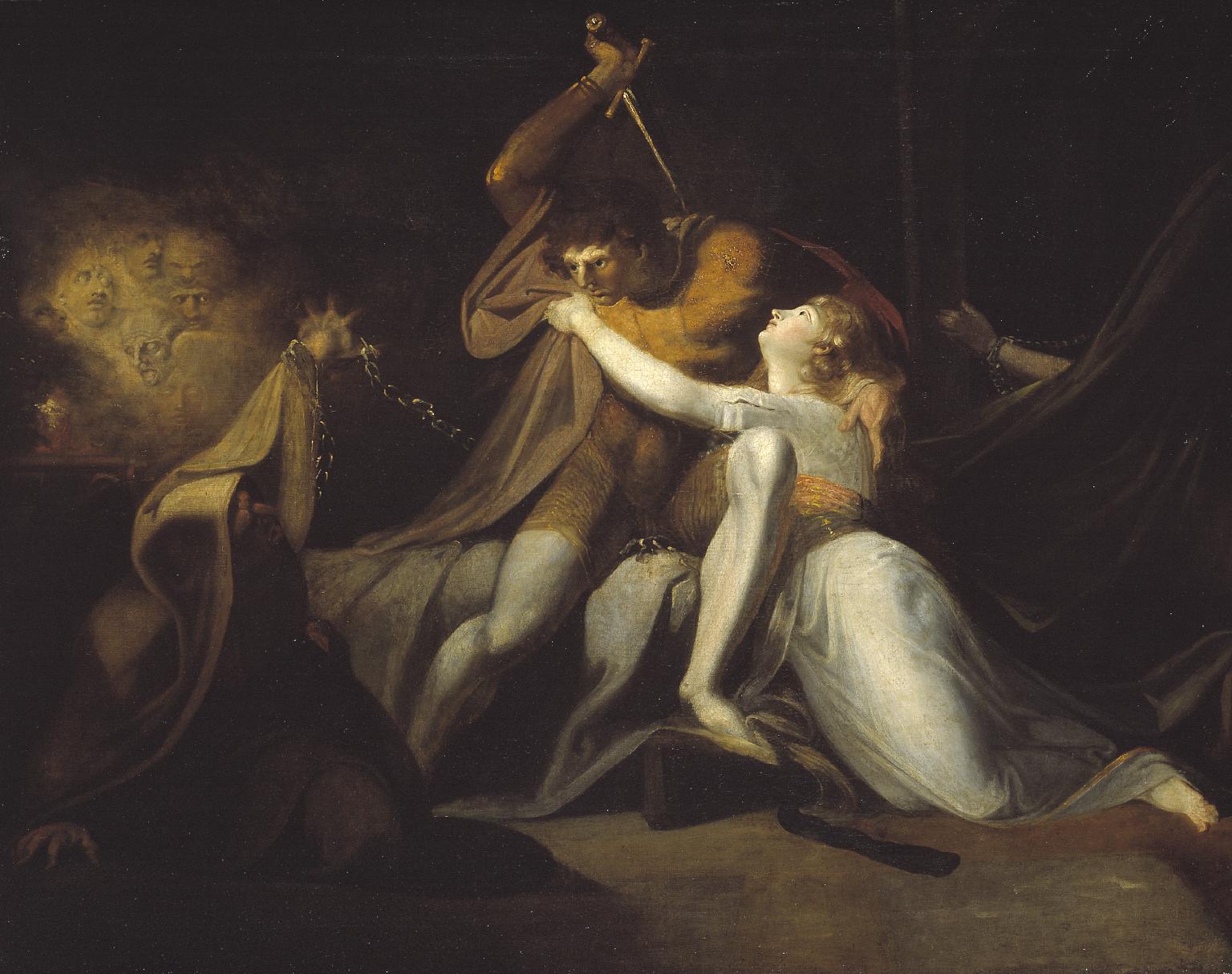
- Artist: Henry Fuseli
- Date: exhibited 1783
- Medium: Oil paint on canvas
- Dimensions: support: 991 x 1257 mm
- Museum: Tate Britain
- Collection record: Tate Britain website
Listen to the free audio guide
About this artwork
This is the “Percival Delivering Belisane from the Enchantment of Urma” by Henry Fuseli, painted in 1783 with oil on canvas. You’ll notice the dramatic, almost theatrical composition: Percival, in mid‑rebirth from a dream, lifts his sword to strike the wizard Urma, while his lover Belisane clings to his side. Fuseli claims this scene comes from the “Provencal Tales of Kyot,” but it’s actually a fabrication of his own—an invented story that lets him play with myth and spectacle.
At first glance it looks like a grand‑manner heroic tableau, but Fuseli flips the expectation. Instead of moralizing noble virtues, he leans into supernatural drama, letting the figures' emotions dominate the frame. The lighting is intense, the colors rich, and the action frozen in a moment of tension that feels almost stage‑like. This approach made Fuseli a wild eccentric of his time, admired for daring theatrics yet reviled by those who preferred restrained classicism.
So, as you stand here, consider how Fuseli’s bold brushwork and invented narrative turn a traditional knightly scene into a sensational, almost cinematic moment of wonder.
See it in person
Percival Delivering Belisane from the Enchantment of Urma is in the collection of Tate Britain on Millbank, London — free to enter. Point your phone at any artwork there and audioguide.london plays a free audio guide in six languages — no app download needed.